CONSIDER HIM

6%

Pacific Press Publishing Company · Oakland, California · Nov 12, 1902

FromSigns of the Times, Vol. 28, No. 46.

Read the full edition

“CONSIDER HIM”

BY PROF. G. W. RINE
That tabernacle was a material symbol of the great truth of the Incarnation.

THE WORD BECAME FLESH.—IMMANUEL.

THE WORD as a titular appellation of our Lord has already been elucidated. As the Word He has declared, and still declares, to all the universe, the boundless knowledge, wisdom, and love of the Eternal Father. The light of the knowledge of the glory of God is seen in the face of Jesus Christ. Jesus alone is, and ever has been, the adequate mouthpiece of the only true and ever-living God.
“And the Word became flesh, and tabernacled among us.” John 1:14, R. V., margin. In these words the Holy Spirit enunciates the profoundest mystery and one of the most momentous facts of history. The Word, the embodiment of all the infinite attributes of the most high God; the Word, the Creator of all things in heaven and in earth; the Bright and Morning Star, the Sun of Righteousness in the firmament of eternity—this same Word condescended to become flesh, with its limitations, its frailties, and with all its implacable impulses to evil. That the Holy Spirit uses the term flesh is most significant. It carries with it the idea that the Word assumed universal human nature. Christ did not identify Himself with any one race or nation or tribe, but with humanity—humanity of all climes and ages. As the religion of Christ is universal in its range and adaptation, so Christ in becoming flesh gathered up in Himself all the traits, and predilections peculiar to “every nation, and kindred, and tongue, and people.” Christ as the Son of Man touches every man at every point. There is not a key in the vast organ of humanity, which, when struck, does not awaken a sympathetic vibration throughout the mighty range and scope of the Christ-Man.

Our Sympathizer.

No sorrow, no pain, no temptation has ever pressed the heart of any man, woman, youth, or child, that Jesus did not feel. This sad but significant fact was foreseen by the prophet when he wrote, “Surely He hath borne our griefs, and carried our sorrows.” Isa. 53:4. Note the pronoun our. Jesus bore the griefs and sorrows of not any one man only, but of every member of the race. For “in all things it behooved Him to be made like unto His brethren, that He might be a merciful and faithful High Priest. . . . For in that He Himself hath suffered being tempted, He is able to succor them that are tempted.” Heb. 2:17, 18. Being made like unto the children of men, He experienced every suffering to which humanity is susceptible. Wherefore He is a faithful and merciful High Priest. He knows every one of us perfectly, because He is every one of us perfectly, sin excepted. Having Himself suffered being tempted, He knows how to deliver, how to succor, us when tempted. He knows my sorrows because He has felt them; He knows your anguish because that same anguish has wrung His great innocent heart.
Hence “we have not an High Priest which can not be touched with the feeling of our infirmities; but was in all points tempted like as we are, yet without sin.” Heb. 4:15. I may be subject to temptations that none of my brethren can ever know or feel, but no impulse to evil can ever surge through my nerves that Jesus did not feel and conquer. This great fact—the fact that He for whom are all things and by whom are all things, suffered everything that every member of human kind has suffered or can suffer constitutes Him a perfect Saviour. Thus it is that every soul finds in Christ the complement of his nature, the overflowing supply of his deficiencies. As the law could not work out righteousness in human flesh, God, moved with infinite pity and love, sent “His own Son in the likeness of sinful flesh,” that He might condemn “sin in the flesh.” Rom. 8:3. And as He assumed your flesh and my flesh, He most certainly condemned sin in your flesh and my flesh. Hence that condemnation avails for your sins and my sins now, providing we by faith suffer Jesus, by His Spirit, to dwell in our flesh. Day by day, hour by hour, moment by moment, Christ condemns and subdues sin in our flesh, providing I suffer Him to dwell in me. We can now understand what Paul meant when he spoke of “Christ in you, the hope of glory.” Col. 1:27. For my entering into glory is conditioned upon my triumphing over sin; and Christ in me subdues my iniquities.

The Body of the Flesh.

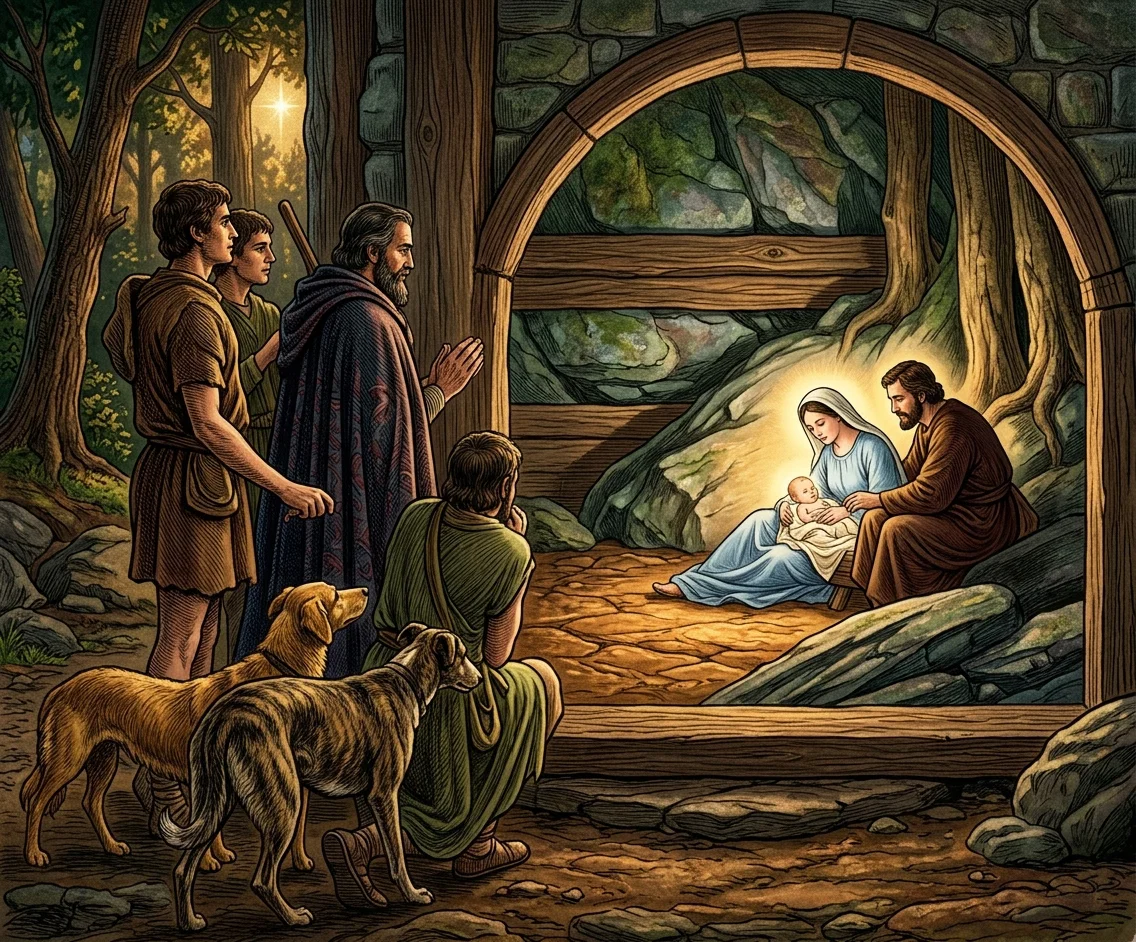
It was when the Son of God condescended to become the Son of Man that He declared, “Sacrifice and offering Thou wouldst not, but a body hast Thou prepared Me.” Heb. 10:5. And that body was the flesh of universal man. Yes; He took upon Him the “body of our humiliation,” and thus “tabernacled among us.” During the wanderings of Israel in the wilderness, God dwelt among them in the tabernacle He had commanded them to make for that purpose. See Ex. 25:8; 2 Sam. 7:6. That tabernacle was a material symbol of the great truth of the Incarnation. In the wilderness He veiled His intolerable glory from human sight with curtains of blue, and purple, and scarlet; when He came a Babe in Bethlehem, He veiled that glory with the curtains of human flesh. How fitting, then, that in the same breath He spoke of the temple and of His body. For that “body” which God had “prepared” Him was ever, in the most literal sense, the temple of the Most High. That God dwelt in the body of Jesus is the irrevocable pledge and surety that the same God, in His Son and by His Spirit, shall dwell in your body and in my body. And as He thus condemned sin in His body, even so shall He condemn sin in our bodies.
More than seven hundred years in advance it had been prophesied: “Behold, a virgin shall conceive, and bear a son, and shall call His name Immanuel” (Isa. 7:14), a name signifying “God with us.” And “God with us” means righteousness, holiness, deliverance, eternal triumph, and endless life. In the happy phrase of a well-known writer, “Christ set up His tabernacle in the midst of our human encampment. He pitched His tent by the side of the tents of men, that He might dwell among us, and make us familiar with His divine character and life.” This is the boon and glory par excellence of man, that God is with him and in him; that the Son of God is likewise the Son of Man. With what honor this great truth invests every human body. For it, too, may be and ought to be the temple of the Holy Ghost. As “God was in Christ”—in the body prepared for Him,—so with regard to His redeemed children He says, “I will dwell in them and walk in them.” He is to us Immanuel; and hence can never leave nor forsake us. That He is to me Immanuel is the pledge that He is to me Jesus; for He must be with me in order to save me from my sins.
“O the depth of the riches both of the wisdom and knowledge of God! how unsearchable are His judgments, and His ways past finding out!”
[The next article is “The Life of Christ—Revelation and Exemplification of the Divine Law.”]
“And the Word became flesh.”