It is Surprising

3%

Pacific Press Publishing Company · Oakland, California · Oct 22, 1902

FromSigns of the Times, Vol. 28, No. 43.

Read the full edition

It is Surprising

To find how frequently our loved English Language is misused and even abused by speakers and writers. Some of our most common expressions are proved to be not only incorrect, but sometimes positively absurd and vulgar.
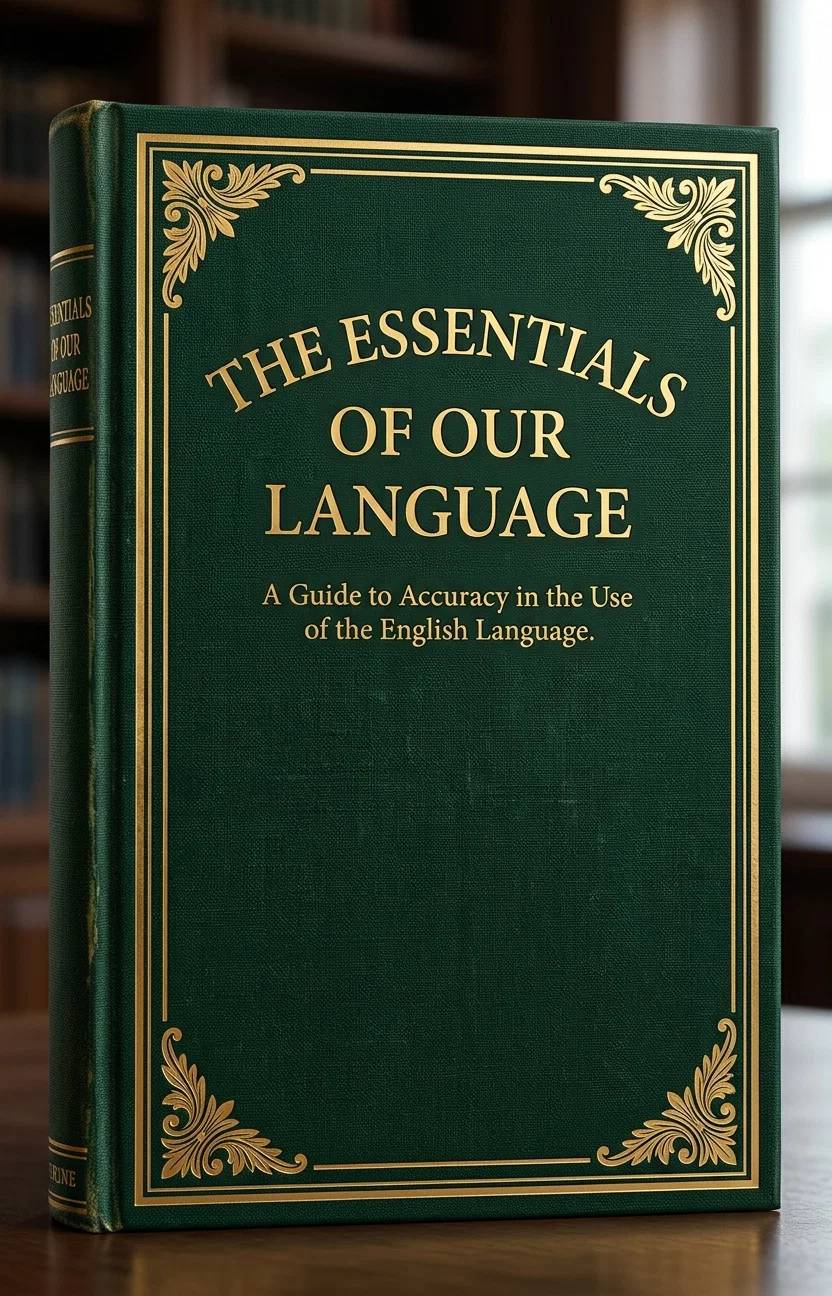
A most interesting book on this subject has just been published, entitled

THE ESSENTIALS OF OUR LANGUAGE

A Guide to Accuracy in the Use of the English Language
By GEORGE W. RINE, B. L.
The work is not only invaluable to students, speakers, and writers generally, and to those especially who have missed educational advantages, but unlike most technical works, it is also very interesting. This is because of the many surprising errors in language, which are heroically revealed by the author.
Here are examples from Part I, which is entitled, “Accuracy in the Use of Words.”
Awful is a genuine English word, and a very useful one, too. It is thus defined by Webster: “Oppressing with fear or horror; appalling, frightful.” Further: “Fitted to inspire with reverential fear; profoundly impressive.” A violent storm at sea, especially after night, is an awful phenomenon. The scene on and around Mt. Sinai, at the giving of the divine law, as described in the book of Exodus, was an awful one. Hence, the utter nonsense of “What an awfully sweet baby.”
Blacken. One may blacken another’s name or reputation, but not his eyes or his boots. One blackens by means of calumny, slander, etc., but blacks by the use of his fist or his shoe-brush.
Depot. As depot is properly used to designate a storehouse, it is better to apply the word station to a stopping-place on a railway.
Firstly. No reputable writer sanctions the use of “firstly.” Secondly, thirdly, etc., are sterling English, but first must serve as both an adjective and an adverb.
“Mutual friend,” says Macaulay, “is a low vulgarism for common friend.” Mutual signifies reciprocity of feeling or sentiment, and so can relate to only two persons.
Raise. Parents who properly care for their children do not raise them, but rear them. Farmers raise chickens, calves, wheat, etc.
Resurrect—the verb form of resurrection—is a barbarism.
Retire. How much more restful the familiar locution “go to bed” sounds than does the more formal “retire.” Men retire from business, or from public life, but, as a rule, they go to bed when the day’s work is done.
Stays. One stays, not stops, at a hotel, at the home of a friend, or at his own home.
Try. We shall try an experiment. Read, We shall make an experiment. Experimenting is trying. No one tries a trying.
Under the head “Synonyms Discriminated” we find much similar instruction to the following:—
Distinguish, Discriminate. We distinguish with the eye, the sense of vision; we discriminate with the judgment or understanding.
Defective, Faulty. What is lacking in some respect is defective; what has something that it should not have is faulty. A defect must be supplied; a fault must be corrected.
Enough, Sufficient. We have enough when our desires are satisfied; we have sufficient when our needs are met.
Evidence, Testimony. Evidence is that which actually proves something; testimony is that which is intended to prove something.
Eternal, Everlasting. Everlasting now means without end; eternal without beginning or end. They are not, as formerly, interchangeable.
Little, Small. Little, means not much; small means not large. Little, when made to serve for small is a colloquialism.
These quotations will give some idea of the value of this book. It is really surprising how the reader’s interest is sustained from start to finish. We can heartily recommend the work to all who are anxious to become accurate speakers and writers. Even the best informed will find it a valuable and painstaking tutor.
It is withal a Christian book, the author using only examples and quotations which are helpful and elevating.
Price 75 cents
Pacific Press Publishing Company & Oakland, California
18 West Fifth Street, Kansas City, Mo. & 11 West Twentieth Street, New York, N. Y.