SOUTH AFRICA AS IT IS

7%

Pacific Press Publishing Company · Oakland, California · Oct 15, 1902

FromSigns of the Times, Vol. 28, No. 42.

Read the full edition

SOUTH AFRICA AS IT IS.

THE dogs of war are chained; the cannon’s roar has ceased; Briton and Boer have met in deadly conflict; the brave Boer matched his strength against superior numbers; the weaker failed, laid down their arms, and wisely sued for peace. Peace has been proclaimed; 25,000 soldiers of the former Transvaal Republic, have surrendered. Deadly enemies have, professedly, become friends and fellow-citizens; 85,000 British Colonial soldiers have been disbanded by one sweeping order from the Commander-in-chief; full 2,000 block-houses are vacated, and their demolition has begun; 2,000 miles of barbed-wire barricade is being removed; entrenchments no longer required, are being filled; military authority is gradually loosening its iron grip for the milder and less burdensome civil rule; the military permit system is gradually giving way to allow the public to travel at will; military rebel-courts are clearing their dockets for want of fresh cases; military prisons are being emptied, except of long-service prisoners found guilty of high treason.
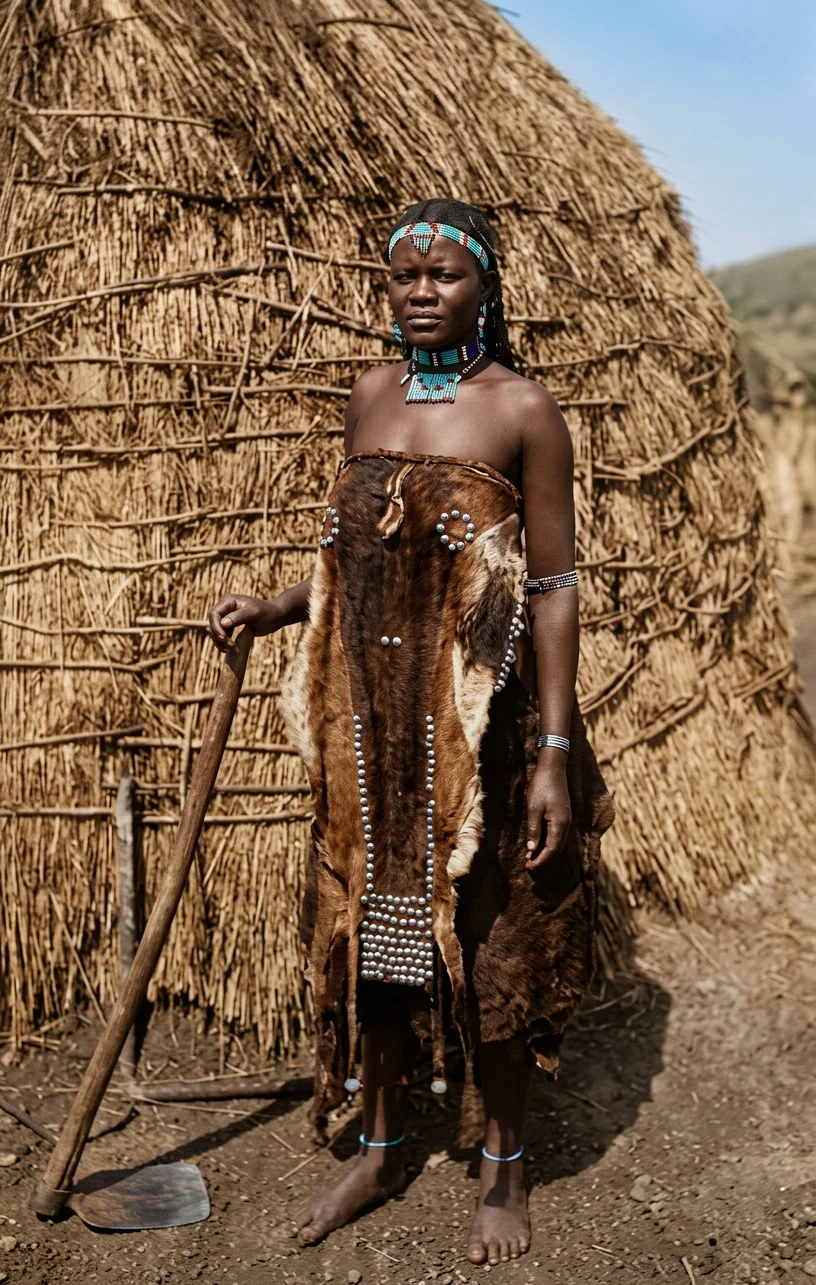
A Zulu Woman with a Hoe.
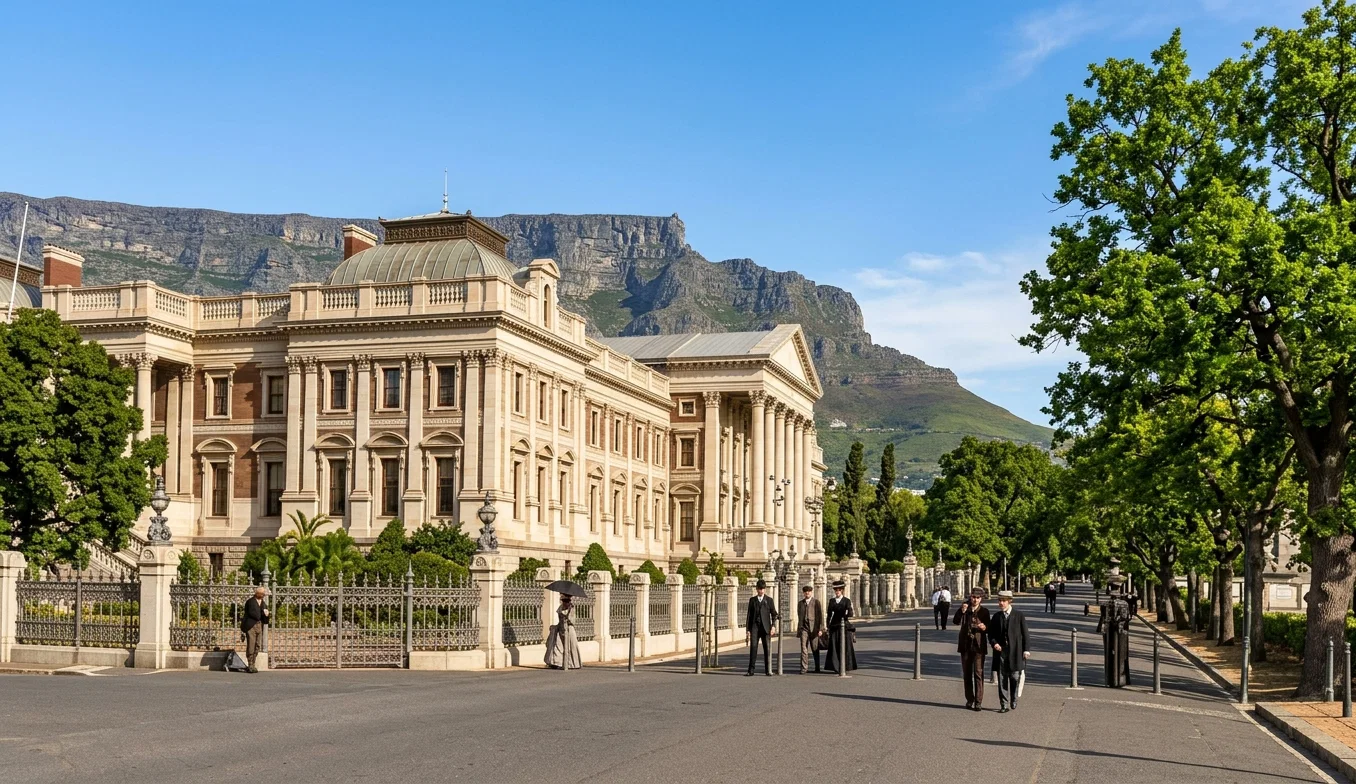
Government Avenue and Parliament House, Cape Town.
British generals are joyfully returning home to receive glory and honor of fellow-countrymen; the railway lines and cities of South Africa are overcrowded with too-often demoralized, disorderly soldiers, against whom citizens are raising their voices in righteous indignation, and freely using the public press in condemnation of their maudlin conduct, hopeful that they may thus secure suppression of such conduct, and so relief.
Britain-bound steamers are over-crowded with home-going soldiers; labor markets are congested with discharged soldiers and civilians, the latter having waited long at the ports for access to the up-country mining centers.
No more are troops and mounts being hurried to the front; and armored trains are discarding their war-scales, to take up again the business of peaceful transportation. Erstwhile soldiers are returning to occupations of peace. There is great rejoicing in England over the triumph of British arms and relaxation of burdensome taxation.
Untold thousands of unknown and unnamed graves are scattered over the “veldt,” their occupants silently awaiting the roll-call to the last judgment.
Millions of pounds sterling, invested in food and forage for rider and steed, are being released by offering stores at auction to civilians. Half a million horses and mules, for cavalry and transport, are soon to go under the auctioneer’s hammer to the highest bidder.
The Boer is no longer disturbed at night and compelled to hurry away over the “veldt” to escape a deadly volley from Mauser and Gatling. Boer generals are visiting concentration camps, to cheer occupants who are disheartened at defeat. Steamers laden with Boer prisoners are returning from faraway Ceylon and Bermuda, or from the nearer place of exile of the great Napoleon. Late antagonists are pledging loyalty to King Edward VII. Oom Paul is sadly spending the last days of an eventful life, not under the proud folds of the Transvaal flag, but in the Fatherland of the Boer people, and under the protection of Queen Wilhelmina. No longer will the “image and superscription” of Uncle Paul appear on coin, stamp, and seal of the Transvaal Republic; for it is no more.
Boer families, long separated, are joyfully reuniting; and if the misfortunes of war have left them a few pounds sterling, they “treking” back to desolated farms and ruined homes, recounting, as they journey, their bravely-endured hardships, and making loving mention of the missing ones, while fathers and sons relate battle scenes and hair-breadth escapes, or tell of how some members of the family gave up their lives on the field of battle, in a vain effort to support a lost cause. Boer women and children are parting company in the concentration camps, while thousands remain as British prisoners till funds can be provided to settle them on farms.
Hundreds of thousands of home-seekers, adventurers, and speculators are turning their faces toward the Cape of Good Hope. Speculation is running wild, and property is changing hands at fabulous prices. Apparently the best opportunities have been secured by capitalists on the alert during the war. All the cities are “booming,” especially Johannesburg. The prices of nearly all commodities are inflated, while wages are only moderate. Such are some of the conditions produced by the late South African conflict.
Thrice welcome peace! Would that the special peace proclamation of “peace on earth, good will to men,” made 1900 years ago, had been accepted by all members of the human family, and that the conditions were such that we might reasonably hope for a long period of peace and prosperity. But we are not justified in indulging this hope for South Africa, nor for the other countries of the globe, for we are living in a time when “the nations are angry,” and when “the kings of the earth and of the whole world” must soon be gathered together to the “battle of that great day of God Almighty.”
There must, however, be a short interval of peace for the giving of the last message of mercy to the nationalities who will make up the cosmopolitan population of South Africa. Is it not especially due the Dutch people—who have heretofore been deceived into thinking that they were to fulfil Bible prophecy in holding the temporal supremacy in South Africa—that they now receive the everlasting Gospel in all of its fulness? G. W. REASER.
Cape Town, South Africa.