In verse 12 a question is asked concerning the rebuilding of the city of Jerusalem; and the statement is made that because they had grieved the Lord, the desolation of seventy years had come upon them. In reply to this inquiry, good words, comforting words, are spoken. These are just the kind of words which are always heard by those who inquire after the plans of God, and who long to see His work carried forward. The deep interest and watchcare of God is set forth in the following verses. God is jealous for Jerusalem and for Zion with great jealousy. He is sore displeased with the heathen, for while He was but a little displeased with Israel, and had intended to use the heathen as a means of punishing them, as the prophet Isaiah says of Assyria which God called the rod in His hand, they (the heathen) had purposed to go far beyond what God had intended, and to utterly destroy Israel. But God has interposed, and now gives this precious promise:
“I am returned to Jerusalem with mercies; my house shall be built in it, . . . and a line shall be stretched forth upon Jerusalem. . . . My cities through prosperity shall yet be spread abroad; and the Lord shall yet comfort Zion, and shall yet choose Jerusalem.”
Then the prophet has a vision in which he sees four horns, representing the four powers which have scattered Judah, Israel, and Jerusalem; to-wit, Assyria, Babylon, Syria, and Egypt. Next he sees four carpenters. These symbolize the four decrees, backed up by the power which they represented, and which cast out those nations, and rebuilt the city; for we read in Ezra 6:14: “And the elders of the Jews builded, and they prospered through the prophesying of Haggai the prophet and Zechariah the son of Iddo. And they builded, and finished it, according to the commandment of the God of Israel, and according to the commandment of Cyrus, and Darius, and Artaxerxes king of Persia.”
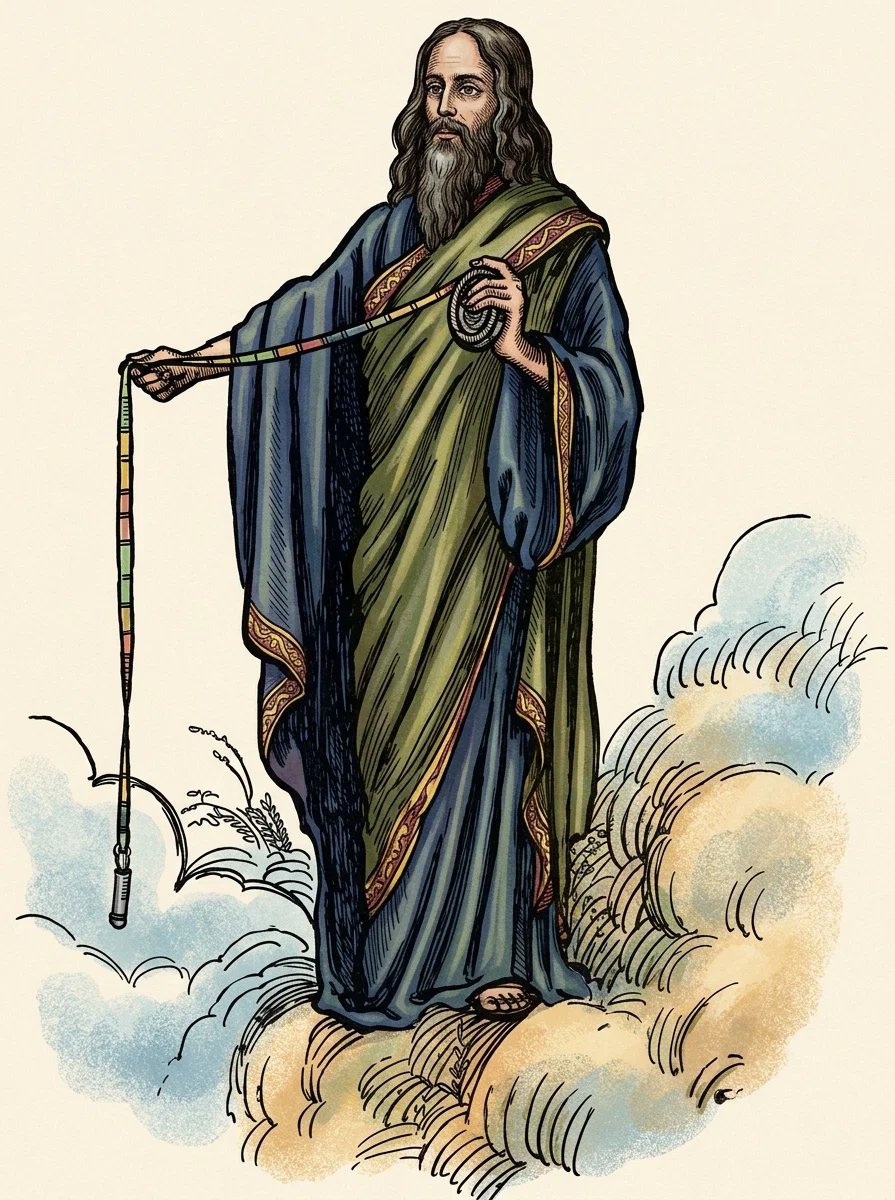
“I lifted up mine eyes again, and looked, and behold a man with a measuring line in his hand. Then said I, Whither goest thou? And he said unto me, To measure Jerusalem, to see what is the breadth thereof, and what is the length thereof. And, behold, the angel that talked with me went forth, and another angel went out to meet him, and said unto him, Run, speak to this young man, saying, Jerusalem shall be inhabited as towns without walls for the multitude of men and cattle therein.”
The prophet sees a man about to measure, or lay out, the city of Jerusalem. This young man represents the children of Israel who had returned, and were engaged in rebuilding the city. The angels are interested in it. They meet and converse concerning it. They observe all that is being done.
They know that the boundaries which the people are marking out will be the site of walls which they will construct about the city. They know that these walls, when built, will be the chief reliance of the people for defense. But God should be their defense. “Glorious things are spoken of thee, O city of God.” But these walls will lessen the faith and trust of the people in God, and this lack of trust and faith will limit the manifestations of His power for them. The angels are anxious. “Run,” says one to another, “tell this young man. Jerusalem shall be inhabited as towns without walls for the multitude of men and cattle therein; for I, saith the Lord, will be unto her a wall of fire round about, and will be the glory in the midst of her.” O if the people could only grasp what God has for them! if they could only realize what He wishes to be unto them!
Then follows an earnest, stirring appeal to Israel in general. “Ho, ho, come forth, and flee from the land of the north, saith the Lord; for I have spread you abroad as the four winds of heaven, saith the Lord. Deliver thyself, O Zion, that dwellest with the daughters of Babylon.” Medo-Persia, as the successor of Babylon, is here spoken of as her daughter. “After the glory (or in accordance with His glorious plan), hath He sent me unto the nations that spoiled you, for he that toucheth you toucheth the apple of His eye.”
If Israel would but arise, and gird on her strength: if she would but clothe herself in the panoply of God; if she would but rally, and keep step with the marshalling strains of music which come to her from the band of heaven; if she would but allow the cloudy pillar to lead her, and the glory of the Lord to be her rearward; then even her masters would become her servants. Then God would dwell in her midst, and many nations would join themselves to the Lord to share the blessing of Abraham, and God would enter into His inheritance. But they went on, and built the walls, and then trusted4in them, and forgot God their Saviour, and limited the holy one of Israel, until God’s purpose for that people miscarried. But will it never be carried out? Will the enemy of peace always triumph? Will the reign of the King of Israel never begin?—It will be carried out. The enemy shall not always triumph. The reign of peace shall begin; for God’s purposes are eternal. “For the earth shall be filled with the knowledge of the glory of the Lord, as the waters cover the sea.” Hab. 2:14. “And the kingdom and dominion, and the greatness of the kingdom under the whole heaven, shall be given to the people of the saints of the Most High, whose kingdom is an everlasting kingdom.” Dan. 7:27.
In view of this fact the chapter closes with the solemn admonition, “Be silent, O all flesh, before the Lord: for He is raised up out of His holy habitation.” As we realize that God is raised up, that He has taken to Himself His great power, and is about to reign, let us be silent, listening to hear His voice, that we may know and do His will, and have an abundant entrance into His glorious kingdom so soon to be established.
[“The Experience of the High Priest” (chapter 3) is the subject of the next article.]