THE CITY OF THE SUN

9%

Pacific Press Publishing Company · Oakland, California · Sep 3, 1902

FromSigns of the Times, Vol. 28, No. 36.

Read the full edition

“THE CITY OF THE SUN.”

ONE of the oldest and most famous of the cities of Egypt was situated in lower Egypt, just at the beginning of the great Nile delta. Its civil name was An; its sacred name was Pe-Ra, the “house of the sun.” It is called in Gen. 41:45, 50; 46:20, by the name of On, and in Jer. 43:13, Beth-shemesh, the Hebrew for “the house of the sun.” The Greeks called it Heliopolis, “the city of the sun.”
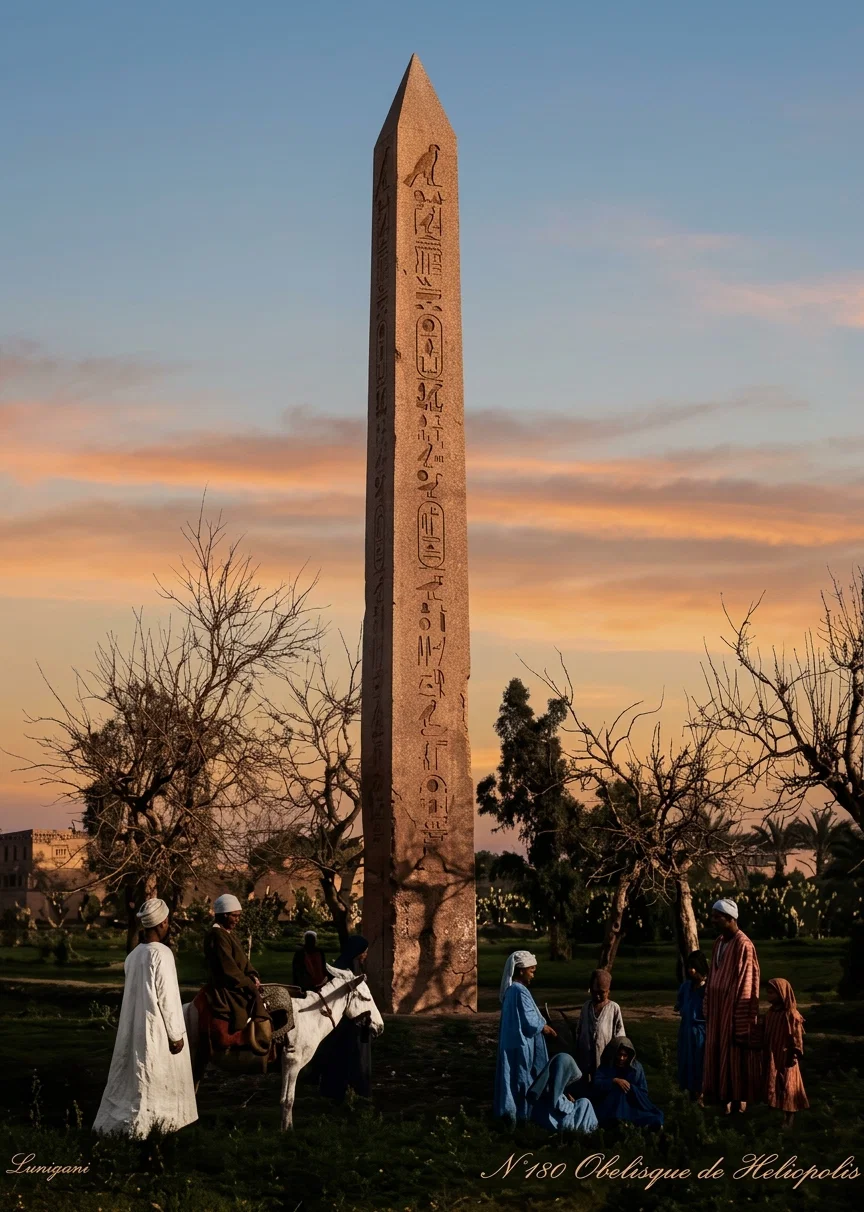
Obelisk of the Temple of the Sun, in Ancient On, Egypt.
THE city was noted for three things: (1) It was the great famous center of sun-worship devoted to the sun-god Ra. (2) Here was the “University of Egypt,” including a school for priests devoted to sun-worship, and a noted medical school, also connected with the sun temple. (3) Its many obelisks, the peculiar symbols of the sun-god. Most of the obelisks (often erroneously called Cleopatra’s needles, with which she had naught to do) taken to Europe have been taken from On. To these schools came the Greek Plato and other philosophers; and the magnificent sun-temple is the only Egyptian temple of which a Greek writer has given us a description. Here dwelt “Potipherah, priest of On,” the father-in-law of Joseph. Gen. 41:45.
THIS old idolatrous worship was founded on the perversion of the true. “God is light; and in Him is no darkness at all.” The sun is but one of God’s mediums in giving light to the world. Men, refusing to know God as the Giver of light and life, solely because of His inherent righteousness, shut from their hearts the knowledge of the Creator by the worship of the creature. The carnal heart did not love the righteousness of God. It preferred the lusts of the flesh to the love of righteousness. It deified the sun as the father of all, as the minister of the procreative powers of nature used not to glorify God, but to satiate lust. Hence sprang the basest and most licentious of all, nature-worship, condemned everywhere in the Word of God, and always as among the worst. (See Ezekiel 8.) No other worship so took hold upon the perverted sexual elements of humanity; and this baseness was consecrated and glorified as acceptable religion. “When they knew God, they glorified Him not as God.” Rom. 1:20–25.
THE education of Egypt was founded upon what was once a true basis. Surely who should seek to be illuminated more than the priest, the minister to the souls of men, the representative of God. Many of them may have seen beyond the creature to the Creator.
Doubtless some of them did look beyond the soulless forms to Him who dwelleth in the light; but they grew fewer with the years, till Egypt became a symbol and synonym of spiritual darkness. There is healing in the light, healing in the sunlight; and where better could be located a medical school? But this branch of science was in the same gross bondage, and the light became darkness, the healing became disease, till nothing in physical ills could be worse than the diseases of Egypt. (See Ex. 15:26; Deut. 7:15; 28:60.) In the first of these scriptures the deplorable result in physical ills from Egypt’s transgression is set in contrast to the healing of Jehovah upon those obedient to His laws of righteousness, His statutes of life.
THE obelisks of Egypt are symbols of the grossest phases of sun-worship; and they are also evidences of the sacrifices which men will make, of the time and money they will expend to gratify carnal lust. These obelisks were red or pink granite monoliths, or single stones. They ranged in height from seventy feet to one hundred and eight feet, and from twenty-five feet in circumference to thirty feet and over. The largest at Karnak weighs two hundred and sixty-seven tons. All of them were taken from the quarry, brought down the Nile in great barges, lifted from the barges to wagons, and in some casestransported a hundred miles overland. They were then placed upon foundation mounds and pedestals, raising them from one hundred and twenty-five to one hundred and fifty feet high. The one in our illustration is all that is left in On. It was one of two, Rawlinson tells us, that stood before the entrance of the temple of the sun, at the inner end of an avenue of sphinxes. Its apex was once covered with a casing of gilt bronze.
BUT On, or Beth-shemesh (“the house of the sun”), is now in ruins, and the one obelisk, or pillar, stands alone of all its magnificent monuments, covered with idolatrous inscriptions, emphasizing the utter ruin and destruction of every system of worship which puts the creature, however bright and shining it may be, in the place of the Creator. The prophecy of Jeremiah (43:12, 13) has received fuller fulfilment than predicted of Nebuchadnezzar: “He shall break the pillars [margin, “obelisks”] of Beth-shemesh, that is in the land of Egypt; and the houses of the gods of Egypt, shall He burn with fire.” When these mighty monuments were erected, Egypt was one of the greatest of earth’s empires; now we see fulfilled in her the prophecy of Ezekiel (29:15): “It shall be the basest of the kingdoms; neither shall it any more lift itself up among the nations; and I will diminish them, that they shall no more rule over the nations.” Thus will it be with every nation, every soul, which perverts the truth of God into a lie.
“GOD is light.” The sun is but a symbol of His glorious presence; a manifestation of His mighty power. It should lead man to worship, not the shining orb, but the Creator who made and appointed it. “God is light,” and He would illumine the souls of all His children. He wishes to be honored here, not by dead stones, howsoever magnificent they may be in their cold grandeur, but in living temples of light; in living witnesses to His power; in souls recreated from the darkness of nature to the light of God; in light-bearers that more than shine and coruscate in borrowed splendor, but that give warmth and hope and cheer to those in the great cold world. Such souls will honor God. One such is worth infinitely more to point the way heavenward and uplift the world than all the obelisks which in Egypt pointed skyward. Men wander far to see a few of the latter; God abides with the former.