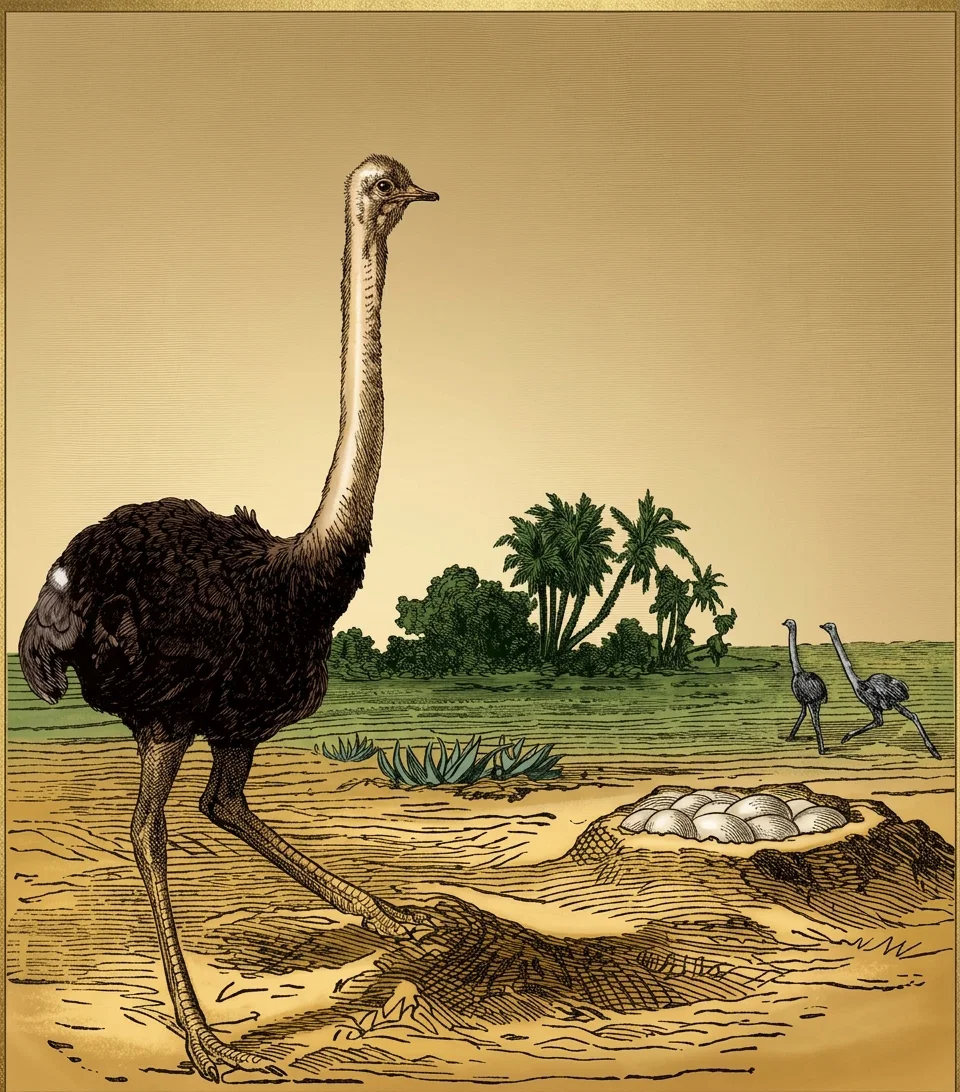
Those interested in matters curious will find much to their taste in an account of a new California industry, written by Ernest Horsfall Rydall, in the May Era. Any one thinking of raising ostriches will be glad to know that the care of the ostrich is a very easy and inexpensive matter. An ostrich has to be kept four years before it arrives at adult age; it may then be expected to yield annually about thirty dollars' worth of ostrich feathers to the owner. Feathers are obtained from the ostrich even at the age of one year, but these are of small value. The cost of the keep of an ostrich is no more than that of a sheep; so that a farmer of very limited experience can easily figure the cost of a flock of ostriches. The balmy climate of California permits the birds to remain in the open all the year round. The feathers are always in demand, and range in value from ten to a hundred dollars a pound. No more easy occupation can be entered into, and few more profitable in the raising of live stock, than the raising of the domesticated ostrich. Ostriches live to the age of about sixty years; it has been found that the climate of the Pacific States south of Cape Concepcion is admirably adapted to the African ostrich, the Struthio camelus. Constipation is, perhaps, the only malady to which adult American ostriches are subject; this can be easily rectified by the well-known methods practised by the ostrich farmers of the Cape. On the nourishing alfalfa that grows so readily and so plentifully in California the ostriches thrive; they will eat all kinds of grain and vegetables. Common opinion has it they will eat anything; while the temptation naturally is to feed the ostriches in California upon anything that may be of low value in the produce market, yet the experience of the average American ostrich farmer so far has been that the better the ostriches are fed the better egg-layers they become. The digestive powers of the stomach of an ostrich are proverbial from remote times, and modern statements are that cigars, newspapers, and miscellany of the most varied description have gone successfully into the stomach of an ostrich; but this is all exaggeration, altho of course ostriches do require a certain amount of gravel to assist digestion, as do other birds. Second-class oranges, beets, the refuse of wineries, and other things not suitable for other cattle, can be safely and profitably used to sustain the ostrich.