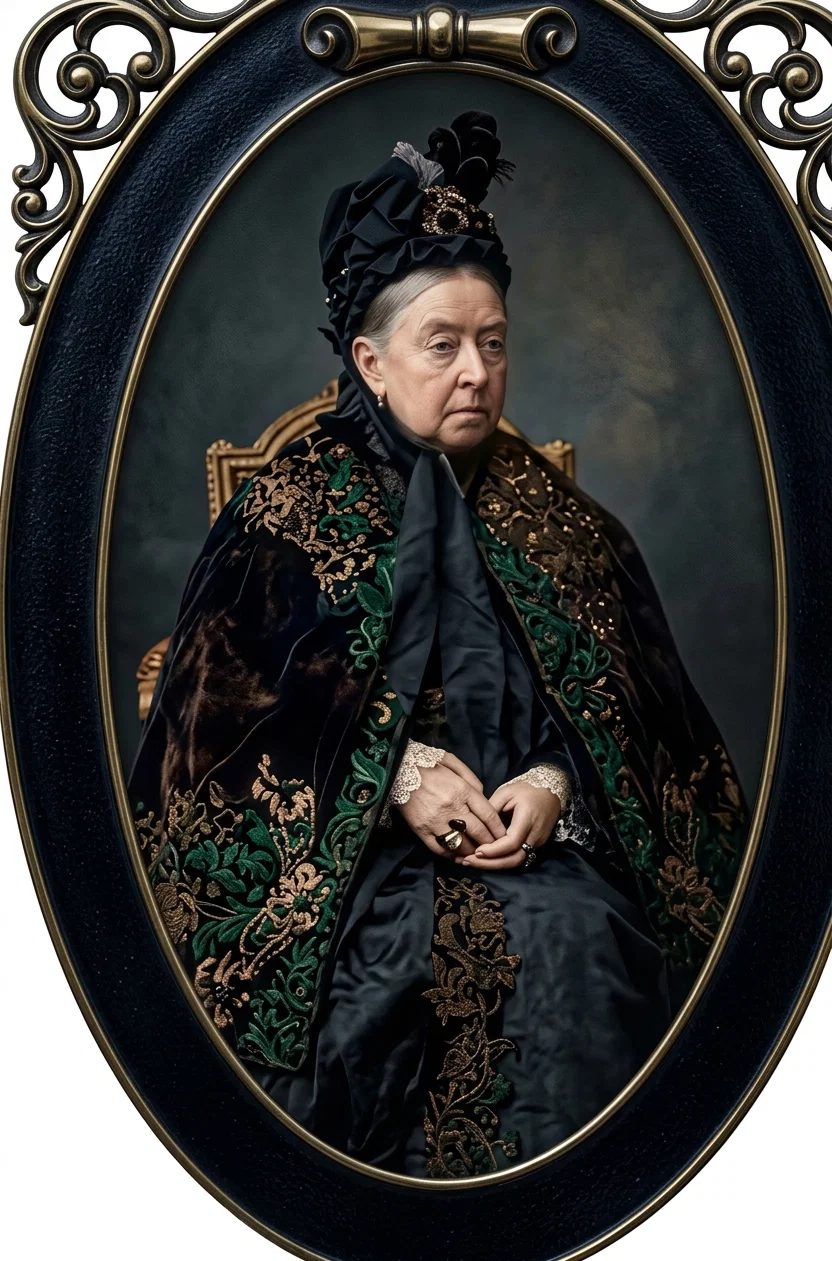
On the death of her uncle, William IV., King of England, Victoria, only daughter of the Duke of Kent, succeeded to the throne. She was proclaimed June 21, 1837, and was crowned on June 28, 1838, being then nineteen years of age. On February 10, 1840, took place her marriage to his Royal Highness Albert, Prince of Saxe-Coburg and Gotha, who died in 1861.
Victoria Hall
Perhaps no country in the world has had a more marvelous growth and development in the same length of time than did the British nation from the time of Victoria's coronation to the time when death took the scepter from her aged and weary hand, placed the seal upon her life-work, and closed her forty years of widowhood. No sovereign was ever more beloved by the people of his realm than Queen Victoria, and none has ever received more general respect and honor from the people of other nations and languages. Her reign was remarkable both for its length and for the growth and progress of the nation during its continuance. She had seen fifteen successive parliaments elected, had dealt with a score of different ministries, under the leadership of ten different individual prime ministers. She had seen five Archbishops of Canterbury and six Archbishops of York in office. Lord chancellors and chief justices had come and gone, and two generations of men, dispensing justice in her name, had passed away. British authority had reached out over India, Egypt, Australasia, and a multitude of the islands of the sea. In it all her personal influence was continually exerted for progress and peace. Had it not been for this strong influence, it is certain that England would have had many expensive and bloody wars on her hands. It is a sad fact that her collapse was hastened by what she had hoped would never come, the clash of arms in South Africa. Her death occurred Tuesday afternoon, Jan. 22, 1901, when she had reached the age of 81 years, 7 months, and 28 days. Thus closed one of the most illustrious reigns in history. The day following her death, Albert Edward, Prince of Wales, was proclaimed king.
With pomp and ceremony and regal rituals, England's king will take the coronation oath on the 26th day of the present month. It has been many years since Old England has witnessed the oath-taking and crowning of a ruler, and she will make the most of it. Foggy London will wear the gayest dress her decorators can fashion; while upon that day and the day following her streets will resound with the clatter of cavalry, the heavy tread of armed men, the long roll of the military drums, the booming of cannon, and the inspiring strains of the grand coronation march.
Democratic England is going to crown a king, and the world must know about it. England herself must realize that it is no unimportant event that is taking place on that date. England spent $350,000 on the coronation of Queen Victoria; but that was sixty-four years ago—longer than the great majority of her population has lived. There have been many expensive coronations since the nineteen-year-old Victoria took the reins of government over Britain and her dependencies; and the coronation of Edward VII. will be one of the most expensive. Three hundred and fifty thousand dollars would pay but a small part of the expense to be incurred in this coronation. The cost, as represented in the civil service estimate, is placed at £1,000,000, or $4,888,000. What it will cost those who see it and take part in it is an item impossible to estimate; but it will mean an enormous amount in the aggregate. The ceremony is expected to be one of the most imposing spectacles ever witnessed, and many will spend small fortunes in connection therewith, either in participation or in attendance.
Edward VII., son of Victoria and the Prince Consort Albert of Saxe-Coburg and Gotha, was born Nov. 9, 1841, and is thus in his 61st year. He takes the title of his father as Prince of Saxe-Coburg and Gotha; is Duke of Cornwall; Duke of Saxony; Duke of Rothsay; Earl of Chester, Garrick, and Dublin; Baron of Renfrew; and Lord of the Isles. His ancestry is traced back on his mother's side to the House of Guelph and on his father's side to the House of Wettin. He was married in 1863 to the Princess Alexandra of Denmark. So the oldest king in the world is now the father-in-law of the newest crowned king, who was older, perhaps, at his coronation than any king with whose name we are familiar.
When Victoria became the Queen of England, she was not yet Empress of India. She did not get that title until the year 1877. She was not ruler of India in fact until 1855. Australia was just beginning to blossom out as a colony when Victoria came to the throne. Egypt was not under the governing hand of England then, and Canada had made but little progress at the beginning of her reign. There has been a marvelous development between the date of the coronation of Victoria and that of her eldest son, Edward VII. He comes upon the throne of a kingdom numbering 395,319,560 persons. At the beginning of her reign the English language was spoken by about 25,000,000, while the number speaking that language now is over 124,000,000. This is the most marvelous growth recorded in any language. Its growth is so universally recognized now that English is fast becoming the polite language of Europe. The wooden war-ships with which England was then protecting her interests have given place to the mightiest steel navy in the world, consisting of 956 vessels of all classes, exclusive of obsolete ships. With this great progress it naturally follows that England must occupy a most influential place among the sisterhood of nations and exert a powerful influence.
No nation with greater or more varied interests was ever ruled over by man than the nation whose ruler Edward VII. becomes formally on the day when he takes the coronation oath. These are doubtless some of the considerations which have influenced royalty to make of this coronation one of the most memorable spectacles in the history of the world. The gems and robes of the king and queen, peers and peeresses, official attendants and foreign representatives, will make it a scene of uncommon splendor. Ermine and precious stones are now commanding the highest prices, and10every part of the earth is being searched for the precious white fur. There is even now complaint in other countries that the finest pearls in the world are being sent to London. As a result, the price of gems has risen to unprecedented figures in other parts of the world. It is stated that a peer and peeress can not obtain a coronation outfit for less than $2,500.
The coronation ceremony will take place at eleven o'clock on the morning of June 26 in Westminster Abbey. The choir will sing, “I was glad when they said unto me, Let us go into the house of the Lord.” The peers and peeresses will be seated on either side of the coronation chair. The clergy, robed in purple and gold, and white and black, with scarlet hoods falling on their backs, will stand in the middle of the nave, awaiting the king's entry. The knights of the Order of Chivalry will be marshaled to their places, and the standard-bearers will take their stations beneath the grouped standards. The king enters, with the barons of the five old Norman ports holding over him the canopy of state. Two bishops walk at either side of the king. After kneeling in prayer at the altar and taking the coronation oath, the king will take his place in the ancient coronation chair, over the celebrated Stone of Scone, over which all British rulers have been crowned since 1272, and over which the rulers of Scotland and Ireland had been crowned previous to that date. Four Knights of the Garter hold over the king's head a canopy of cloth of gold, and the Dean of Westminster pours from a vessel called the ampulla some of the scented oil into a golden spoon. With this the archbishop anoints the king, pouring a few drops on his head, a little on his hands, making the motion in the form of the cross. Then the king kneels and is blessed by the archbishop with uplifted hand. The mantle of cloth of gold is placed upon the king's shoulders, and he is girt with a sword, and spurs are placed upon his feet. After other curious and quaint ceremonies, the orb, a globe of gold ringed with gems and surmounted by a cross, is placed in the right hand of his majesty, and a ruby ring is put on his fourth finger. Then the orb is taken away, and two scepters are placed in the king's hands, the one surmounted by a cross and the other by a dove.
After all this, there comes the ceremony to which the foregoing has been but the prelude. The archbishop, with the crown of St. Edward before him, asks a blessing over it, the group of clergy approach the king, and the Archbishop of Canterbury places the crown on his head. The peers put on their coronets, the trumpets sound, the cannon boom, and a powerful choir takes up the anthem, “The king shall rejoice in thy strength.” A crown is then placed upon the head of the queen consort, and the peeresses don their coronets. The coronation completed, the Bible is placed in his hand as his most precious possession. And the world can express for him no better or truer good wish than to hope that it may be so.
Tho the coronation is ended, the great spectacle for the common people has not yet taken place. The grand procession will occur on the following day, and will probably equal in magnificence any pageant of the kind that has ever been looked upon by man. Seats to view the procession on that day will be very expensive. Many will pay more than a thousand dollars for the use of a window commanding a view of the parade.
Tho the king of England is not an unlimited ruler, there is no man in the world whose political responsibilities are greater, or who can wield a greater influence by his personal example. May a sense of those responsibilities and of that influence rest upon the new-crowned King of Great Britain and Emperor of India.