CHRISTIANITY IN JAPAN

5%

Pacific Press Publishing Company · Oakland, California · May 28, 1902

FromSigns of the Times, Vol. 28, No. 22.

Read the full edition
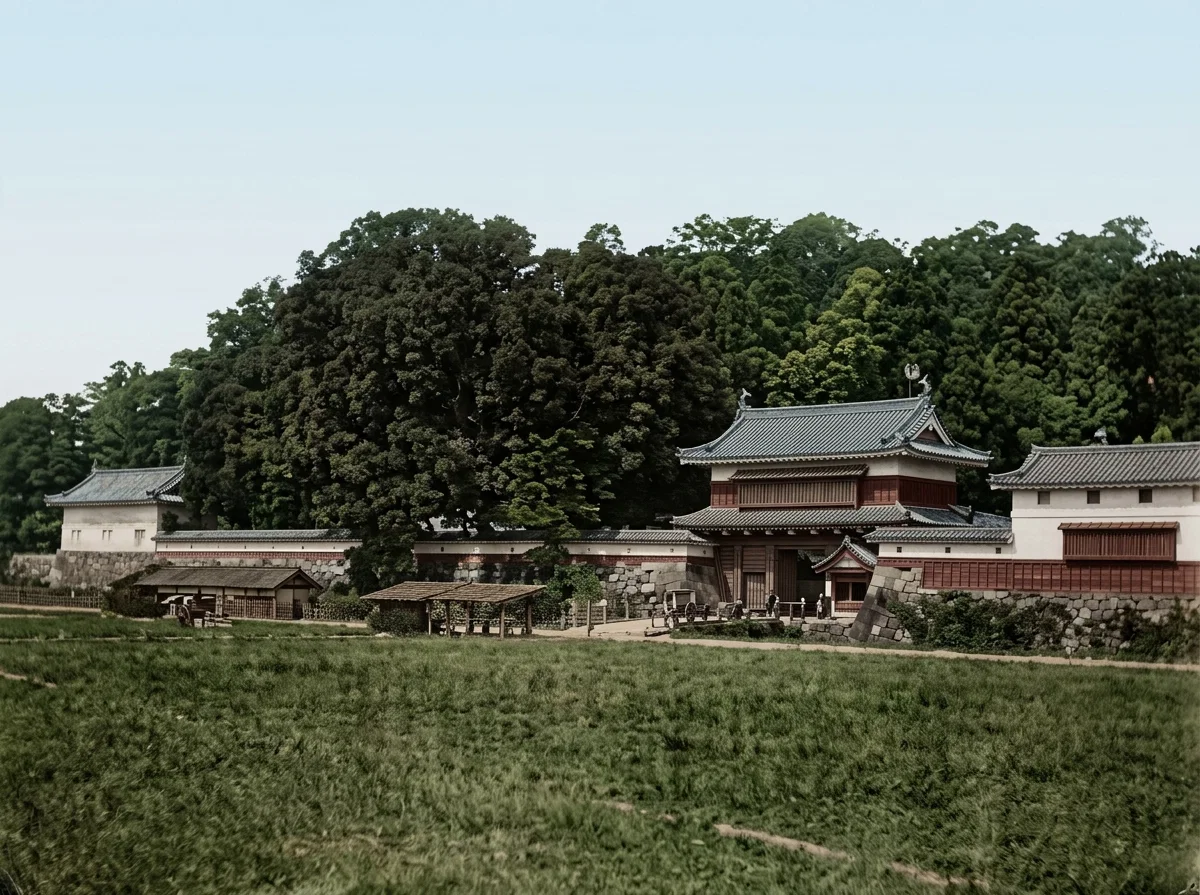
Entrance to an Ancient Castle.

CHRISTIANITY IN JAPAN.

JAPAN has made wonderful progress in a very short time, and has undergone a great change. Half a century ago Japan was almost unknown to other nations; now she is coming up to be the foremost nation of Asia, and is claiming equality with the powerful nations of to-day. The Japanese are active, ambitious, and progressive; and so since they began to have intercourse with civilized nations, they have been making energetic efforts to improve in every direction, pushing out to learn and adopt whatever is thought profitable.
The reader may wonder why the Japanese, being so progressive, and so willing to make their own all learning and arts of civilization, are so conservative in religious matters. But there are many influences that tend to make the progress of Christianity in Japan very slow. The Japanese have not much creative genius; but they have an excellent ability to adopt from others what is good and profitable, and to improve it and make it their own. In ancient times, when Japan subdued Korea and made it tributary, and invaded a part of China, she brought in, as a result, Chinese civilization. She called in Chinese scholars, artists, and artisans, and she sent students to their country to be educated.
With Chinese science and art came Chinese religion; for Buddhism came also. Its first convert was the crown prince. Shintoism (the religion of the gods), founded on the Japanese mythology, and making the emperors descendants of the sun goddess, is the original religion of Japan. So when Buddhism first entered, it had to contend with the established religion; but as the noble prince was at its head, it soon found its way to the hearts of the common people. Thus Chinese civilization and religion were imported into Japan.
When, fifty years ago, Japan was awakened from her slumbers by the visit of Commodore Perry, she freely opened all her seaports to foreign nations. Then the nation began to struggle with many difficulties and perplexities; and the people, in their attempts to adapt themselves to the new conditions, have made many social revolutions in rapid succession. Where now is the Japan of the samurai (soldier caste), with their cued hair and with two swords by their sides? Now it is only to be imagined. The Japan of four castes,—soldier, farmer, artisan, and merchant,—is gone, and the premiership is now open to the ambition of every youth. The government has sent and is sending many students to Europe and America. And Japan, that twelve hundred years ago imported civilization from China, is now learning of the civilized nations of to-day, and is earnestly pressing into the ranks to be counted with the great nations of the world.
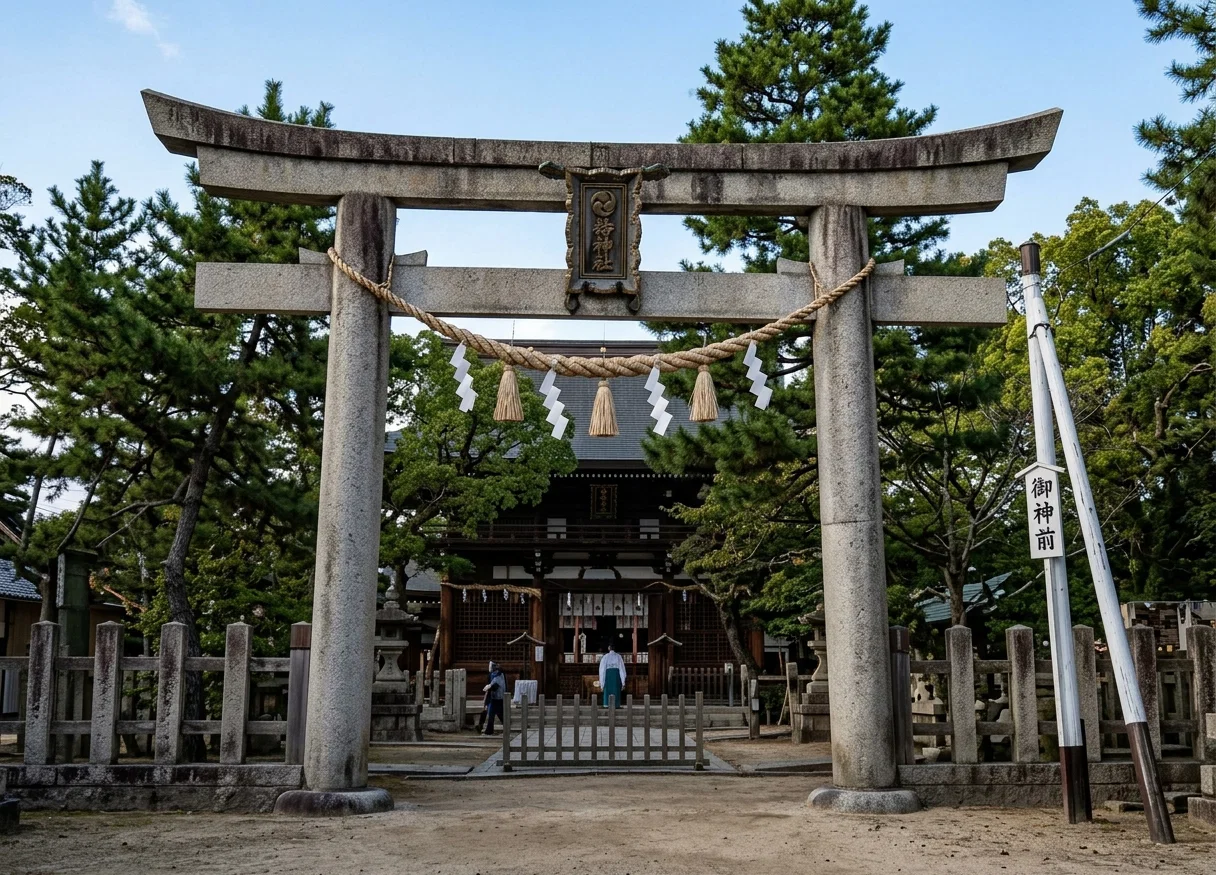
Entrance to a Shinto Temple.

Christianity Misunderstood.

This being the case, as Buddhism entered with Chinese civilization, it would seem the natural course for Christianity to enter with the tide of Western civilization. But unfortunately Japan had long misunderstood Christianity; and when Protestant missionaries first came here, they had to meet a strong antipathy and bitter prejudice. The common people hated Christianity as a pest, believing Christians to be magicians and sorcerers, and the government checked the propagation of the new faith.
There is nothing in Japan so misunderstood as Christianity. But there is a reason for this. A little more than three hundred years ago, Catholicism, under its famous missionary Xavier, entered this country. Nobunaga, who was then regent, favored the new religion. He donated to it, and built a large temple, which he named the South Barbarian Temple; and it is said that in a short time there were 400,000 adherents of the Catholic doctrines.
But the Catholic priests aspired to grasp political power, and the next regent, Hideyoshi, became very suspicious of their intentions. About this time a Portuguese ship was wrecked near the coast, and some sailors were rescued. Hideyoshi treated them kindly; and when he asked them how Portugal became so great a nation, one of them answered, either intentionally or carelessly, that their country sent missionaries first, and after turning the minds of the people, took their country. This confirmed the suspicions of Hideyoshi, and he determined to suppress Catholicism; but he died in the attempt. Tokugawa, the regent succeeding him, pursued the same policy toward Catholicism; and its adherents—men, women, and even children—were killed with cruel tortures, such as burning and crucifixion. Japan had many martyrs, for whom the Catholic Church takes glory. Some leading men, fearing the same fate, openly rebelled against the government. This intensified the hatred of the government, and made it more bitter. Small metal crosses were made; and to test their faith, people were allowed to tread upon them. If any dared not trample on them, the government knew they were “Kiristan,” as Christians were called; they were then persuaded to change their faith, and if they would not be persuaded, were killed. When a man wished to hire a maid or a servant, a certificate was given him, stating that she or he was not “Kiristan.” By such means the government long sought to root up this unwelcome faith; and the idea that “Kiristan” is a hateful thing permeates the mass of the people.
Catholic priests seem to have made a liberal use of science to do wonders in the sight of the ignorant people. Even now, in the country, where civilization is not so far advanced as in the centers of learning, when the people see some strange thing which they can not understand, they say, “That must be Kiristan magic.”
Japan is surrounded by water; and the people, having an adventurous spirit, would have entered into close relations with European nations long ago, but for the “Kiristans.” Fearing their influence, the government took a shut-door policy, strictly forbidding people to build large ships. The idea was cherished that Japan was a god-favored nation, and the strongest in the world. And being thus ignorant of the outer world, it is no wonder that Japan was very much astonished, when, half a century ago, a greater power than she called upon her, and pressed her to open her ports.
The government knew no difference between Catholicism and Protestantism. And when Japan opened her seaports to other nations, what to do with the Christians became a difficult question to solve, for Protestant missionaries were soon on the ground. At first the government posted up notices everywhere, telling the people that Christianity was positively forbidden; but these notices were reluctantly taken down for fear of incurring the ill will of other nations. With close intercourse with other nations and a better understanding of them, the fear of Christianity vanished; but the prejudice against it is not dead yet.

A Decline.

For the purpose of propagating the truth, Christian schools were built everywhere, and they were filled with ambitious students, thirsting for the European learning. Christian workers were very hopeful, and their work flourishing. When I started for the United States thirteen years ago, I remember that every church had a very good attendance. And I soon heard that the popularity of Christianity was so great that the churches had overflowing audiences, while many stood outside to listen. Compared with that time, the churches have all experienced a very sad fall.
One reason for the great change is that the Japanese have a tendency to go from one extreme to another. Much, I think, is to be imputed to errors of missionaries, who, elated with their apparent success, were too busy working for the conversion of the whole nation to give the necessary care to individual believers. Then when Japan conquered China, she became vainglorious, and thought in her heart, What is the help of God? We can be a great nation without Him. And whereas Japan once thought she must become a part of Christendom to be reckoned with the civilized nations, she now feels that she has many reasons to be proud of the name heathen. For these reasons Japan has thrown aside Christianity.
S. HASEGAWA.
(To be continued.)