How are Your CHEWERS?

3%

Pacific Press Publishing Association · Mountain View, California · Apr 3, 1928

FromSigns of the Times, Vol. 55, No. 14.

Read the full edition

How are Your CHEWERS?

How are Your CHEWERS?
Roy O. Williams, D. D. S.
The teeth really should be classified among the vital organs of the body, for disease there soon affects the entire system.
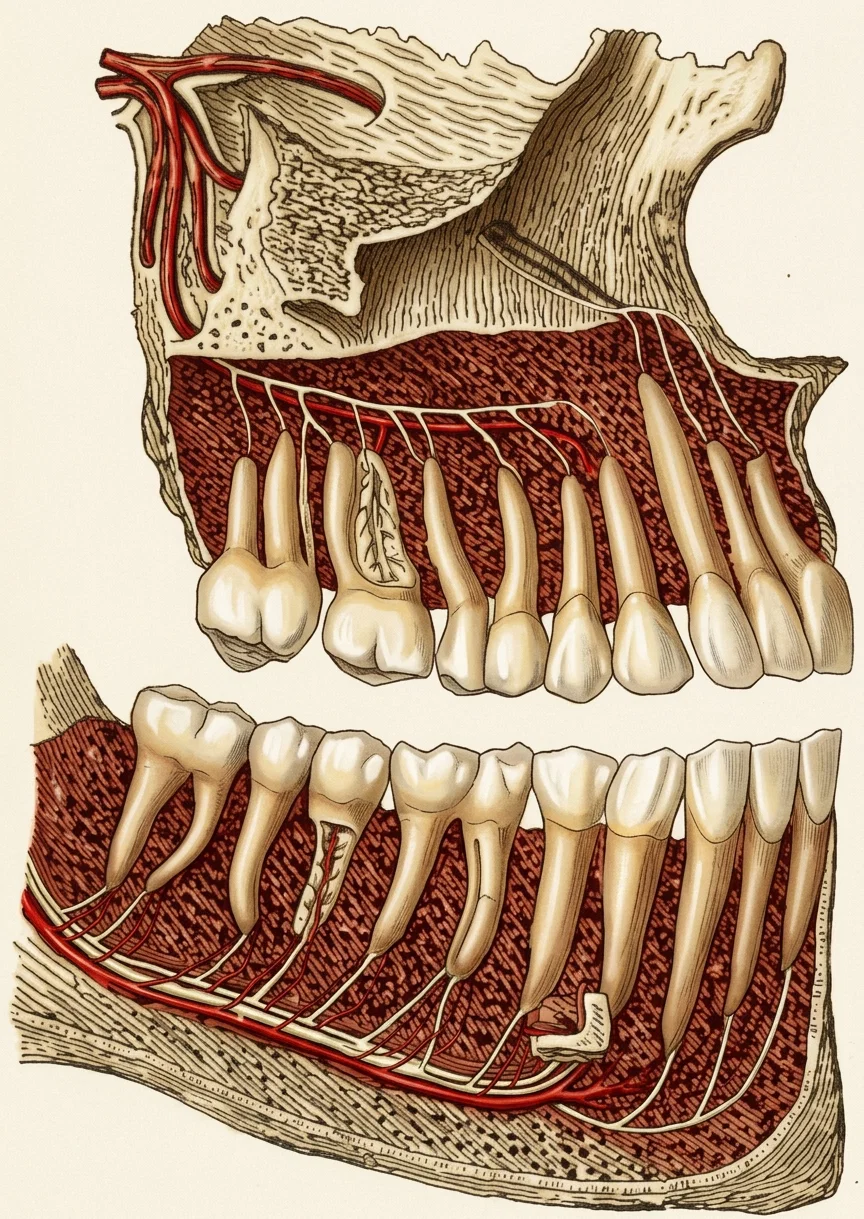
MAN has been provided with a wonderfully efficient chewing organ. As a mill for shearing and grinding natural foods it is a masterpiece of engineering. Every little curve on the surfaces of the teeth has a scientific reason for being just so. The way food is distributed over the teeth by the action of tongue and cheeks, the strength of the muscles of mastication, the coordination between the joints of the jaw and the chewing surfaces of the teeth, the emptying of saliva at the most convenient points for distribution, and many other features of the mouth that space does not permit of mention are too wonderful to have just evolved or happened so. And, would we be provided with such a machine showing infinite wisdom in every detail of its design were it not a necessity to our health?

LOW CHEWING EFFICIENCY

In the clinic of my employment I see many semi-wrecked mouths. Along with other data, the percentage of chewing efficiency of every patient is estimated; the figures being arrived at largely by the number and position of teeth that meet. What do we find? The large majority of patients who have not had more than 60 per cent chewing efficiency for several years are majoring in stomach and intestinal complaints.
Such people have to live on soft foods, as their stomachs soon get so they can not handle coarse foods improperly chewed; and in time they rebel against everything. The whole alimentary system needs just what the teeth and gums need, something to exercise them. Exercise is one of the requirements of life that will not be ignored forever; and how else can our digestive system get exercise, but through coarse and bulky foods? When mouths are put in condition to handle such foods, we frequently see the patient secure a new lease on life.

DETECTING PYORRHEA

Pyorrhea is responsible for more wrecked mouths than all other causes combined. It is a disease of the investing tissues of the teeth (bony process and gums) that earnestly invites your investigation, it being so destructive, so prevalent, so easily prevented.
The early beginning of pyorrhea may be easily recognized from the appearance of the gums. In the healthy mouth the gums are of a light pink color and hug the teeth tightly, tapering off to meet them in a sharp margin. Early symptoms of pyorrhea are the gums between the teeth showing a swollen and puffy condition and a dark red color, and bleeding of the gums on regular brushing. Looseness of the teeth is a later symptom, appearing at a time when in many cases it is too late for a satisfactory arrestment of the condition. X rays are an aid in diagnosis.
The possibility of a cure lessens in direct ratio to the advancement of the disease. Only incipient and slightly advanced cases may ever be considered cured, in the sense that we speak of a broken arm or leg being cured—the parts returning to a condition as good as normal. If not too far advanced, the pyorrhea may be “arrested,” and the teeth do good service for a long time with proper care.

THE CAUSES CLASSIFIED

As in other diseases, the cure of pyorrhea is dependent upon the removal of its causes. The causes, according to the understanding of the writer, may be classified as follows:
  1. The germs in the mouth
  2. Lowered general tissue vitality
a. Unhygienic living b. Systemic disease c. Senility 3. Lowered local (mouth) tissue vitality a. Faulty occlusion of the teeth b. Gum irritants, such as calculus, and overhanging fillings or crowns c. Lack of exercise of the chewing organ
Food remaining around the teeth invites the rapid multiplication of germs. Pyorrhea is an instance of lowered resistance (vitality) of tissue plus germs equaling disease. There are no germs common to pyorrhea, so far as known, that may not be found in the average mouth, and there are sufficient germs in the average clean mouth to cause pyorrhea in the presence of lowered resistance of tissues. Hence the importance of treating pyorrhea by raising the vitality of the tissues involved, although keeping the mouth scrupulously clean to lower the number of the involving germs will always remain a first consideration in allaying the disease. The chewing of coarse foods and natural foods is all-sufficient for the cleaning of the ideal mouth. The additional intelligent use of the toothbrush, however, is indicated when such food is not eaten, when teeth have not been put in an ideal condition of repair, and especially in the presence of pyorrhea.

BLOOD AND CIRCULATION

Low tissue vitality is caused by either poor blood or poor circulation, or, as in many cases, a combination of the two. The treatment to bring up tissue vitality and resistance is directed toward stimulating good end-circulation of good blood. By end-circulation is meant the flow of blood into the finest capillaries in the end tissues, that is, those nearest the outside. Such a circulation of healthy blood readily combats disease, through the activity of the white cells, called “the little soldiers of the blood.”
The importance of general measures in treating pyorrhea is obvious. That which affects the circulation of the whole affects that of the part. In some cases improvement in the circulation and quality of the blood is the only treatment necessary for pyorrhea.
One patient told me that the “run around the block” that he took every night he thought did his pyorrhea more good than anything else. Exercise, tonic water baths, sun baths, air baths, and a general hygienic routine of living are more important measures in curing pyorrhea than any highly colored medicine one can use on the gums.
Systemic disease is a common cause of pyorrhea. This is especially true of the diseases influencing most the quality of the blood and the circulation. Diabetes and tuberculosis are good examples. People so affected are highly predisposed to pyorrhea, and should consider the treatment of their systemic disease the most important phase of their treatment for pyorrhea.
With few exceptions, young people are free from pyorrhea. In fact, it has been called a disease of old age. Age, however, may be measured by tissue vitality; and lowered general tissue vitality is, in the opinion of many, the greatest predisposing factor to pyorrhea. Hence the appearance of pyorrhea may well impress one that man is not immortal, and that the human machine requires a life well conformed to the principles of natural law if it is to last the allotted threescore and ten years. Therefore we must look upon pyorrhea as a symptom, as well as a disease, and advise the early correction of all stresses predisposing old age (unhygienic habits and disease) along with local treatment.
In many cases we find sufficient cause for pyorrhea in the mouth itself. These cases may expect improvement only when the local causes are removed.
The way teeth meet each other in chewing is spoken of as “occlusion.” “Faulty occlusion,” so called, is considered a cause of much pyorrhea. Because of cavities, uncomfortable dental work, unsupplied spaces, and in many instances for no apparent reason, many if not most people chew on one side of the mouth, almost to the exclusion of the other side. Thus the wear is not evenly distributed. The cusps will be longer on the side not used, and the lateral movement of the jaw, tending to conform with the flatter surfaces of the other side, will cause the teeth with the longest cusps to “rock” and thus loosen each other. If you do not know already that you do most of your chewing on one side, have a friend watch you at the table when you are unconscious of your chewing. Dentists can always tell which side is used the most, if either, by the cleanliness of the teeth and the comparative lack of pyorrhea. The secret is also revealed by an overdevelopment of the face on the side that does most of the work. By grinding off a small fraction of the enamel it is possible for dentists to even up on the wear of the teeth.
Gum irritants, such as deposits of calculus and overhanging fillings and crowns, invite pyorrhea. The gums become inflamed, red and swollen, around such irritants; the circulation is congested from the excess of blood to the area; and infection and breaking down of the underlying bone is to be expected. Overhanging fillings and crowns and restorative work of certain types may make the mouth difficult to keep clean, and the often ever-present débris is very nourishing to the many hard-working germs. It is the part of the dentist to remove all such irritants.

OF UTMOST IMPORTANCE

Chewing is of the utmost importance in preventing and curing pyorrhea. If one refused to use his arm, and just let it hang loose by his side, we would expect it soon to become a sick member of the body. Just so with the teeth and gums. Every chewing movement makes the teeth give a little in their sockets, and stimulates circulation in the pad of elastic tissue between the root and its socket. Also the food passing over the teeth scratches on the gums. The gums are poorly supplied with nerves, to allow for this. It is their way of getting exercise. From this we see that our diet should be made up of foods that will require muscular effort in chewing and that will be coarse enough to stimulate the gums. Primitive tribes of people who live on such diets have been found to be 100 per cent free from pyorrhea. The American diet of mashed potatoes, fresh bread, and pudding and pies, is an insult to the wonderfully efficient chewing organ we possess, and it robs it of its needed exercise. Eat more natural foods and raw foods, such as carrots, cabbage, celery, hard bread, nuts, and the like.
It will be found difficult to chew food properly if there are missing teeth, or if spaces have been filled with unsatisfactory restorations, or if food can be forced between the teeth in chewing. The mouth should be put in fine condition for chewing, as a step in caring for pyorrhea, a point which patients frequently overlook because they are expecting to lose all their teeth some day. If it is too late to save them, they should be out and dentures fitted.
To raise the resistance of the mouth to pyorrhea, next in importance to chewing is correct brushing. Only chewing is correct brushing. A stiff brush, and preferably one with bristles set far apart and fairly short, is advised. Brush from the teeth toward the gums. Keep in mind the thought of reaching in between the teeth with the bristles with each stroke.
There are good reasons for recommending this stroke. It has been scientifically demonstrated to clean the teeth more efficiently. It is the direction that food is naturally forced in its excursions in chewing, and the tissues are so built to resist this movement, and respond to its stimulation.
People affected with pyorrhea might well spend five minutes morning and evening brushing their teeth and gums in a systematic manner. Generally speaking, the more gums bleed, the more they need to be brushed. If all gum irritants are removed, after faithful brushing for several weeks, bleeding may be expected to entirely subside. If gums are tender, begin brushing lightly for the first few days. Gradually tone the gums so you can brush harder, and after several weeks, you may be able to brush as hard as you can with the stiffest brush without bleeding; and it may even feel good. You are then getting results.
It is advisable for patients to have two brushes, and use them alternately. This gives them time to dry out thoroughly. Then they will be harder and more efficient instruments for cleaning and massaging. Incidentally, it is economy. It is the continuously moist brush that wears out fastest. A dry brush will last indefinitely.

JUST ORDINARY SALT

Ordinary table salt is a superior dentifrice, and is especially recommended to those having pyorrhea. After brushing, wash out the brush, shake partially dry and press in cup or glass of salt. Then hang to dry in an airy place. The salt will cake on the brush and it will be kept reasonably sterile for the twenty-four-hour period, when next to be used. Salt inhibits the growth of bacteria, and is excellent as a tonic when applied to gums, as well as to the skin. A powder dentifrice may be substituted if the teeth are too sensitive for salt, or used alternately if it proves to remove stain better.
The treatment of pyorrhea should be rational. Reason from effect back to cause, and the treatment should suggest itself. Avoid fads of treatment. The enthusiasm of faddists, if carried into a well-balanced course of treatment, is excellent.
If you are threatened or bothered with pyorrhea, analyze carefully, with the aid of physician and dentist, what are the main and contributory causes in your case. Be content with nothing short of an efficient mouth for chewing, and beware of cooks who have sought out many soft inventions.