TEN

8%

Pacific Press Publishing Association · Mountain View, California · Apr 3, 1928

FromSigns of the Times, Vol. 55, No. 14.

Read the full edition
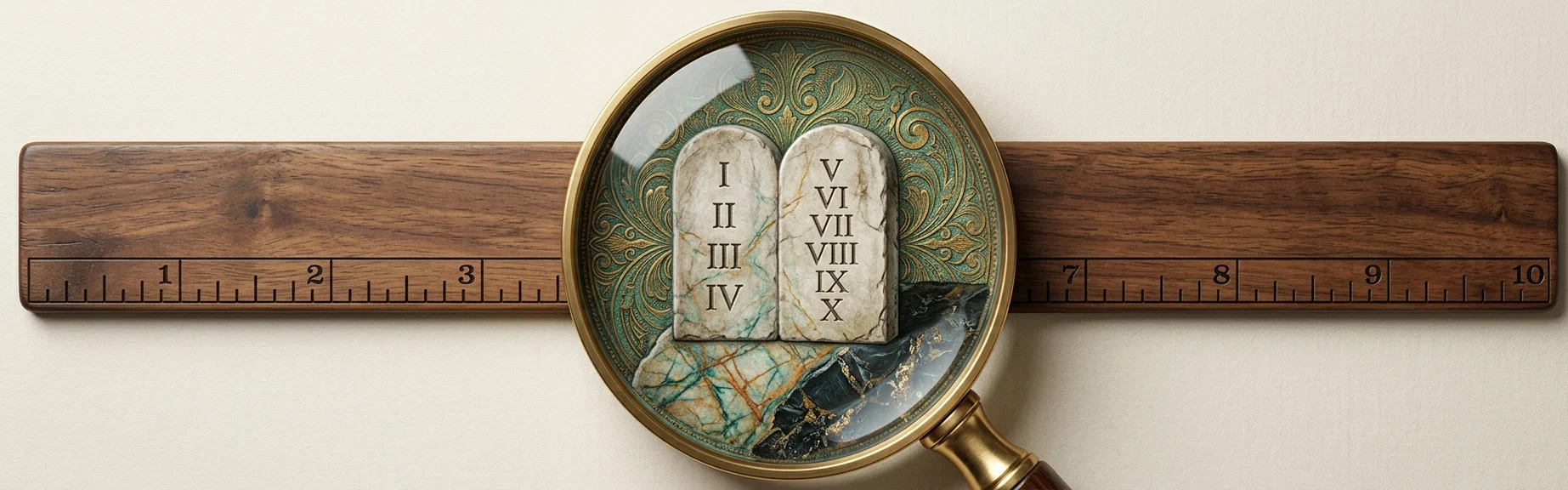
TEN

This word stands in the way of those who declare the Ten Commandments abolished.
ALLEN WALKER
SOMETIMES a very small word in the Bible is a great annoyance to those who wish to arrive at certain conclusions in order to evade an unwelcome truth. The little word “ten,” with only three letters in it, is one of these words.
The little word “ten” stands persistently in the way of those who try to argue that the Ten Commandments are not a distinct and separate law. The apostle Paul says in Ephesians 2:15 that “the law of commandments contained in ordinances” is “abolished.” Seventh-day Adventists hold that the Ten Commandments are a distinct and separate law, and are not included in “the law of commandments contained in ordinances,” which Paul declares was “abolished.” Those who attempt to include the commandment, “Remember the Sabbath day, to keep it holy,” with those which were abolished, contend that the Ten Commandments are in no sense distinct from the others, and that there are not two laws. Let us see:
In Deuteronomy 4:13 we read that God “commanded . . . ten commandments.” Why does Inspiration put the word “ten” there? Why did the Lord speak just “ten” commandments, and then stop? The word “ten” is a limitation word. The law which the Lord Himself spoke contains just “ten” commandments, no more, no less. In Deuteronomy 5:22 Moses was very specific on this point, “These words the Lord spake . . . and He added no more.” Why was it that the Lord “added no more”? There must be some very important reason why the Lord stopped there and “added no more.” It was because He wished us to understand that this was a distinct and separate law.
When God wrote His law later on tables of stone, how many commandments did He write? “And He wrote . . . ten commandments.” Deuteronomy 10:4. “Two tables of . . . stone, written with the finger of God.” Exodus 31:18. “The writing was the writing of God.” Exodus 32:16.
Why did the Lord write just “ten” commandments, and then stop? Because that was all that God wished in this law; ten commandments completed it. If God stopped there, and “added no more,” and the Holy Spirit by the use of the word “ten” limits this law to that exact number of commandments, what right has puny man to “add to” this law the scores of other commandments which the Lord instructed Moses to command?
It is the application of this inspired word “ten” to the language of James 2:10, 11, found in the New Testament, that brings “trouble” into the ranks of the one-law-theory advocates. For when by the use of the word “ten” we have established the truth that the law of Ten Commandments was a complete and distinct law, then all that is necessary to prove that “the whole” of this law is still to be kept by Christians, including the commandment which says, “the seventh day is the Sabbath,” is to read the following language in James 2:10, 11. “Whosoever shall keep the whole law, and yet offend in one point, he is guilty of all. For that law [margin] which said, Do not commit adultery, said also, Do not kill. Now if thou commit no adultery, yet if thou kill, thou art become a transgressor of the law.”
This plainly says that “the whole” of “that law” which says, “Thou shalt not commit adultery,” and, “Thou shalt not kill,” is still binding. It took “ten” commandments to compose “the whole” of “that law,” and one of these commandments proclaims, “The seventh day is the Sabbath of the Lord thy God.” If that commandment was abolished from “that law” at the cross; then in the days of James “the whole” of “that law” which said, “Thou shalt not commit adultery,” would not be in force, but just nine tenths of it.
The Holy Spirit’s repeated use of the word “ten” and His use of the words “whole law” in James 2:10 are Bible proof that the Ten Commandments make up a complete law, and no part of it was abolished at the cross.