DEATH OR LIFE? WHICH?

14%

Pacific Press Publishing Company · Oakland, California · Apr 2, 1902

FromSigns of the Times, Vol. 28, No. 14.

Read the full edition

DEATH OR LIFE? WHICH?

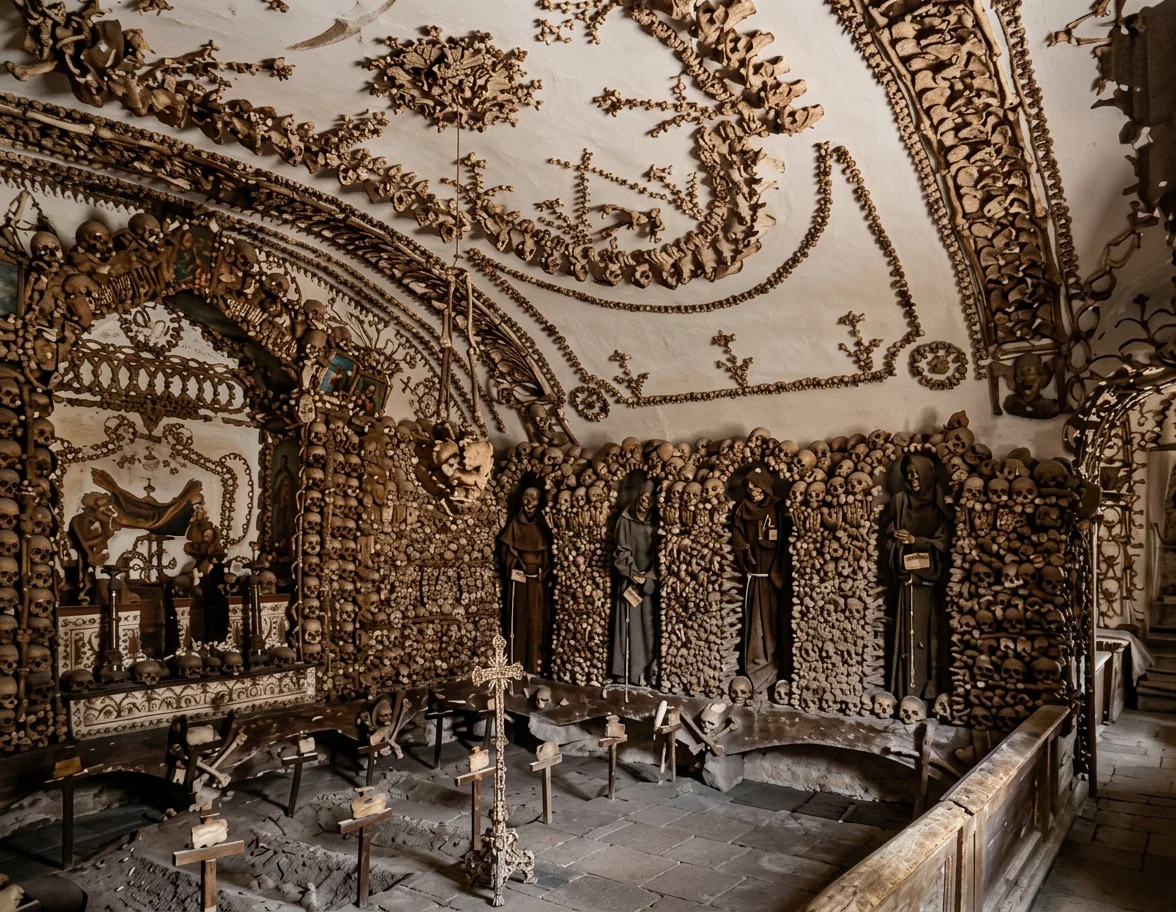
IT is a negative lesson which we present in our illustration this week. It is not a pleasant one. Negative pictures in moral character, spirituality, are never pleasant when we see them in their cold nakedness. It is only for the striking lesson and the blessed contrast that we can consent to place upon this page the gruesome illustration. But study the lesson, reader; it may do you good, and the picture can not hurt you, if you take it aright.
THE CATACOMBS OF THE CAPUCHINS, ROME.

The Way of Death.

BONES, bones, bones! Skulls and vertebræ, femur, tibia, and fibulæ; phalanges, humerus, radius, and ulna; long bones, short bones, flat bones, and bones of all sorts! Bones for walls, for doorways, for altars, for ornaments, and the whole ghastly structure lighted up by a chandelier of bones! Ghastly skeletons stand in the doorways clothed in priestly robes, and hideous skulls grin and glare from floor to ceiling. Surely it is a gloomy, ghostly, gruesome, charnel-house, albeit it is fitted up as a chapel.
READER, this is a view of a chapel in the catacombs of the Capuchin monks, and the bones are supposed to be those of early Christian believers, saints, and martyrs. The Capuchin monks are an offshoot of the order of the Franciscans. The chief thing about the order in the beginning was a capuche, or hood, which a Franciscan monk heard or believed was worn by St. Francis, different from what the Franciscans later adopted. He was greatly impressed by this discovery, and proceeded to Rome, where he obtained permission from Pope Clement VII. to wear the pyramidal capuche and the long beard, to live a hermit, to preach where he liked, and report once a year. Two others got hold of the idea of the original genuine hood and the strict rules of St. Francis, and they obtained the same permission as the first. They afterward became independent of the Franciscans. In 1543 its vicar-general, finding no salvation in its dead forms, became a Protestant, which almost resulted in the abolition of the order; but under a pledge from its members of “the most absolute submission to the wish of the pope, the most complete abnegation of all individual opinions,” it was suffered to live. While the world was being lifted toward education and refinement, the Capuchins expressed the ignorance, the credulity, and the coarse sympathies of the masses. (See Schaff-Herzog Cyclopedia, art. “Capuchins.”)
THIS illustration of the catacombs of the Capuchins is a fair expression of that religion, belief, or credulity which seeks aid or salvation from the dead forms of the past. From time immemorial, when men departed from God, they have sought salvation in dead forms. Their ideas of God have been seen in the worship of the heavenly bodies, in beast, and bird, and creeping thing. Men, made in the image of God, have bowed to all these living creatures, the existence of which was but for abrief day. They have believed the bodies of these creatures to possess the souls of men dead. Worse than this, they have written their faith in a god in cold, dead stone images, that can neither hear, nor feel, nor see, nor speak, and bowed before them. Men have crept to the cold crypts and dark caverns of the earth to hear the voice of some spirit or demon or saint, which superstition placed between them and God. Men—breathing, thinking men—have gathered up rags, clothing, rings,—something that a “holy” man once touched,—his mouldy, decaying bones, his dank, dark sepulcher,—to find virtue, healing, salvation. So professed Christians have striven, and sought, and fought, for the dead cross upon which Christ hung, the nails that spiked Him to the tree, the rock-tomb in which He lay. And since there were not enough of these, the graves, and relics, and bones of His followers have fed the insatiate thirst of human credulity, born in dead creeds and nourished on pagan superstition. O, it is pitiful! It is sad beyond expression. As in our illustration death is impressively emphasized by the oft-recurring skull and cross-bones, so over all this worship of form, this homage to the lifeless past, is written large, Death, death, death. Yet how many are following the way of death, rejoicing in the touch of an oxidized nail or a crumbling bone.