IT was not until May 14, 1811, that permanent independence was secured for Paraguay. Ferdinand VII., king of Spain, having been deposed and imprisoned by Napoleon, Spain could make but feeble resistance to the efforts of Argentina and Paraguay in this direction. The Paraguayans, infused with the spirit of General Belgrano, the Argentine patriot, determined to strike a blow for independence. This fell on the night of the 14th of May, 1811, when Pedro Caballero, with a few companions, surprised and captured the general arsenal without encountering the least resistance from the garrison. The greater part of the people, on assembling in the plaza, adhered to the revolution, which was thus consummated without the effusion of blood.
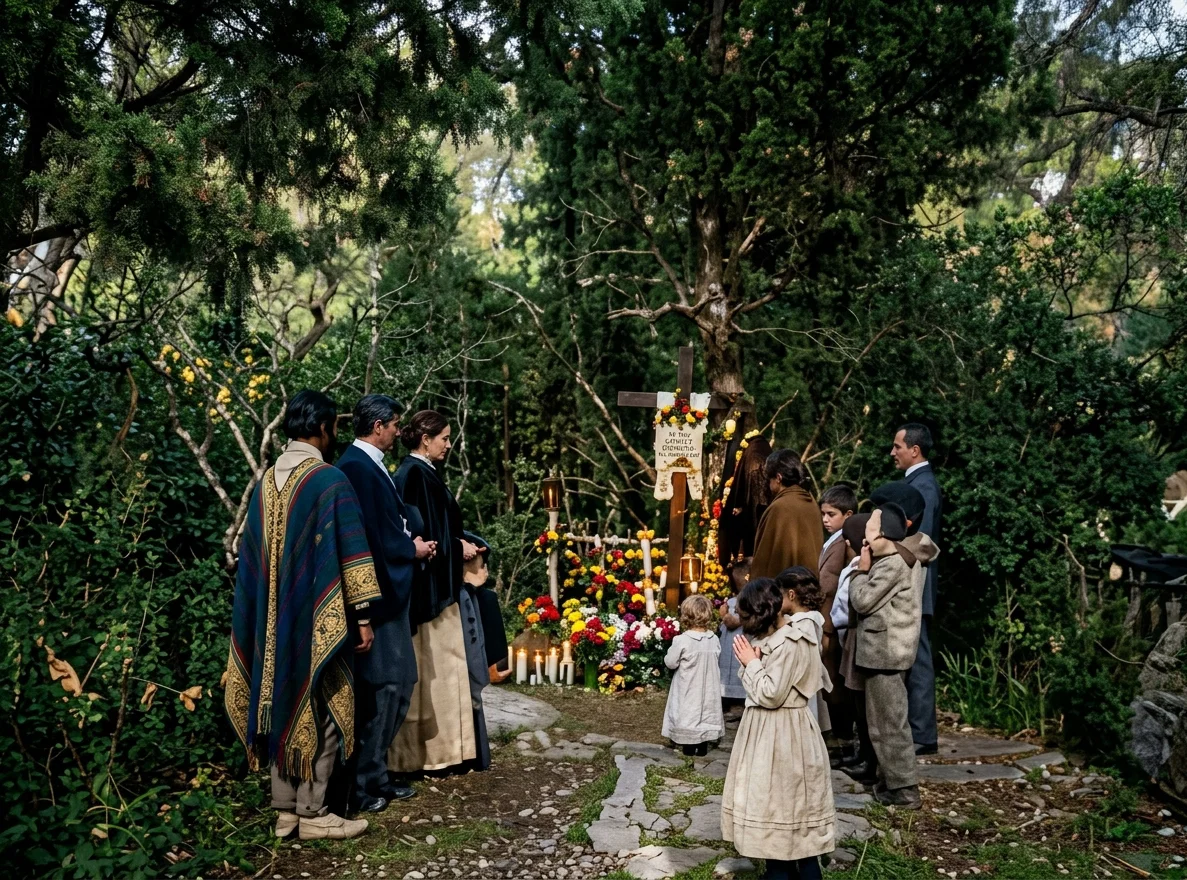
On the Plate River. A scene in a Catholic cemetery on All-saints' Day.
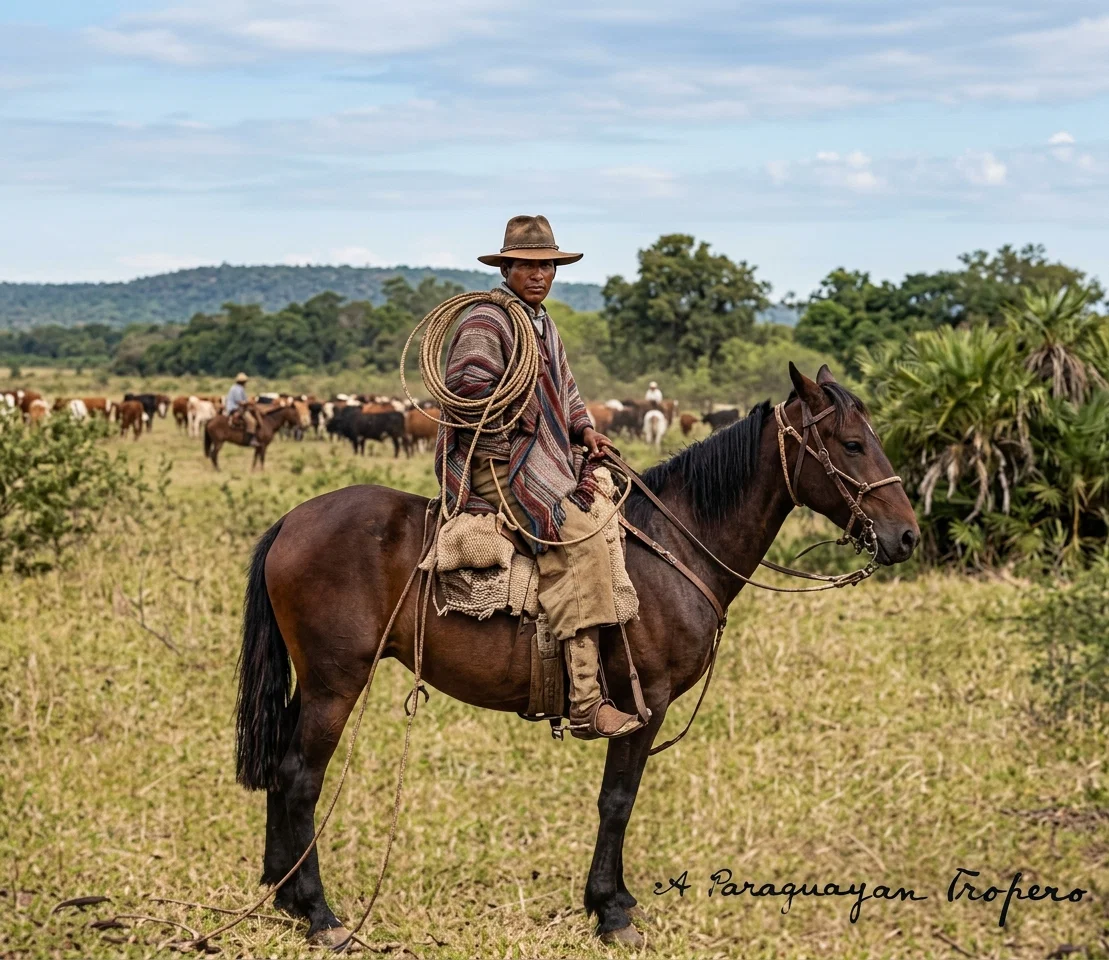
A Paraguayan Trooper.
The first congress assembled June 18, of the same year, and was composed of a governing board of five members. The first act of the legislators was to decree the deportation of Velasco, the Spanish governor. Various decrees were made for the promotion of commerce, and a treaty was celebrated with Buenos Ayres, by which the latter recognized the independence of Paraguay.
Oct. 1, 1813, the second congress sat, consisting of a thousand deputies elected by the popular vote. This body conferred the chief executive power on two men, who took the title of consuls. October 12, Rodriguez de Francia and Fulgencio Zégros were elected to this office by acclamation.
During the session of the third congress, assembled October 15, 1814, a demand was made to substitute a temporal dictatorship for the existing government, in imitation of the practice of the ancient republic of Rome. To meet this demand, Dr. Francia was elected for three years at a salary of $9,000. As a result of his efforts to ingratiate himself with the governing classes, the congress, at its annual session in 1816, proclaimed Francia perpetual dictator.
Unhampered by any rival, with his highest ambition realized, Francia soon entered on a career of despotism that characterized his whole administration. Among his first acts was one prohibiting the marriage of Spaniards to other than Indians, mulattoes, or negroes.
Other decrees were issued, rooting out the corruption of the clergy, cutting off the authority of the Vatican, and proclaiming himself head of the church, besides suppressing the Inquisition. Proceeding further, he restricted religious processions, abolished Catholic feasts, and suppressed convents, confiscating their property for the State. As a crowning act of despotism, he decreed that all marriages celebrated without his consent should be void.
Finally, in 1820, a conspiracy was formed to assassinate him; but the knowledge of this came to him by means of a letter addressed to one of the conspirators, which fell by chance into his hands. By means of tortures he drew confessions from suspected conspirators; and, under pretext of holding them guilty of treason, he executed them to the number of seventy-six in nine days. His persecution of the Spaniards also continued, and by June 9, 1821, 300 of them were imprisoned, including the bishop.
Under Francia agriculture received quite an impetus, his object being to make Paraguay independent of the world by enabling it to subsist on its own products. In harmony with his policy of isolation, Francia prohibited foreigners entering or leaving Paraguay. In 1819 the country suffered devastation by locusts, whereupon he compelled the natives to plant a second time. It was then first discovered that more than one harvest could be secured in a year. The compulsory labor under Francia brought quite a degree of prosperity to the country; and as one sees the square miles of uncultivated wild land, almost in the shadow of the palace of Lopez, he is impressed with the expediency of adopting Francia’s compulsory policy in dealing with the natives of the present generation.
In conclusion, the historian tells us that Francia governed by holding the people in abject terror, which he was enabled to do by inflicting the most cruel punishments. He died a natural death Sept. 20, 1840, at the age of seventy-four years.
Following the death of Francia a provisional government was organized, consisting of two consuls as executives, and 300 deputies, which made itself memorable by ratifying the declaration of independence by special act on the 25th of November, 1842. A constitution was then adopted, authorizing a government of 200 deputies, a chief executive, to be elected for ten years, and a judicial department.
Don Carlos Lopez was the first president under the constitution. His first act was to secure the recognition of the independence of the country by the European nations. This was denied by Argentina, that country still claiming Paraguay as an Argentine province. The feeling on the part of the latter country led to commercial difficulties between the country and Rosas, the Argentine dictator, which culminated in a short war. The difficulty, however, was removed by the mediation of Mr. Brent, U. S. minister to Buenos Ayres. This period is notable as marking the establishment of the first newspaper of the country, April 26, 1845. Such was the prosperity attending Lopez’s administration that on the expiration of his term of office, in 1854, he was re-elected for ten years. Under him the country became possessed of arsenals, iron foundries, powder and ammunition factories, and numerous schools, and a railroad was built, the first one in South America. Lopez did much to encourage the mechanical arts and the sciences, bringing the best artisans from Europe as instructors.
On the death of Lopez, in 1862, his son, Francisco Solano Lopez, assumed the reins of government. Owing to disputes over boundaries with Brazil and Argentina, this became a very critical period for Paraguay. Uruguay, being at this time threatened with an invasion from Brazil, appealed to Paraguay for mediation, which was rejected by Brazil. Paraguay then declared any invasion of Uruguayan territory would be considered an affront to herself, at the same time closing Paraguayan waters to Brazilian ships. The seizure of the Brazilian ship Marquez de Olinda determined the rupture of diplomatic relations between that country and Paraguay, and war was declared Dec. 14, 1864. In the early part of the struggle Argentina violated her neutrality by permitting Brazil to mobilize, in Argentine waters, a squadron of war vessels with which to attack Paraguay. This fact, coupled with Argentina’s refusal to permit the Paraguayans to pass Argentine territory, led the former to declare war against the latter the 5th of March, 1865. Hostilities began April 13, by the seizure of Argentine ships and the occupation of Corrientes.
May 1, 1865, Brazil, Argentina, and Uruguay celebrated an alliance to make war against Paraguay. In the early part of the conflict the latter seemed to have the advantage, overrunning the State of Matto Grosso, Brazil, and capturing a large amount of arms and munitions of war. Argentine territory was also invaded; but the army of invasion, being attacked by superior numbers, was forced to capitulate. Finally Paraguay was invaded by the allied forces, and eight engagements fought, the Paraguayans being successful in four. However, Lopez, with an army of scarcely 10,000, was confronted by the Brazilians, 32,000 strong, in the battle of Itá Ibaté, which lasted six days, and resulted in the annihilation of Lopez’s forces. He then gathered a few recruits, consisting of old men and boys, and retired to the mountains. His final stand was made at Cerro Corá, where he died defending himself, March 1, 1870.
The death of Lopez ended not only the war, but a reign of despotism hardly surpassed by that of Francia. We are told that his troops were so dominated by a fear of him that at his order they would fight to the cannon’s mouth, being made to believe by Lopez that if killed they would be alive again in three days, and receive great honors.
We have now arrived at the constitutional period, or the period of reorganization, which we shall reserve for another time, together with a sketch of the Jesuit missions of Paraguay. E. W. SNYDER.