SOUND

8%

Pacific Press Publishing Company · Oakland, California · Dec 18, 1901

FromSigns of the Times, Vol. 27, No. 51.

Read the full edition

SOUND

SOUND is produced by the vibration of some object. A sliver on a rail in a windy day sets up its song, but it will not sing unless the wind sets it in motion, causes it to vibrate. These vibrations, or regular movements of the object, set the air in motion, and it is by means of the air that the sound reaches the ear. When a stone is thrown into a pond of water, the water moves out in rings. When a bell strikes, the air moves in rings similar to those of the water, when the stone is plunged into it. The ear is so delicately adjusted that the waves of air striking on it are conveyed over the nerves to the brain, and we hear.
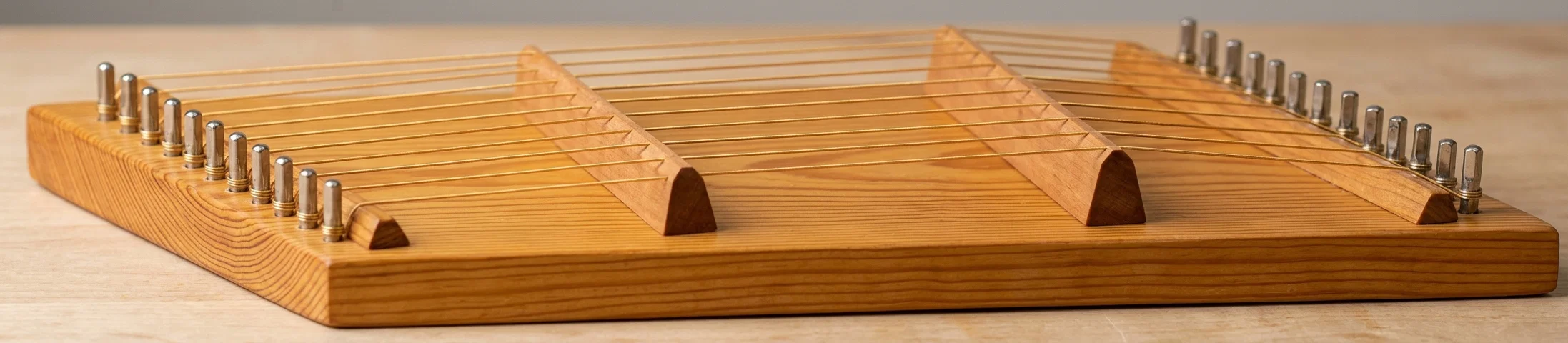
A little experiment, that of the Æolian harp, which can readily be carried out, will not only serve to give an understanding of what sound is, but will at the same time create something of an interest in music. It may be constructed as follows: Take a dry pine board about six or eight inches wide by one half inch in thickness, and cut it so that it will easily slip into the window when the sash is raised. Drive about ten tacks or small nails into each end opposite each other, letting the heads project about an eighth of an inch. Small screw-eyes are better than nails, as by means of them the strings can be readily tightened up or loosened. Beginning at one side, stretch from the first nail to the opposite one in the other end a silk thread which has been well waxed. Then twist two threads; wax them and stretch between the second pair of nails, and so on increasing each thread by one cord of silk. Next make two bridges of hard wood of the same size and shape. Their length should be equal to the width of the board, and they should be about one and one half inches wide at one end, and three quarters of an inch wide at the other. The upper edge, which supports the strings, should be beveled to a sharp edge. Slide the bridges on their sides under the strings near the middle of the board, and then turn them up properly and slip them along toward either end of the board until the strings are quite taut. Raise the sash high enough to clear the bridges, and place the board in the window. Some most pleasing musical sounds will result from a very slight breeze. These sounds will last, with many changes, while the wind blows.
The sounds which we hear from the harp come from the vibrations of the strings. A few narrow strips of paper about half an inch long folded and dropped across the middle of different strings will reveal the vibrations of the strings more clearly. It will be seen that the heavier strings vibrate more slowly. Lay a small stick across the middle of the strings, and note the effect it has upon the music of the harp. Place the stick upon different strings. The sound ceases. Why? Some of the strings give a high sound, and others a low. Discover the reasons for this difference. They are not hard to find. Some of the strings emit a louder tone than others. What causes this? Do the strings which give out the high tones make them louder? Do not take anything for granted, but observe. May the same strings produce both soft and loud tones? and what makes the difference between the soft and loud tones? Move the bridges, and note the effects. Note whether the harp will play as well at the top of the window as at the bottom. Also note whether the opening in the window will make any difference in its playing. On every hand one hears sounds which are produced in the same manner, or according to the same laws, which we see working in the Æolian harp.
On a small piece of wood, not more than half an inch square, place a pane of glass ten or twelve inches square. Directly over the block of wood place a glass rod supported vertically by the hand. Sprinkle fine sand evenly over the pane of glass, and rub the vertical rod with a cloth which has been well powdered with rosin. As the result of the rubbing, a sound will be produced. Now we know that this sound is caused by the vibrations of the glass. As the result of these vibrations, the sand on the pane of glass will move into ridges in various forms. The same results can be obtained by drawing a violin bow across the side of the pane of glass; and different effects will be produced by drawing the violin bow across different parts of the pane.
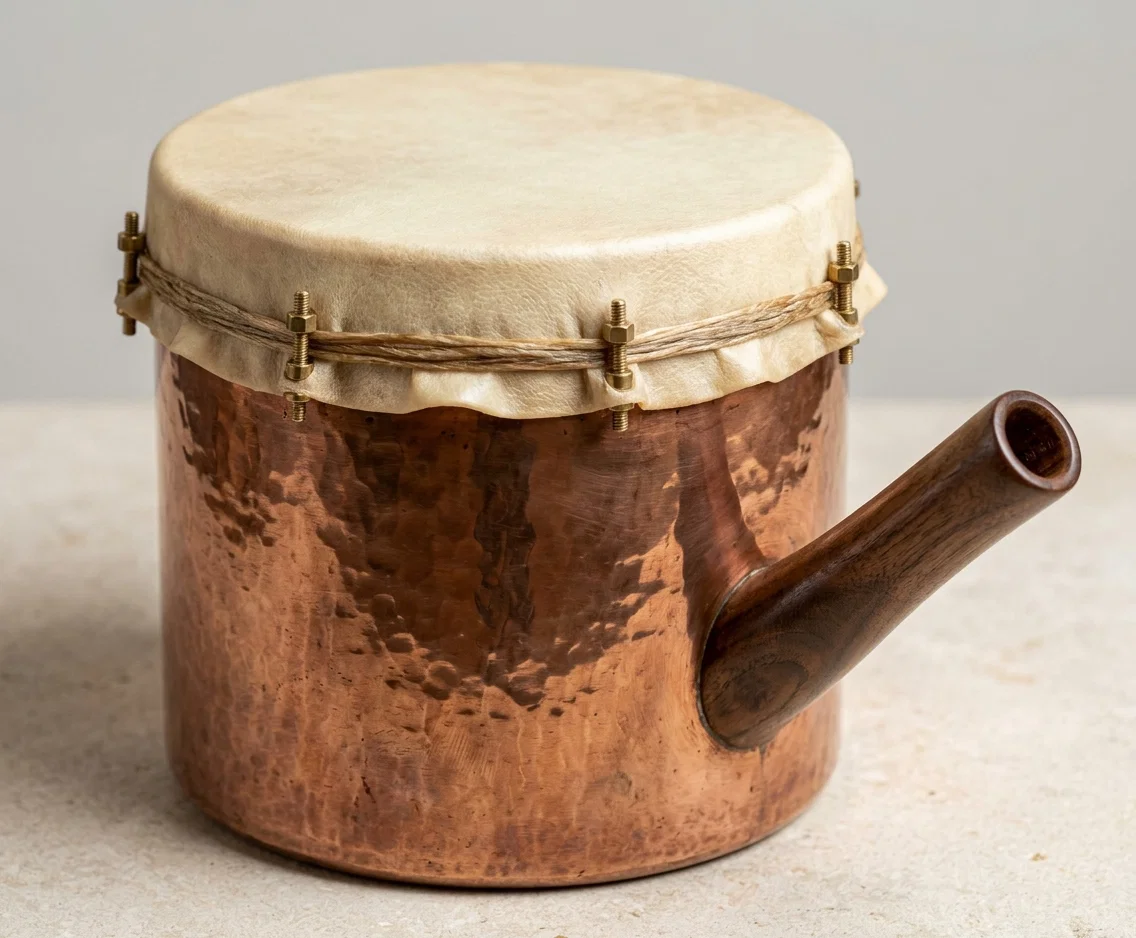
This brings us naturally to voice-pictures. The vibrations of the human voice will produce pictures. Take a can and have stretched over it a thin diaphragm or membrane, say of rubber or a silk cloth. Into this can, let the human voice be introduced through a pipe like the spout of a teakettle, seen in the illustration. Place on the diaphragm a layer of exceedingly fine dust. The human voice, when singing in one steady tone, will cause the dust to take definite shape. These voice-pictures are generally representations of trees and bushes. However, the lower forms of animal life are often made to appear. The dust should be very slightly moistened so as to hold the shape, which it is made to assume, but not so damp as to prevent its being moved readily by the vibrations of the voice, which should be a continued singing sound rather than a sudden, short noise. The pictures will differ according to the voice, and the size, and shape of the vessel over which the membrane is drawn.
When one thinks that the human voice can thus produce definite forms, the mind does not have to stretch far to comprehend the fact that the great God could create the worlds by a word—by the breath of His mouth. Man's word has no life in it, but God's has. He speaks of those things which are not as tho they were. With His speaking, they exist. It is by His word that He speaks a clean heart as well as a world. But He has spoken the word 'clean heart' to every one now—already—but each must claim the word as belonging to himself. He not only creates the worlds by His word, but He upholds them by the same word of His power; and He not only creates the clean heart, but He renews a straight or constant purpose in it by the same word. He is called the Word.
One readily notices the relation of sound to light through the idea of vibration, and indeed some scientists take the position that they are the same only the vibrations differ in intensity.
We have seven primary colors and seven primary tones. In many other respects do they closely resemble each other. God's word spoke the world into existence, which word, together with another manifestation of His power in His spirit of light, brought into existence the various forms of life on the globe. These vibrations, as seen in His word and His light, are the vibrations of life; for He is the Fountain of Life.
FREDERICK GRIGGS.
South Lancaster, Mass.