Get lessons in any of the various fields of nature-study are not the most profitable means by which to learn. Neither is the value of nature-study determined by the number of objects we may study. That value is determined by the intimate acquaintance which we make with a few objects.
The story of how Agassiz taught one young man applies well here. When the young man presented himself to the great scientist as a student, he was given a fish and told to study it. He was not told what or how he was to study, but he was kept at this fish for days, until he finally discovered the points which the master wished him to discover. It was hard work, but in the process he acquired such an intimate knowledge of the one small creature that the foundation was well laid for a broad study of nature.
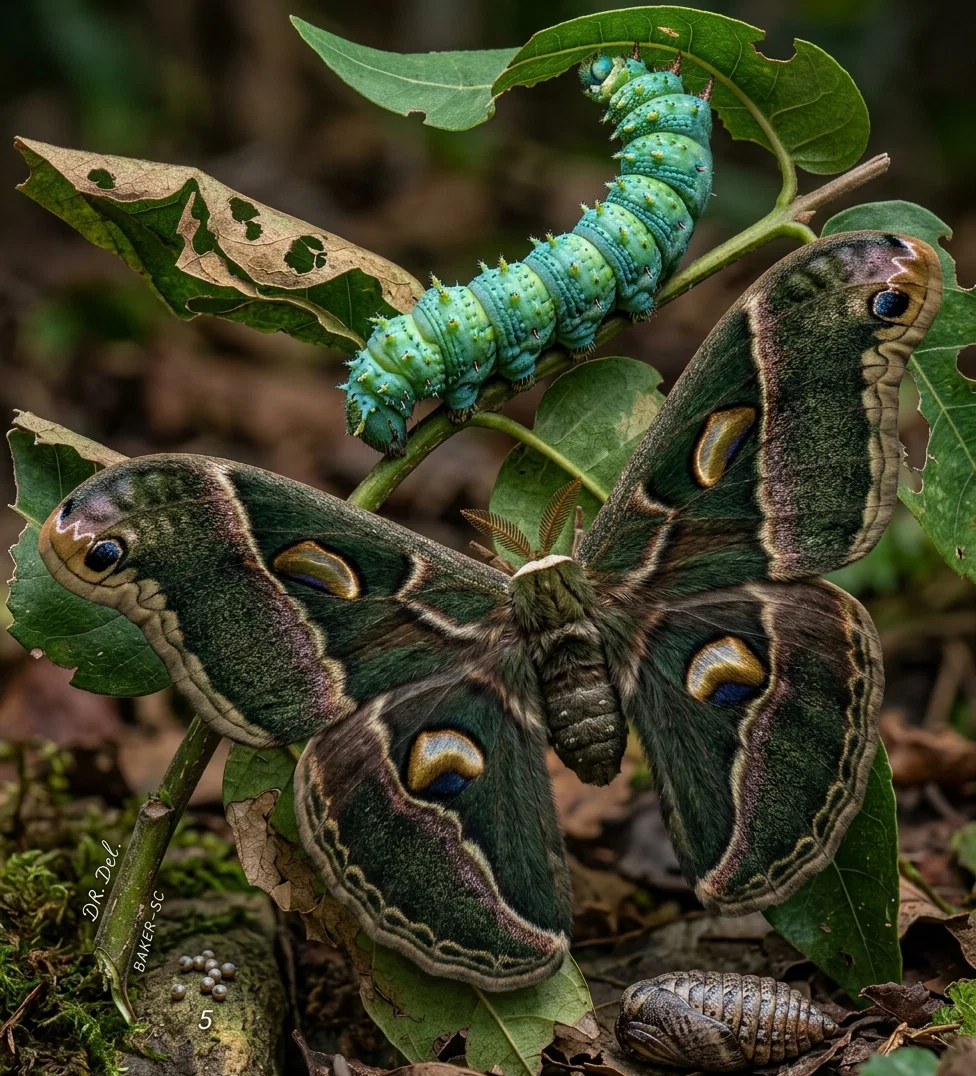
I have already suggested in a previous article that in the study of animals we should pay particular attention to changes which they undergo owing to the seasons and their environments. In addition to this suggestion let me repeat one which I have already made in this article, namely, that of selecting a few animals, and making a close and critical study of them. Thus, if the larva of a butterfly be observed through the changes which it undergoes until it emerges a full-grown butterfly—a truly wonderful transformation, which should be seen by every one—an interest will be aroused in regard to that butterfly which can not be felt for others. Often an insect can be marked so that it can be observed for a whole season. A large knowledge of other animals will thus be acquired, as we naturally contrast them with the particular one under study.
It is in the fall of the year that insect life most manifests itself. Notice the great variety—nothing is more wonderful and interesting. Some one has remarked that no region on the globe has proved so inhospitable but that some form of insect life has been found to adapt itself to that environment. These little insects succeed in imitating, at least, the work of all other animals. I have spoken of butterflies. Notice how and where they get their food. Do they visit all kinds of flowers? How do they cling to a plant, and when clinging, what do they do with their wings? How do their wings differ from that of a bird? Notice the color of the flower which the butterflies visit as compared with their own color. In each one of the points see how they imitate different larger animals. Hundreds of questions might be asked similar to these upon insects alone. It is the work of the student to answer from his own observation some of these questions.
Birds are best studied in relation to their habits. Notice as to whether they are sociable or solitary; how they build their nests; and how they help one another. A noted scientist was once observing two swallows build their nest of mud. They had it quite completed, and while both were away, after laying the final bricks for their house, two English sparrows took possession. When the swallows returned, the saucy bills of the sparrows prevented their entrance into their newly-constructed house. They tried first one plan and then another to eject the marauders. Nothing succeeded. Finally they flew away, and after a time returned with many more swallows, and another nest was rapidly built on top of the first one, hermetically locking the sparrows in their stolen home. This may seem to be a rather large story, but I do not doubt it in the least. The reason we are so incredulous when the close observers of nature tell us of the wonderful doings of animals, is because we observe them so little that we are not at all acquainted with them.
All animals play much more than we imagine, unless we have observed them closely. This is very true of birds. It is very evident that they often try to outdo each other; and they appear to believe that all work and no play makes the thrush a dull bird. For of work—hard work—they have plenty in the course of the year. What with their long journey to the north; the taking up of their homestead claim; the building of the house; the keeping of the eggs warm, at which father and mother must take turns; the feeding of the young, and training them in the way they should go—work? Isn’t this work? If it were not for the courtship and love which come into these little homes, together with their sports, it would be a hard, grinding life that the little bird lives.
I may mention several points to be observed in the habits of birds. First, perhaps, is their migration, the coming in the spring and the going in the fall. This is done under leaders; and by study it will be found that they are organized better than some armies. They have a language all their own. Different sounds have different meanings, and we may learn them. To illustrate this. Every one has observed and learned the different words of a mother hen as she talks to her baby chicks, telling them to follow her, or calling them to eat, or warning them of danger and urging them to run and hide, or the lullaby song that she sings as she cradles them to sleep under her wings. Among birds that live in community life, as the crow, there is always to be found a leader who has often many words of command.
The best place to study animal life is in its natural haunts. But the winter life of animals may often be studied within doors to great profit. Two or three suggestions with reference to this winter study may be of value, and one who is interested will discover others. Take the larvae (large brown and green worms) of several different species of moths, and place them in boxes covered with mosquito-netting. They should be fed upon the same leaves—fresh—as that upon which they were found. It is very interesting to watch them eat. They will soon spin a cocoon, and pass into a sleep, from whence, in the spring—if they have been preserved throughout the winter from extremes of cold and heat—they will break their shell-like house, and come forth to the pleasures of a butterfly life. These metamorphoses through which the butterfly passes in order to come into being, will delight a small child, as well as one who is older.
Ants may be kept for observation throughout a whole year. They can be placed in glass jars or in a glass case, and, if necessary, set in water to prevent their escaping in the house. They should be fed sugar, bread-crumbs, bits of meat, etc. The changes made from day to day in the earth, and the manner in which the larvae are handled, being visible through the glass, are sources of unfailing interest.
Hibernation also may be studied by taking a common snapping turtle, and placing him in a box of wet sand with a lid over it. In a little time he will disappear from sight, and remain until spring. What should the turtle be fed upon before he burrows in the fall, and after he comes out in the spring? How could you find out?
There is practically no end to the suggestions which might be offered for the study of animal life, but one must learn from experience largely. And if one plan of study does not succeed, try another. To-day there are a large number of readable and intensely interesting books which can be purchased at almost any book-store, or from the majority of school-book publishers, which offer suggestive thoughts. However, books are not what are most needed, but eyes and a heart.
“Thou who hast given me eyes to see,
And love for what is fair,
Give me a heart to find out Thee,
And read Thee everywhere.”