ENDING OF HUMAN DREAMS

8%

Pacific Press Publishing Company · Oakland, California · Sep 4, 1901

FromSigns of the Times, Vol. 27, No. 36.

Read the full edition

ENDING OF HUMAN DREAMS.

RUINS to the thoughtful mind are ever subjects of sad contemplation. They speak of ephemeral greatness, of blasted hopes, of unfulfilled dreams, of blighted prospects.
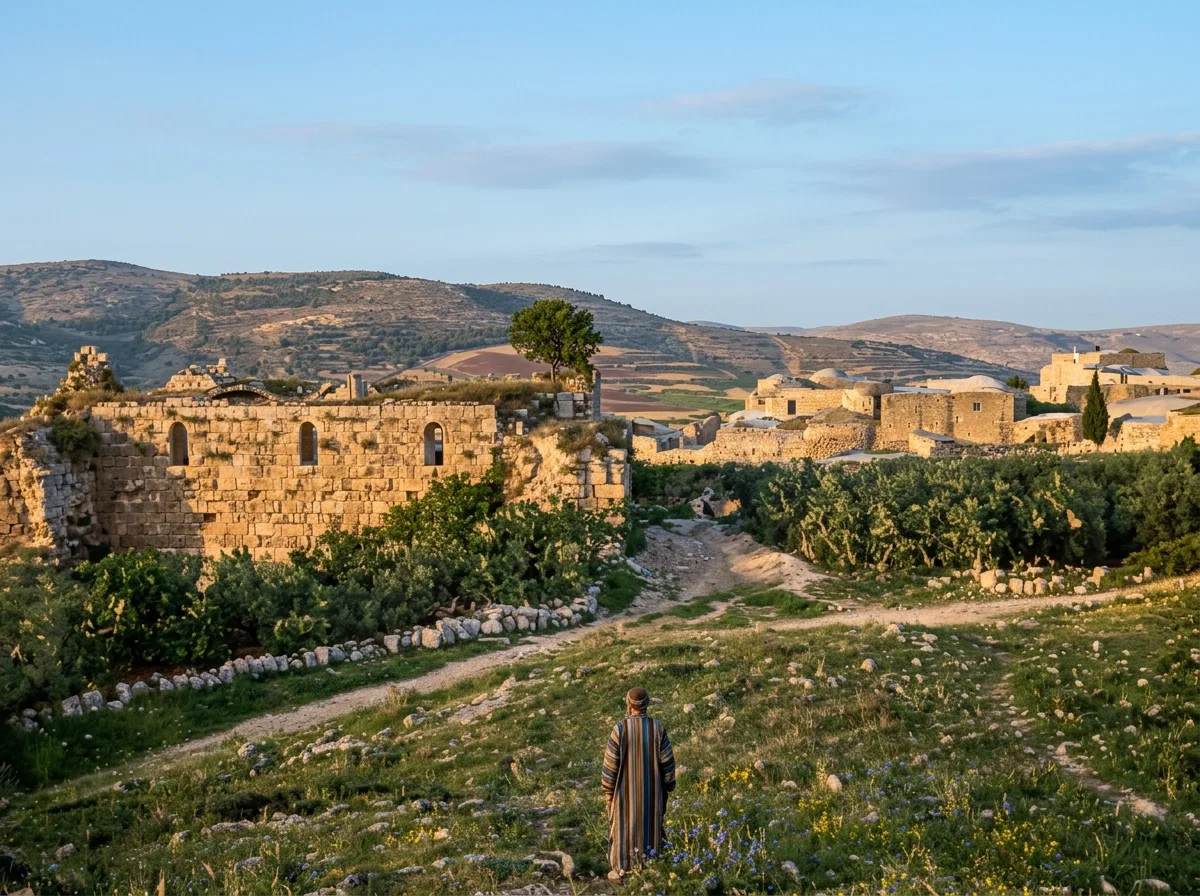
Sebastiyeh, Samaria.
SO SPEAKS the illustration on this page. All that it shows now are some broken walls, a few solitary, decaying old dwellings, dreariness beyond, a solitary figure in the foreground, with a few bright flowers, ever springing anew from the earth to mock the desolation of the ruined monuments to human greatness and folly.
WHEN Omri, captain of Israel’s host, rose up against the traitor Zimri and slew him, he became the strongest influence among the Ten Tribes. For a little time he met opposition, which was soon crushed out. Leaving the royal seat of the kingdom, Shechem, doubtless because of its associations, and also to add luster and strength to his own reign, he bought for two talents of silver, of Shemer, the hill of Samaria, almost on the eastern border of the great plain of Sharon, stretching westward to the Mediterranean Sea. Here, six miles north of Shechem, on this natural stronghold, he built the city of Samaria for the royal capital of the kingdom of Israel. Here he reigned wickedly for twelve years, the city ever increasing in grandeur and beauty.
WHEN Omri died, weak and wicked Ahab, more weak than wicked, came to the throne. He himself bowed to a ruler, his strong, unprincipled, unscrupulous wife, Jezebel, a royal Zidonian, an enthusiastic worshiper of Baal and Ashtoreth. She filled Samaria with the priests of both cults. Both of them were most abominably licentious. Four hundred priests of the former and four hundred and fifty of the latter ate at the dissolute queen’s table, who impoverished the kingdom to support the most degraded worship the world ever knew, and to beautify Samaria, “the crown of pride,” at “the head of the fat ‘valley.”
SHE doubtless thought that Baal and Astarte worship would rule forever in Samaria. She had but one “trouble,” Elijah, the true prophet of God. Ahab, stirred up by his sun-worshiping queen, hunted the prophet in all the kingdoms he knew, far and near. But God shielded His servant, and, when the opportune moment came, revealed on Carmel’s top to Ahab and blinded Israel the difference between the true God and the false. But all this only stirred Jezebel to greater wickedness, and more determined attempts to destroy the prophet of God.
ONE of the recorded acts of this wicked woman, revealing her true character, was the order in the king’s name to shed the innocent blood of Naboth, because, forsooth, the man wanted to retain his own estate,which Ahab coveted. Ahab weakly yielded to her cruel course. Then came the prophet of God again to Samaria’s ruler with this message: “Hast thou killed, and also taken possession? . . . In the place ‘where dogs licked the blood of Naboth shall dogs lick thy blood, ‘even thine, . . . because thou hast sold thyself to do that which ‘is evil in the sight of the Lord. Behold, I will bring evil upon thee, ‘and will utterly sweep thee away, and will cut off from Ahab every ‘man child, . . . And I will make thine house like the house of ‘Jereboam the son of Nebat. . . . The dogs shall eat Jezebel by ‘the rampart of Jezreel.”
A LITTLE later and the king was destroyed in battle, brought home in his chariot, and the blood from his wounds was licked by dogs where Naboth was slain. Jezebel survived him about thirteen years, and was slain in Jezreel by the order of the zealot king Jehu, and her flesh eaten by dogs, as God had foretold by the prophet. Thus perished the builders and beautifiers of Samaria.
OF Samaria itself, a city founded in iniquity and established in wickedness, the prophet declared: “I will make Samaria as an heap of ‘the field, and as plantings of a vineyard: and I will pour down the ‘stones thereof into the valley, and I will discover the foundations ‘thereof.’” This prophecy of Micah has been literally fulfilled. Even the present village of Sebastiyeh is built below the old city and of its ruins.
SO WILL perish all the monuments and works of men not wrought in God. Jesus said: “Every plant which My heavenly Father hath ‘not planted, shall be rooted up.’” The day may be late in coming; thirteen years or thirteen centuries may elapse; men may persuade themselves that the judgments foretold by the Bible will never come; that they are the ravings of enthusiastic partisan devotees; that all things will continue as from the creation; nevertheless, no word of God shall fail. All sin will meet the harvest of its sowing. Everything not founded in the righteousness of God, however man may regard it, will come to ruin. But blessed be God, it is also true that not one promise of His will fail of fulfilment to those who trust Him.
AND here is the lesson to be learned: “Here have we no continuing ‘city, but we seek one to come.” “All flesh is grass; . . . the ‘grass withereth, the flower fadeth; but the Word of our God shall ‘stand forever.” “Love not the world, neither the things that are in ‘the world. If any man love the world, the love of the Father is not ‘in him. For all that is in the world, the lust of the flesh, and the lust of ‘the eyes, and the vain-glory of life, is not of the Father, but is of the ‘world. And the world passeth away, and the lust thereof; but he ‘that doeth the will of God abideth forever.”