MOHAMMEDANISM

4%

Pacific Press Publishing Company · Oakland, California · Sep 4, 1901

FromSigns of the Times, Vol. 27, No. 36.

Read the full edition
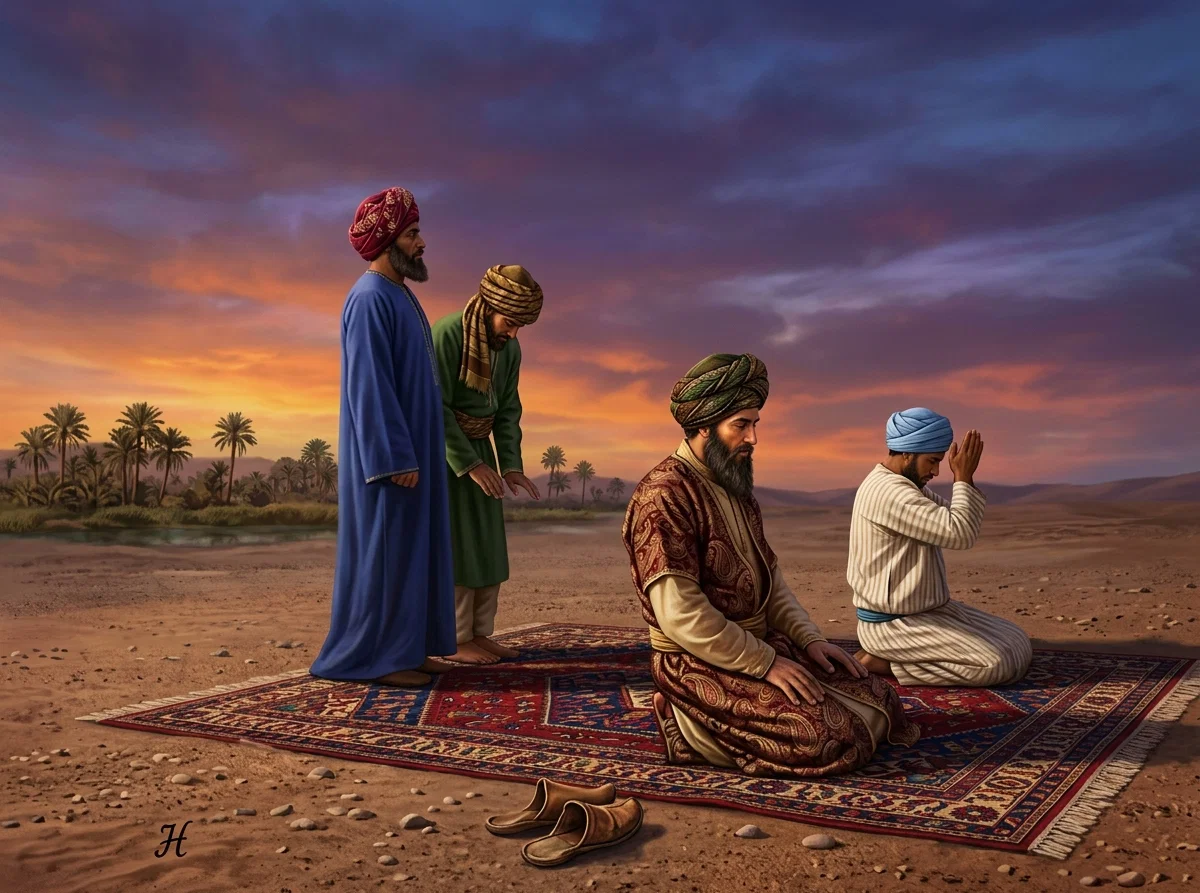
Mohammedans at Their Devotions.

MOHAMMEDANISM

MOHAMMEDANISM is the religion of about 180,000,000 people. Its adherents predominate in the countries of Western Asia, where it had its birth and made its earliest triumphs. India has about 50,000,000 of them; they are numerous in the northern and western provinces of China, and there are not a few of them in the islands of the Eastern archipelagoes. “Islamism is the predominating religion of the entire north of Africa, and its rule extends far down eastward, and into the center of the continent.”
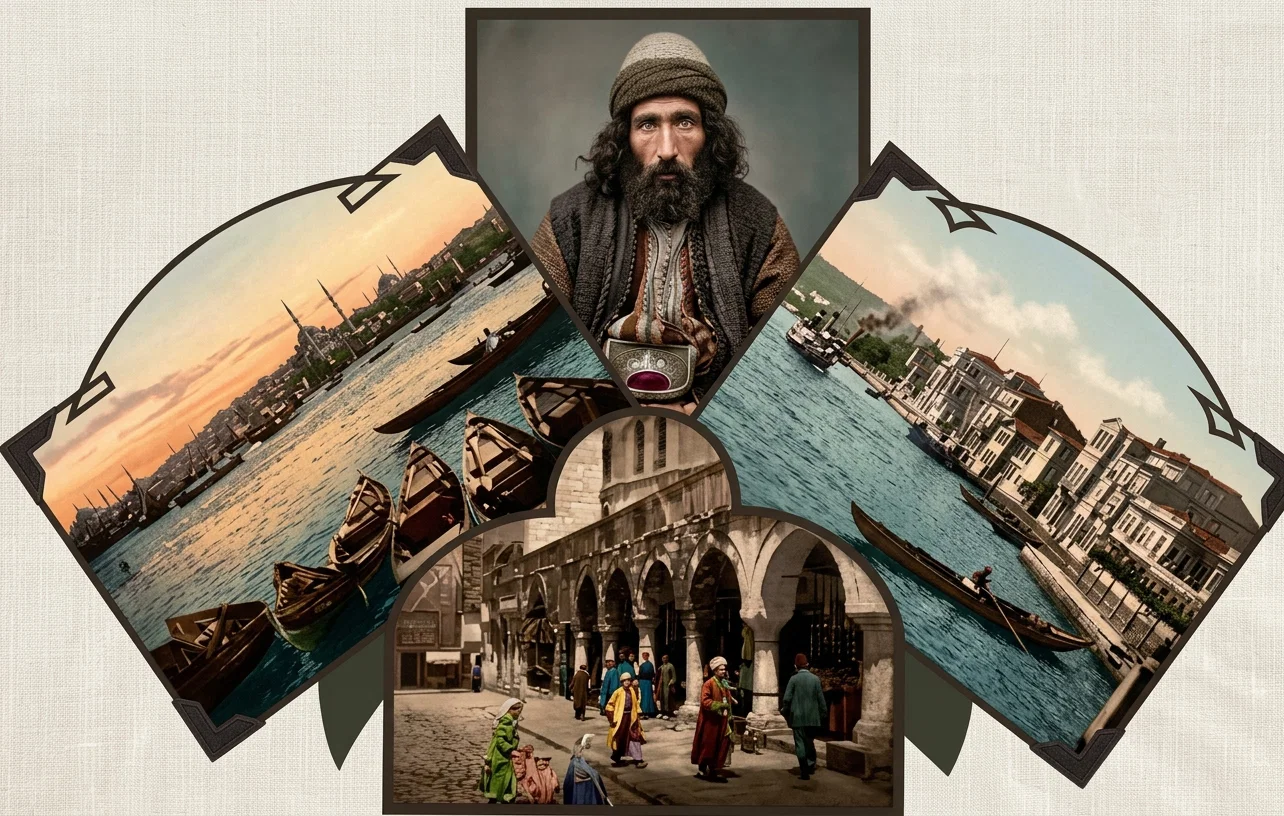
The City from the Harbor. Howling Dervish. A Turkish Bazaar. Residence of European Ministers.
Europe has a share of Mohammedans, including the sultan of Turkey, the most powerful of Mohammedan rulers, and about 4,500,000 of his subjects. Another 2,000,000 Mohammedans reside in European Russia.
The followers of “the prophet” are not so aggressive now as they were when they were building up great Moslem empires; but a religion so widely dispersed, and with so many adherents, could not fail to exert a very strong influence. And this leads to the inquiry, What is the character of the religion that sways so many human minds? and how does it meet the needs of the soul?
Mohammedans boast of the excellence of the Koran, and no doubt it enjoins many good and moral practices. But it is a religion of form. The Sheik ul Islam, or Doctor of the Mohammedan Law, at Constantinople, divides religious duties into two classes,—those to which “great attention must be ‘paid,’” and those “‘obligatory on all.’” The moral duties come in the first class; the ceremonial observances in the second.
Rev. Henry Otis Dwight, LL.D., gives an illustration showing how easily the moral precepts can be evaded. He says:—
In traveling in Turkey I once fell in with a pasha, governor of one of the provinces of Asia Minor. He was a most agreeable and even attractive man; and during a voyage which lasted several days, we talked on almost every conceivable subject of interest to plain and decent men.
This sensible and well-meaning man showed me the corner-stone of his character one evening, at table in the cabin. He asked me to take a glass of wine with him. I declined. Then the pasha said: “You may think it strange that I, a Mohammedan, should ask you, a Christian, to drink with me, when wine-drinking is forbidden by our religion. I will tell you how I dare do this thing.” He filled his glass and held it up, looking at the beautiful color of it, and said: “Now if I say that it is right to drink this wine, I deny God’s commands to men, and He would punish me in hell for blasphemy. But I take up this glass, admitting that God has commanded me not to drink it, and that I sin in drinking it. Then I drink it off, so casting myself on the mercy of God. For our religion lets me know that God is too merciful to punish me for doing a thing which I wish to do, when I humbly admit that to do it breaks His commandments.”
Mr. Dwight continues:—
The Mohammedan sinner is taught that he is fit without reform of his fleshly tastes for admission to God’s eternal favor. God’s mercy may even spare him the pains of punishment. There is little in such a doctrine of man’s relation to God which can check the pursuit of self-gratification.
But in the Mohammedan rules of life, the importance of self and the interests of self are everywhere presupposed. Provision to spare the Moslem the pains of self-denial and self-control is found in the permission to pray but once in the day, providing that tally is kept, and the whole number of repetitions due for the five times of prayer is carefully made up. It is found again in the arrangement of the rules for the great fast, so that men may recoup themselves for abstinence through the day by gorging themselves all night. It appears again in the rules for alms-giving and sacrifice as a part of worship, when the man is definitely told that he need not give the best of his flock to God, but a medium animal; and when he is reminded in the Koran that sacrifice does not mean self-denial, since he has had the use of the beast before sacrifice and has the use of it for food afterward.
The same tenderness of self-interest is shown in the categorical instruction of the Koran for men to take revenge for injuries, promising divine aid where retaliation proves difficult. And the climax for such provisions for serving God without self-abnegation is reached in the carnal gratifications promised by the Koran as the reward of the faithful in paradise, and repeatedly urged upon their study and meditation through life, in order that any deprivation here may be felt to be but temporary.
Yet among Mohammedan thinkers one often meets with telling admissions of the harm to be expected from such ethics. They, as well as we, have observed that with exaltation of self-seeking goes the sure companion of its ill-gotten gains and indulgence of the animal appetites.
The dervish orders, the Babis of Persia, and the Wahabis of Arabia have all wrestled with this question, and thousands still wrestle with it, sometimes reading the Christian Bible as an aid to feeling after God, if haply they might find Him. And Mohammedans are often attracted by the virtues of Christians, intimating that they are near to God’s grace and will reach it, if they only believe in Mohammed, so as to learn the need of ablutions and genuflections and the rest.
Surely this is a religion in harmony with the natural heart; for it makes ample provision for fulfilling “the lusts of the flesh.” But does it meet the needs of the soul? Does it give the heart courage in the trials and vicissitudes of life, and hope and peace in view of the awful and inevitable ordeal of death?
“A notable convert from Islam,” who has gone to rest, has answered these questions. When from the study of the Koran he “had become brimful of Mohammedan bigotry,” but had not found peace in God, he was told that what he had already learned was merely the outward ordinances, but that if hewished “to attain to the true knowledge of God, he must go to the fakirs and Mohammedan saints, and remain in attendance on them for many years, because they possess the secret science of religion.”
He says:—
As soon as I was entangled in this subtle science, I began to practise speaking little, eating little, living apart from men, afflicting my body, and keeping awake at nights. I used to spend whole nights in reading the Koran, and constantly performed the special repetitions of the Koran, and all the various penances and devotions that were enjoined. I used to shut my eyes and sit in retirement, seeking by thinking on the name of God to write it on my heart. I constantly sat on the graves of holy men, in hopes that, by contemplation, I might receive some revelation from the tombs. I used to go even to the dreamy and intoxicated fanatics, in the hope of thus obtaining union with God. I did all this, besides performing my prayers, and always was repeating the salutation of Mohammed and the confession of faith. In short, whatever afflictions or pain it is in the power of man to endure, I submitted to them all; but nothing became manifest to me after all, except that it was all deceit.
The thought of utterly renouncing the world then came into my mind with so much power that I left everybody, and went out into the jungles and became a fakir, putting on clothes covered with red ochre, and wandered here and there, from city to city, and from village to village, alone, for about two thousand cos (two thousand five hundred miles). Faith in the Mohammedan religion will never, indeed, allow true sincerity to be produced in the nature of man; yet I was then, altho with many worldly motives, in search only of God.
I wrote the name of God on paper during this time one hundred and twenty-five thousand times, performing a certain portion every day; and I cut out each word separately with scissors, and wrapped them up each in a little ball of flour, and fed the fishes of the river with them, in the way the book prescribed. During half the night I sat up and wrote the name of God mentally on my heart, and saw Him with the eye of thought. When all this toil was over, I had no strength left in my body; my face was wan and pale, and I could not even hold up myself against the wind. The treasurer, Taj Mohammed, and Fazl Rasul Khan, the minister of the Rajah of Karuli, and many people of the city became my disciples and gave me much money, and reverenced me greatly. But still my soul found no rest, and I only felt daily a growing abhorrence of the law of Mohammed.
This victim of a false faith was led to investigate Christianity; and in Christ he found great peace, and also improved health, for his mind was no longer perplexed and harassed.
Truly “godliness is profitable unto all things, having promise of the life that now is, and of that which is to come;” but every false way shall perish.
E. J. BURNHAM.