The war with Spain resulted in the United States acquiring several island possessions, thus placing some needy mission fields under the American flag. But we do not have to enter these islands to find heathen to be labored for; they are not at, but within, our doors.
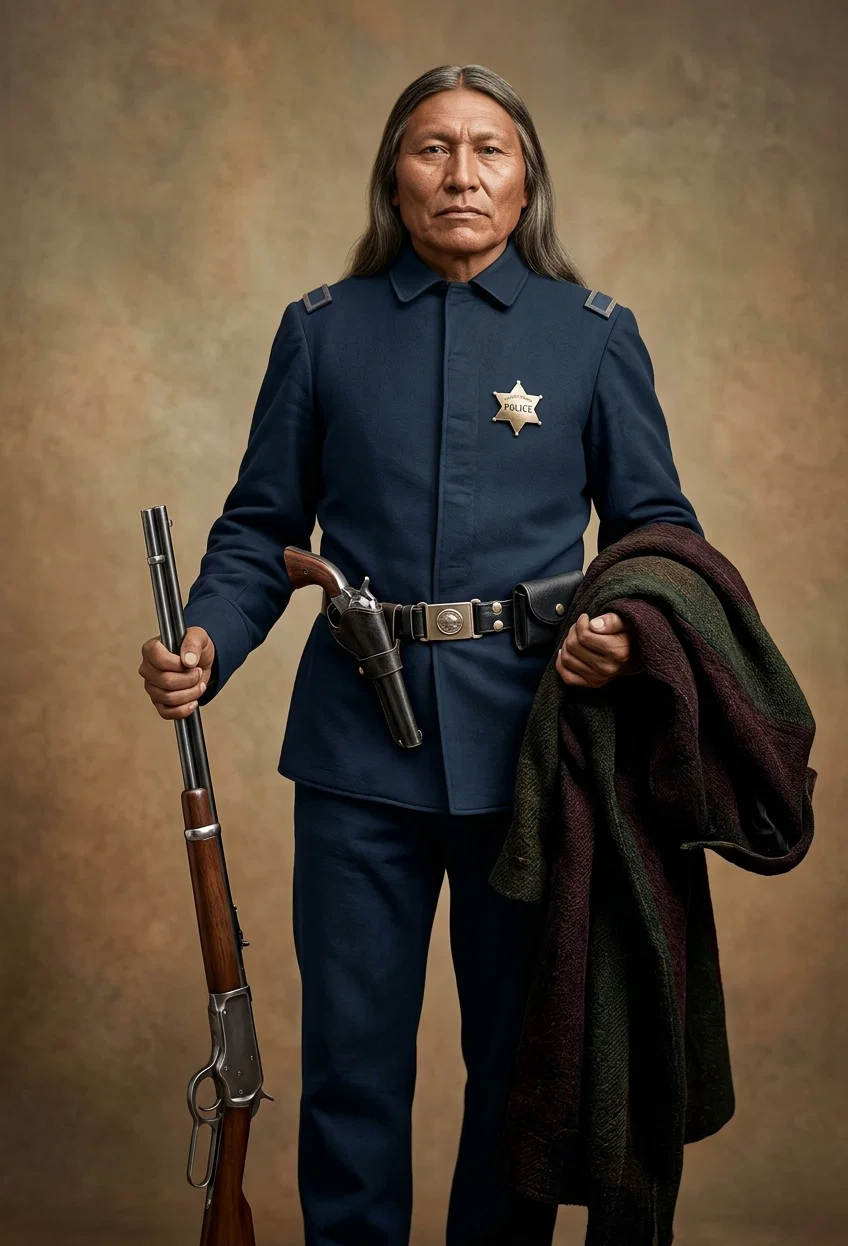
Black Coyote, Chief of Police.
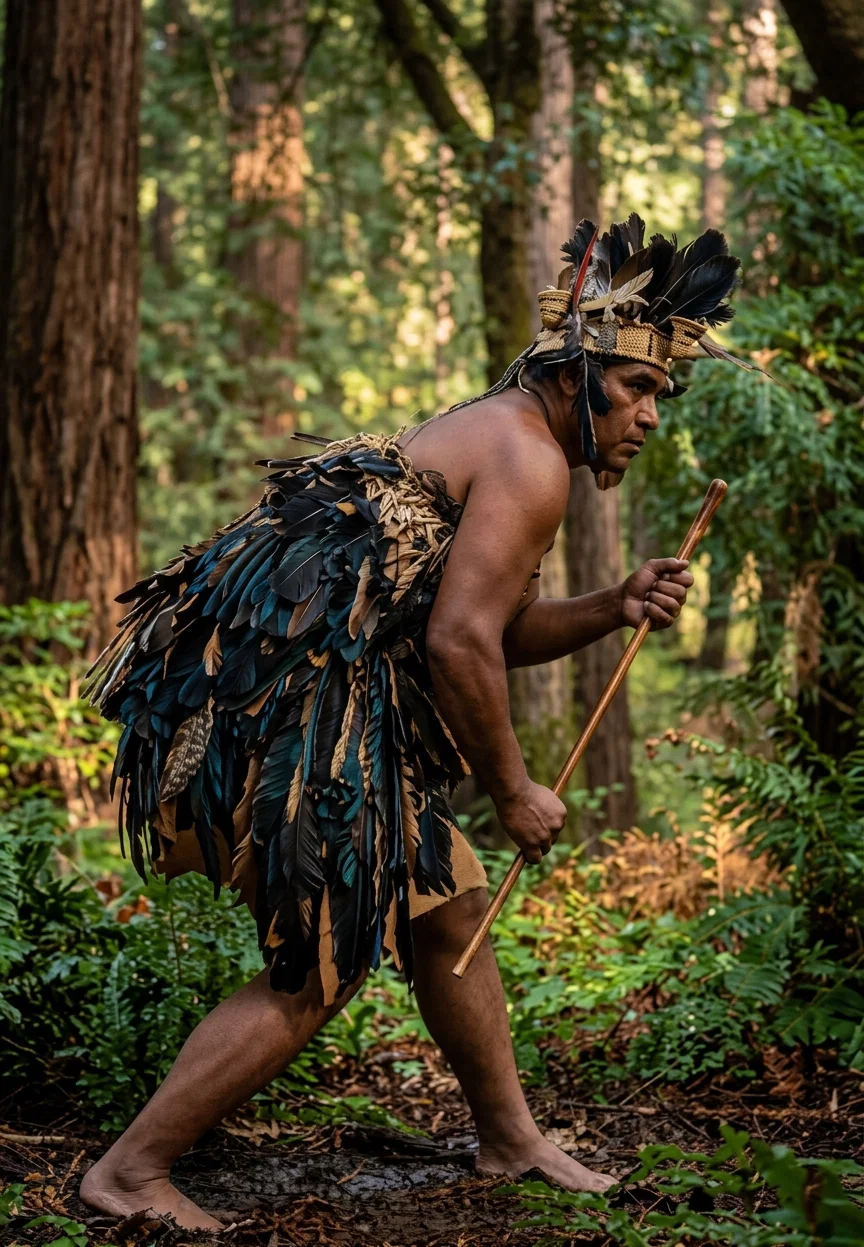
Pomo Indian in Dancing Costume made from Eagles' Feathers.
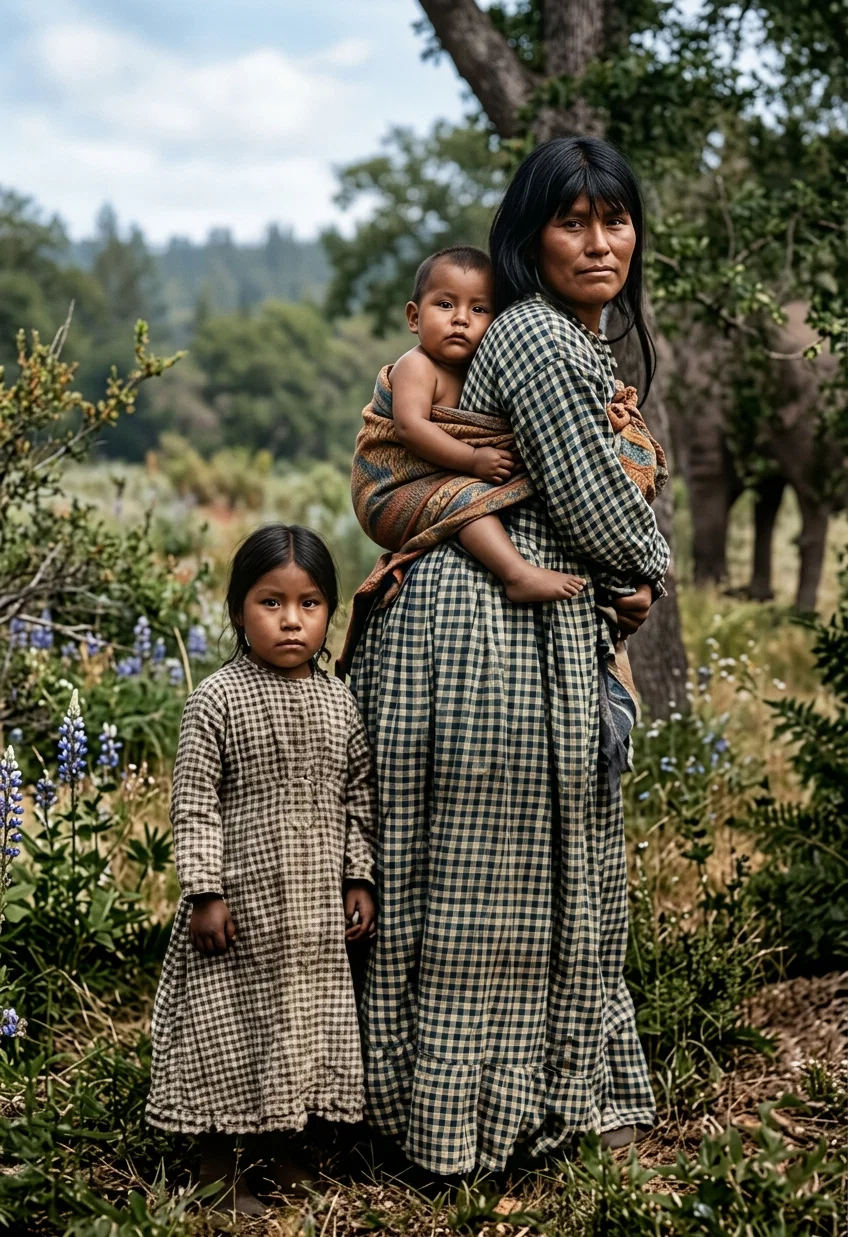
Pomo Indians, near Ukiah, Cal.
In crossing the plains by the Santa Fe route, one is almost sure, at some of the desert stations, to see companies of Indians. Their scanty dress is not over-clean, and their long, matted hair seems never to have made the acquaintance of comb, brush, or water; and what wild, unkempt creatures they are!
The wistful faces of the women and children appear at the car windows, at the doors, anywhere where they can gain access to the passengers. The squaws offer for sale quaint, grotesque, not to say hideous, wares, specimens of Indian pottery; and they will willingly take any food the passengers may have to spare. While the squaws are begging or bargaining, the “braves” stand in the background. Poor and degraded as these desert tribes are, Christ died for them; and how much they need the uplifting, refining influence of the Gospel.
At other places along the line are the low adobe huts of the Mexicans, and occasionally groups of swarthy laborers are to be seen. These, too, need Christ and the pure Gospel.
Indians in the United States.
The census of 1890 showed the entire Indian population of the country to be 250,000. Of these, 96,000 were civilized. In 1900 there were 134,158 untaxed, or uncivilized, Indians. These figures do not include the natives of Alaska, nor the many thousands of civilized Indians, who own and cultivate farms, or engage in other industries, pay taxes, and are reckoned as citizens.
It is frequently said that the Indians are dying out; but the “Encyclopedia of Missions” quotes figures and authorities to show that this is not the case. There were 12,593 Cherokees in 1809; in 1884 the tribe had increased to 24,100; and this gain was made notwithstanding the high death-rate when in 1838 the tribe was removed to the Indian Territory. The Navajo tribe doubled its population in fifteen years, from 1873 to 1888. These are marked instances; but careful estimates show that the people as a whole are increasing in numbers.
Early Missions.
Roman Catholic missionaries were first in this field. The Jesuits entered Nova Scotia and Maine in 1612; and there are still many Catholic Indians in Canada and Maine. A bishop and five priests minister to the Catholic Indians of Michigan. The Catholic bishop of Indian Territory has more than 5,000 native communicants in his diocese. But in most places the work of the Spanish priests in the southern part of the United States has been much less fruitful of permanent results.
In 1643 the first Protestant mission work among the Indians was begun in Martha’s Vineyard, by a son of Governor Mayhew. This young missionary was lost at sea in 1657; and altho Governor Mayhew was then seventy years old, he studied the Indian language, and took up his son’s work. “He spared himself no pains, often walking twenty miles thru the woods in order to preach or to visit the Indians.” He continued to preach until his death, in the ninety-third year of his age; and with the assistance of native helpers, he was enabled greatly to extend the influence of the Gospel.
Four generations of Mayhews labored among the Indians, their ministrations extending over a period of seventy-seven years, from 1643 to 1720. In 1651, when there were 190 converts, the first school for the Indians was established. In 1670 the first Indian church with a native pastor was organized. There were 3,000 adult believers at this time. In 1709, Experience Mayhew, a great-grandson of the governor, translated the Psalms into the Indian language, and later he translated John’s Gospel.
John Eliot, “the apostle to the Indians,” began missionary work in Eastern Massachusetts in 1646. Christian Indians were gathered into towns, which were governed by native magistrates; schools were started, and the industries of civilization were taught. By 1674 fourteen “praying-Indian towns” had been established. Previous to this the entire Bible had been given to the Indians in their own language. The first edition was issued in 1663, and this was the first Bible printed in America. Its translation was the crowning work of Eliot’s life.
In the year 1675 King Philip’s War broke out. This bloody war has been called “the last great struggle of the native tribes of New England against the race of foreigners who were gradually, but surely, crowding them out of the land of their fathers.” The Christian Indians were loyal to the whites, and rendered them invaluable aid. But the exasperated authorities looked upon them with suspicion. They made cruel war upon them, and their communities were nearly or quite destroyed.
After King Philip’s War, efforts to Christianize the Indians were made at different times by various churches and individuals, often with a good degree of success for a time. But the frequent wars interfered seriously with missionary work. The Christian Indians were great sufferers in these wars. Again and again their communities were broken up and their villages burned. No doubt many, in these trying times, remained faithful to the light they had received; but many others, in their discouragement, returned to heathenism, or became drunken vagabonds.
Later Missions.
In 1810 the American Board of Commissioners for Foreign Missions was organized. Five years later it began work among the Cherokees. From this time to 1883, when its Indian missions were transferred to the American Missionary Association, 512 of its 1,600 missionaries had been sent to the Indians. Its work had been interrupted by Indian wars and massacres, and by the roving habits of the people; but up to this time the board had had, “among the Indians, 15 different missions, 500 missionaries, 45 churches, 3,700 church-members, and had reached 100,000 Indians.”
Work among the Indians is still continued by the leading Protestant churches and several unsectarian societies. As a result of the efforts put forth in their behalf, five tribes of the Indian Territory—the Cherokees, Choctaws, Creeks, Chickasaws, and Seminoles—have made such progress that they are reckoned as civilized. They live in houses, and cultivate farms, and carry on other industrial pursuits. They have churches, and support their own schools. These tribes are self-governing. They have, “besides the principal and subordinate chiefs, a council, which corresponds in many respects to the legislature of a State. They also have simple codes of laws, and courts to enforce them.”13
Exclusive of these tribes, there were, in 1889, 163 missionaries laboring among the Indians, having under their care 21,922 church-members. Mission and training schools have been established, where the pupils are taught, not only from books, but agriculture and other industries that make them self-supporting.
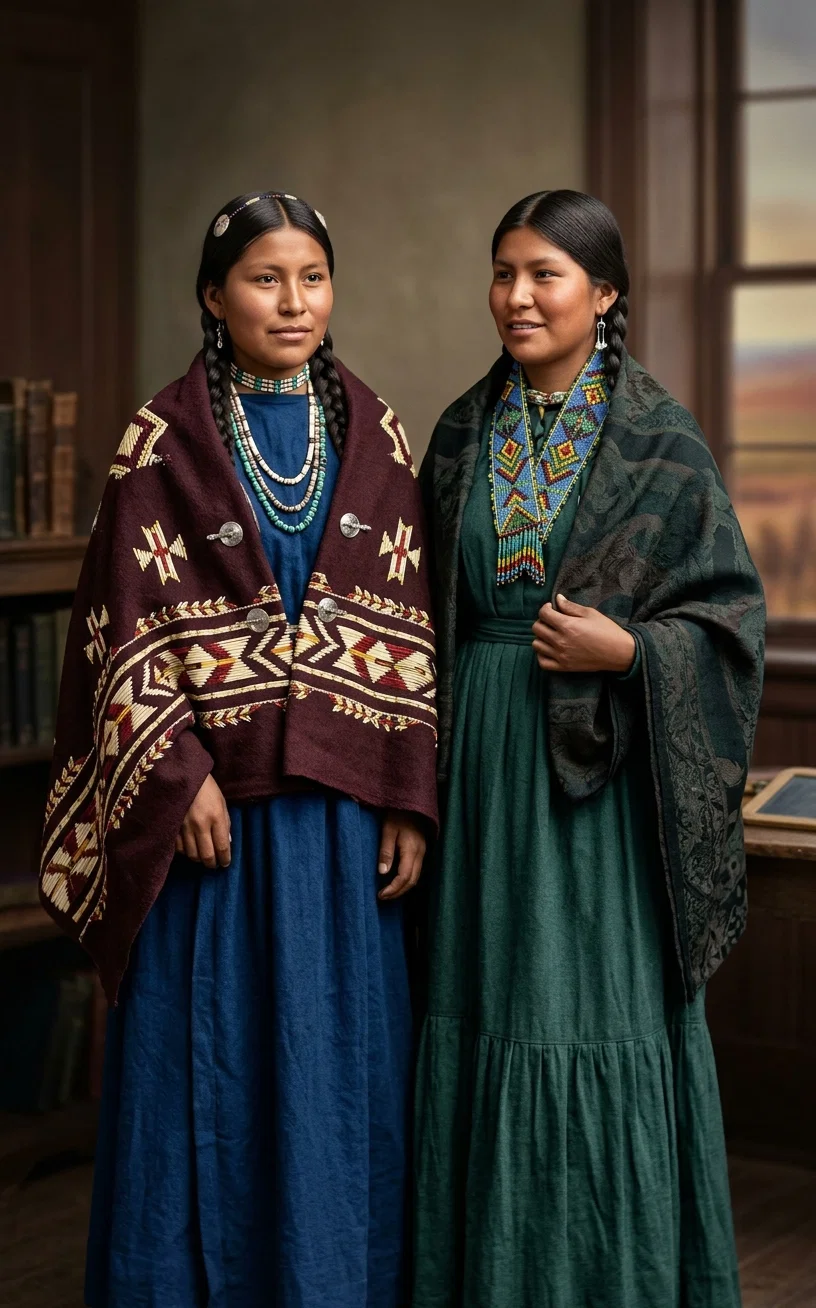
Pupils from the Arapahoe School.
But notwithstanding all that has been done, there is still, among these children of the forest, a wide field for the Christian worker. The latest reliable statistics at hand show that there are within the United States fifty-six tribes or portions of tribes destitute of missionary aid; and when all mission, contract, and government schools are filled, there are still 20,000 Indian children unprovided for.
To many readers of the Signs it will be interesting to know that the Sabbath truth has gained some adherents among the Indians. The Mohawks, one of the tribes comprising the famous confederacy known as the “six nations,” have lands in Canada. In one of their settlements twelve persons have accepted the special truths of the advent doctrine, and one of their number represented them in the good conference recently held in Battle Creek.