WOMEN IN INDIA

5%

Pacific Press Publishing Company · Oakland, California · Jul 10, 1901

FromSigns of the Times, Vol. 27, No. 28.

Read the full edition

WOMEN IN INDIA.

TO THE EDITOR OF THE SIGNS OF THE TIMES—
Dear Sir: At the request of a member of your mission in Calcutta I will tell you something about the women in India, touching their practical life in regard to their various relationships in the family.
In Indian families the birth of a girl is dreaded as a calamity by the parents; but why this should be so, passes my comprehension, for in the sacred scriptures of the Hindus one comes across such teachings as, “Daughters also, like sons, are to be nourished and educated with care.” As you call a wife “better half,” the Hindu Shastras enjoin that wives are “halves of the bodies of their husbands,” and that husbands should show every consideration to their wives.
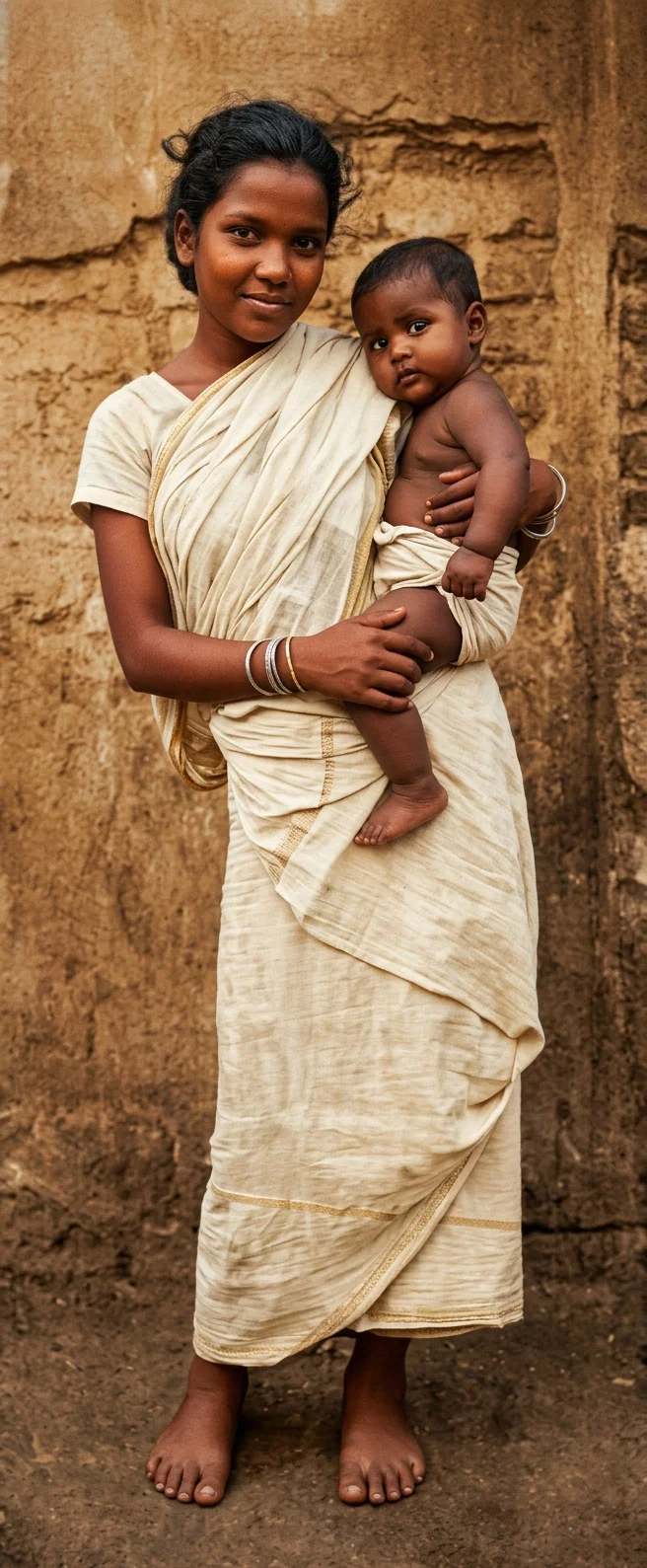
Mother and Child. The mother of this mother, the grandmother of this child, is only twenty-five years old.
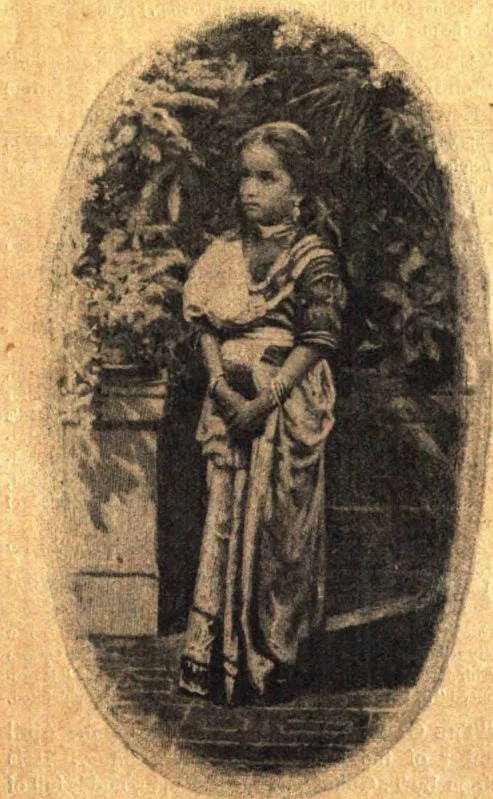
A Nine-year-old Wife.
If this is so, it might be asked, Whence is the present degraded condition of the women of India?
The reason is not far to seek. Before the advent of the British, the country passed thru centuries of foreign rule of aliens who had no sympathy for the people, their languages, their customs, or religion, and everything that was good in them died out. They were constantly in danger of their lives and liberty. It was during this period that the zenana system sprang into existence. In the early days of Hindu society the people were not bound by the system of zenana, as they are at the present time. You will find that Bombay and Madras, where Mohammedan rule did not penetrate so deep as it did in northern India and Bengal, are comparatively free from it. It is an innovation that reared its head in the wake of Mohammedan rule. Much as I wish the rigors of the system of zenana abated, I would not say that it has not served its part in the days gone by. This, and some other things, in my humble opinion, have served to maintain the individual and distinctive features to this day of the Hindu society, altho subjected for over ten centuries to Mohammedan rule.
To return to the subject. Directly a female child is born, the anxiety of the family commences. The great law-giver, Manu, whose laws are considered binding by the Hindus, enjoins that a girl ought to be married before she attains puberty, failure being accounted a great sin, necessitating one's being sent to hell. To follow Manu in practical life, in a warm country like India, a girl has to be married before she is ten or eleven years of age. At such a tender age, before she can understand anything of the responsibilities of married life, she has to be married and sent off to her husband's family, among aliens, so to speak, and shut up in the zenana. And mind you, in the matter of marriage, which concerns her life and existence, her happiness or misery, she has no voice.
As regards the marriage of boys, there is no limit placed as to age. This has the effect of allowing great freedom on the side of the boys, while it places great restriction on the girls, who have to be married within ten or eleven years of age. It places the fathers in an abject position, and they have to submit to exorbitant terms as to dowry to be settled upon the girls, altho the laws of Manu enjoin that nothing but a nominal and voluntary dowry, free from compulsion of any sort, is to be exacted from the bride's side. But we live in degenerate times. The laws of the great Manu are more honored in the breach than in the observance. I have known of instances where fathers of girls have been ruined by having to meet exorbitant demands on the occasion of the marriage of their daughters. But I am happy to say that the keen struggle for existence, and the increasing inability of parents to meet such demands, is imperceptibly helping to raise the marriageable age of the girls by postponing marriage till they attain a slightly higher age. This will have the effect of allowing the parents a little more breathing time, while it will not fail to improve, at least slightly, the health and morale.
I fail to see why it should not be so. Among the Koolin Brahmins of Bengal, who are supposed to be the highest among Brahmins, the first caste among the Hindus, marriage of girls was not performed generally until a very late age in spite of the laws of Manu. I have known many instances in which girls have been kept unmarried for want of an eligible bridegroom till they were twenty or thirty years of age, or even the entire life. Among those I count some of my relatives as well.
I will relate to you how a marriage is brought about. After a girl is seven or eight years of age, her parents begin to look about for a suitable bridegroom for her. It used to be the work of professional male matchmakers, possessed of, and versed in, the genealogies of the different families, generally to the fifteenth or twentieth generations back. This was necessitated by the Hindus observing prohibited degrees of consanguinity among themselves. But with the keen struggle for existence and with pecuniary affairs claiming the larger share of attention, the Hindus are getting lax in every way, marriages not excepted. Educational qualifications, the wealth and position of the bridegroom, these are the chief factors in determining the extent of the dowry demanded from the bride's side. Whether the bride's parents are in a position to meet the demand is not taken into account. Perhaps the father has to borrow at ruinous interest or sell off whatever he has, if he has anything to sell, and then pass the remainder of his days in misery; because meet the exorbitant demands on the occasion of his daughter's marriage, he must, or the grim specter of hell stares him in the face.
I have in mind one case in which, on the occasion of the marriage of his daughter, the bride's father had to agree to give costly jewelry and golden ornaments far in excess of his means. In this case he was compelled to have recourse to deception. The poor man thought that once the marriage was over, the bridegroom's party would be considerate, and not be hard on him even if he was found out. But alas! that was not to be. Shortly after the deception was found out, the law was set in motion, and the poor man was thrown into prison.
When the terms as to cash and ornaments to be given by the bride's party to the bridegroom are settled, they fix upon a day when the auspicious event is to be celebrated. Here astrological calculations are made. The dates and hours of the births of the bridegroom and bride are calculated, so as to avoid the union of parties born within antagonistic signs of the zodiac. When these signs indicate the undesirability of a union, the matter is dropped, altho I have known of some instances in which parties veered around when an enhanced dowry was forthcoming from the bride's side.
When the date is fixed for the event, the bridegroom, with a party consisting of at least some of his relatives and friends, the family priest, and servants, starts for the bride's house so as to reach there in the eveningor at night. Both sides during the day perform certain ceremonies invoking the blessing of the ancestors upon the projected marriage. At night the invited guests, relatives, and friends assemble in the outer yard of the house, it may be under some shelter in the way of tent or other structure improvised for the occasion. Exactly at the appointed hour the ceremony begins. The family priest has the bridegroom repeat certain solemn vows, tho in the Sanskrit language, which many do not know. These vows are taken in a solemn way, altho in the majority of cases they are not understood. They refer to promises on the part of the bridegroom to maintain his wife as best his position will allow, to be always charitably disposed to her, even to her faults, in a word, to consider his fortune as indissolubly bound up with hers in weal or woe. Most desirable vows indeed! Would that they were understood and literally interpreted and followed. The bride is taken round the bridegroom seven times, the hands of both are united, when the vows are repeated and assented to by bridegroom and bride. After this, they are considered united in holy matrimony.
This over, the assembled guests, the number of whom varies from a few only, to over a thousand, according to the position and circumstances of the bride's parents, are treated to a sumptuous feast, of course at the expense of the bride's father.
When the morning dawns, the bridal party return to the bride's house. On some occasions at the approaching separation from dear parents and brothers and sisters, the little creature rends the skies with her cries. But the fates are unrelenting. She must face the situation. Nor is this all. In many instances where the parents on account of their position can not keep to the letter their promises in regard to the dowries, the little-girl wife has to suffer terribly for the lack of her parents. She has not only to endure ridicule and banter at the hands of her mother-in-law and sister-in-law, but has at times to suffer from branding with red-hot irons, or similar torture, some cases of which find their way even into the criminal and other courts in the country.
It were wished that relief came to the bride's parents on the completion of the marriage; but such is not the case. In a good many cases their troubles only begin. They are expected to send presents, often costly and beyond their means, to their sons-in-law pretty frequently. These are often found fault with, resulting in the end in much suffering to the poor creatures,—the girl wives.
Such is the hard lot of the Hindu women in general. They have other sufferings as well. As they become mothers at an age when girls in your country are nothing but girls, they become weighed down with cares and anxieties and often with disease. When overtaken with disease, they would rather die than consult any doctor except one of their own sex, of whom the number in this country is very limited.
It is very much to be desired that the marriageable age of our girls shall gradually rise, so as to allow them to remain with their parents longer, and thus become better fitted to discharge their duties as sisters, daughters, wives, and mothers. May God hasten such a consummation of our desires.
KUNJA BEHARI BANERJI.
Calcutta, India.