God will get glory to Himself in all that occurs throughout His realm. It is His desire that the glorifying of His name and power shall come with blessing to all. It was God’s wish to make known His power, and to declare His name through the conversion of Pharaoh and the evangelization of Egypt. Long and faithfully God’s servants labored for the haughty king. Miracle after miracle was wrought to demonstrate to the king that his gods were but creatures of the great Jehovah. But the haughty king, stubborn and rebellious to the last, rejected the counsel of God against himself, set his will against the beneficent current of God’s mighty love, and perished in the ruin he invited.
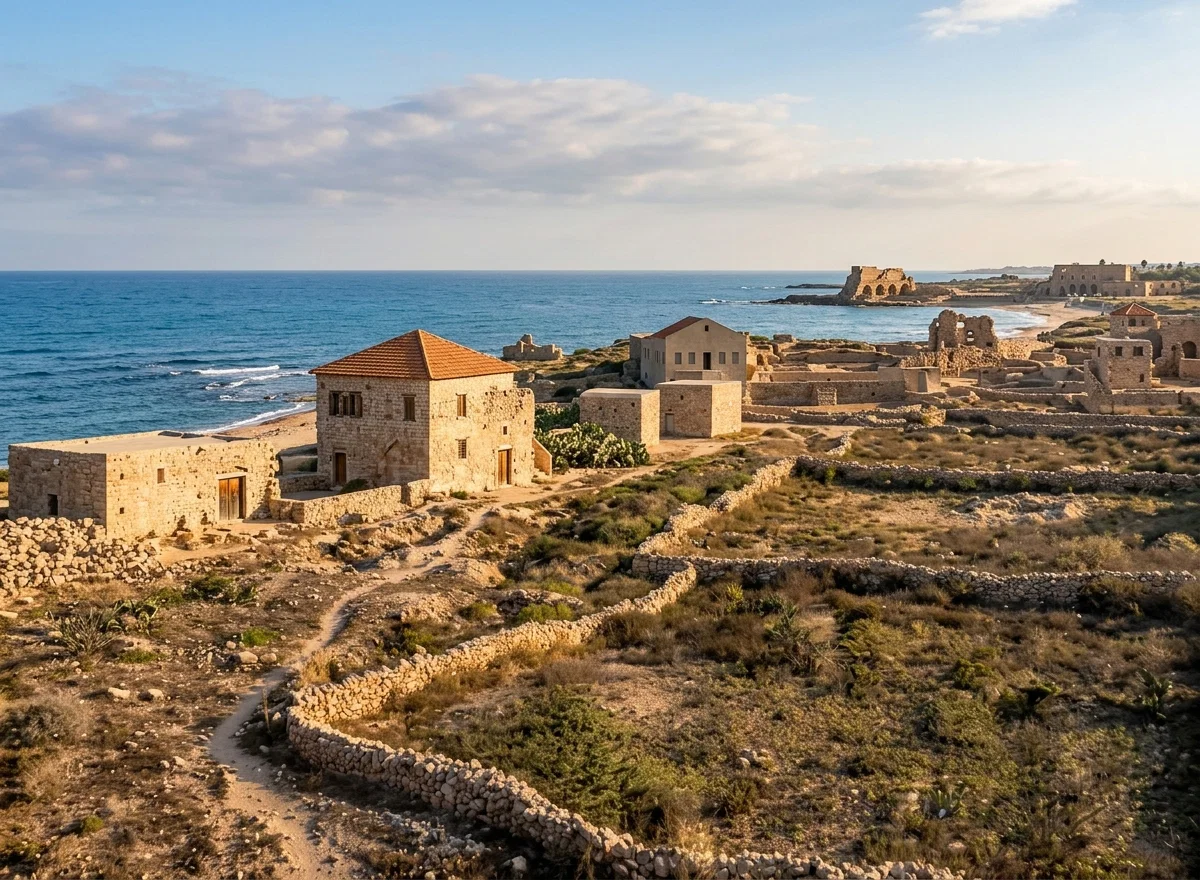
Ruins of Cesarea.
What is for God’s glory is for the good of His creatures. It seemingly may not be for a time to mortal eyes; but God “worketh ‘all things after the counsel of His own will,’ “to the praise of the ‘glory of His grace’—His unmerited favor to man. And therefore “we know that to them that love God, God worketh all things with ‘them for good.’” R.V., margin. But he who to the end resists God’s will in himself, perverts to destruction the mighty saving power of God.
These and similar reflections and remembrances of His Word, come to us as we look upon this scene of Cesarea of old. It was once a great city, and for a time a center of power and influence. It was built in the short space of ten years by Herod the Great in honor of Augustus Cæsar. Its location was favorable—on the west coast of Palestine, seventy miles west of north of Jerusalem, thirty miles north of Joppa, lying on the great road from Tyre to Egypt, the residence of several of the Herods, a military center, made by Vespasian, who was there crowned, a Roman colony, having a good harbor, and large commerce,—surely it bid fair to be a great and “continuing city.”
Its principal population was Gentiles with a large admixture of Jews, in whose synagogue the Scriptures were read in Greek. Here a strong Christian church was founded. Here lived Philip the evangelist, whose four daughters possessed the gift of prophecy. Here lived Cornelius, the devout Roman centurion, to whom Peter was sent with the Gospel. Here Herod Agrippa I. died a horrible death, because he glorified himself instead of God. Here also the apostle Paul was kept a “prisoner of Jesus Christ” for two years, waiting for his trial; kept by the corrupt Felix, who hoped to be bribed into setting free an innocent man.
But typical of earthly glory, in which God is not, the Herods have long since passed away. Their very names now live only because of their connection with God’s heralds of the religion these selfish rulers despised and rejected. Cesarea is no more. Long lines of2ruins, heaps of stone, crumbling buildings, quarries for other towns, mark the place of the proud city. God was left out of its reckoning in its building. God was dishonored by its kings. Even the Christian church which once flourished there seems to have imbibed the spirit of “glory to men,” or they would not have retained and tolerated as bishop, Eusebius, the obsequious adorer and flatterer of Constantine.
How all these things recall the Gospel message of God to this generation, “Fear God, and give glory to Him; for the hour of His judgment is come; and worship Him that made heaven, and earth, ‘and the sea, and the fountains of waters.” All life and power are in His hand. All knowledge is His to direct. All love reigns in His heart. Reject them, take glory to ourselves, and their perversion will slay us. Receive them, glorify Him, and they will glorify us with Him forevermore.