STREAMS IN THE DESERT

8%

Pacific Press Publishing Company · Oakland, California · Apr 24, 1901

FromSigns of the Times, Vol. 27, No. 17.

Read the full edition

“STREAMS IN THE DESERT.”

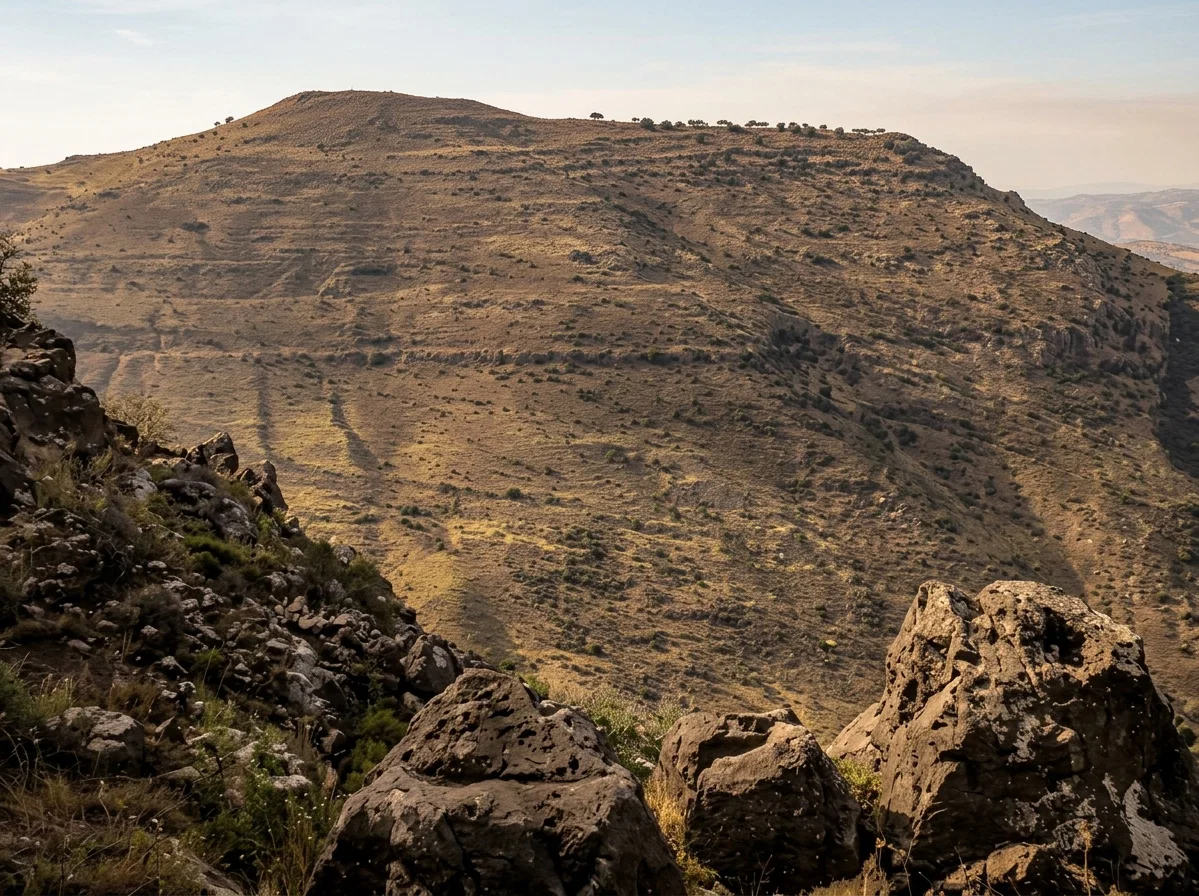
OUR illustration is from the photograph of a mountain in ancient Galilee, the presumable place where our blessed Lord delivered the wonderful sermon recorded in Matthew, chapters 5-7. It is sometimes called the Mount of the Beatitudes. There is nothing of beauty or beautification in the picture. It reveals to us a great barren hill and nothing more; yet, in its historical connections, it suggests wonderful lessons.
THERE is the mountain, cold, barren, deserted, irresponsive. Here are the beatitudes, throbbing with the love and life and sympathy of our heavenly Father:—
“Blessed are the poor in spirit; for theirs is the kingdom of heaven. Blessed are they that mourn; for they shall be comforted. Blessed are the meek; for they shall inherit the earth. Blessed are they which do hunger and thirst after righteousness; for they shall be filled. Blessed are the merciful; for they shall obtain mercy. Blessed are the pure in heart; for they shall see God. Blessed are the peace-makers; for they shall be called the children of God. Blessed are they which are persecuted for righteousness’ sake; for theirs is the kingdom of heaven. Blessed are ye when men shall revile you, and persecute you, and shall say all manner of evil against you falsely, for My sake.”
WE will not take the time to expand or explain these wondrous blessings. They are not simply jewels from the mine; each of them is a mine, or a passageway to storehouses of heavenly riches of character. Together they form a perfect chaplet of virtues; a series of holy steps heavenward; a telescopic ladder in which each step extends to the end; a fulness of blessings having fruition in this life, and more abundant in the life to come.
CONTRAST the two pictures,—barrenness with beauty, change with certainty, chaos with cosmos, crabbedness with companionship, cursing with crowning, desolation with defense, death with deliverance, wasting with wisdom, loneliness with life and love. All these and more are suggested by the two pictures before us,—the picture of light upon the sensitive plate, of the pen with words. Cursing, wasting, barrenness, drought, loneliness, vagueness, uncertainty, despair, is written upon the one; the other teems with blessing and fruitfulness and life and certitude and hope and power. It would seem to human wisdom that Jesus would have chosen the fruitful plain or the gorgeous temple for such wonderful words; but He did not. He chose the barren mountain from which the rains of centuries had washed the strength and goodness, fertilizing the fruitful valleys below. Even in this He would teach the children of earth that where God’s power and presence are we may never despair. When Christ speaks, the desert land becomes an inhabited place, the gleaming parched sands a fountain of freshness and joy.
THUS has He ever told us in His Word. The “Man” ChristJesus, God’s fellow and ours, shall be “as rivers of water in a dry place, as the shadow of a great rock in a weary land.” Isa. 32:2. Before His presence “the desert shall rejoice, and blossom as the rose;” “in the wilderness shall waters break out, and streams in the desert. And the parched ground shall become a pool, and the thirsty land springs of water.” Isa. 35:1, 2, 6, 7.
It was the barren woman Sarah that bore Isaac, the child of promise, thru the power of God. Samuel, the mighty judge and prophet, sprung from the barren Hannah. The greatest of all God’s prophets was the son of aged and barren Elizabeth. “He maketh the barren woman to keep house, and to be a joyful mother of children.” And so will He a barren church if she will let Christ in to rule and to work.
THE natural man, the sinner, who trusts in himself, is “like the heath in the desert,” dry, parched, fruitless. He brings forth no fruit for the Master. In the honest confession of such an one we read, “I know that in me, that is, in my flesh, dwelleth no good thing.” Rom. 7:18. “Destruction and misery are in their ways.” “He feedeth on ashes.” How fitly is represented in these and kindred scriptures the condition of those who have found self and the world to be a barren desert! There are millions such, but many do not know their woeful condition, and will not till sin begins to bear its harvest. Jesus Christ bids all souls who are unsatisfied with the barrenness of their life to come to Him. He declares, “I will pour water upon him that is thirsty, and streams upon the dry ground; I will pour My Spirit upon thy seed, and My blessing upon thine offspring; and they shall spring up among the grass, as willows by the water-courses.” Isa. 44:3, 4, R.V. “Behold, I will do a new thing; now it shall spring forth; shall ye not know it? I will even make a way in the wilderness, and rivers in the desert.” Ch. 43:19. Thus, dear soul, laden with sin, producing but barrenness, thirsting for the waters of life, God will deal with you. Open the heart and receive. Come to the Fountain and drink. Yield all and receive all.
OUR lesson appeals to the dry, barren professors in the churches of Christ everywhere, those who, like the arroyos of the West, are full of water when rain is flooding the land, but are dry when the thirsty come to obtain drink. They are like the spring of water that deceives. The traveler has seen it overflowing in a plenteous time, and he thinks it perennial. He seeks it again in a time of drought, with hopeful longing; he goes far from his pathway to find it, but he sinks despairingly, exhausted by its dry bed. In the flood-time it deceived. Like the new Jericho of old, the situation was pleasant, but the water was naught, and the ground barren. The soul needs, like that ancient fountain, to be infused with the salt of God’s life and power. Then it will be healed, and “like a watered garden, and like a spring of water whose waters deceive not.” Isa. 58:11, margin.
THERE is a lesson in it for the Christian who thinks that his talent is like the barren mountain, of little worth. He may be only a poor carpenter with his tools, a poor mason with his hammer and trowel, a woodsman with his ax, an unknown artist with his brush, a sweet singer not yet heard. Put your whole soul into your talent and consecrate it to Jesus Christ; let Him use it and you. He is building His heavenly temple of living stones for all eternity, and as of old He calls for offerings. Ex. 25:1-8. Not one talent He has given need be unused; not one need be unglorified. “Every wise-hearted” man and woman, every one who can bear tool or sword, can work in the temple or build in the wall. Yield all you have to God, even tho it seem to be but the shining sands of the desert or the barren mountainside. He will make the one well-springs of water for the thirsty; He will speak from the other words of blessing to all eternity.