BETHANY

10%

Pacific Press Publishing Company · Oakland, California · Mar 6, 1901

FromSigns of the Times, Vol. 27, No. 10.

Read the full edition

BETHANY

Around Bethany cluster many sacred memories. It was the home of Mary and Martha and Lazarus, whose names are so closely associated with the name of Jesus in His earthly life. It lies on the eastern slope of the Mount of Olives, about a mile beyond the summit, near the point where the road from Jerusalem to Jericho begins its more sudden descent towards the Jordan valley.
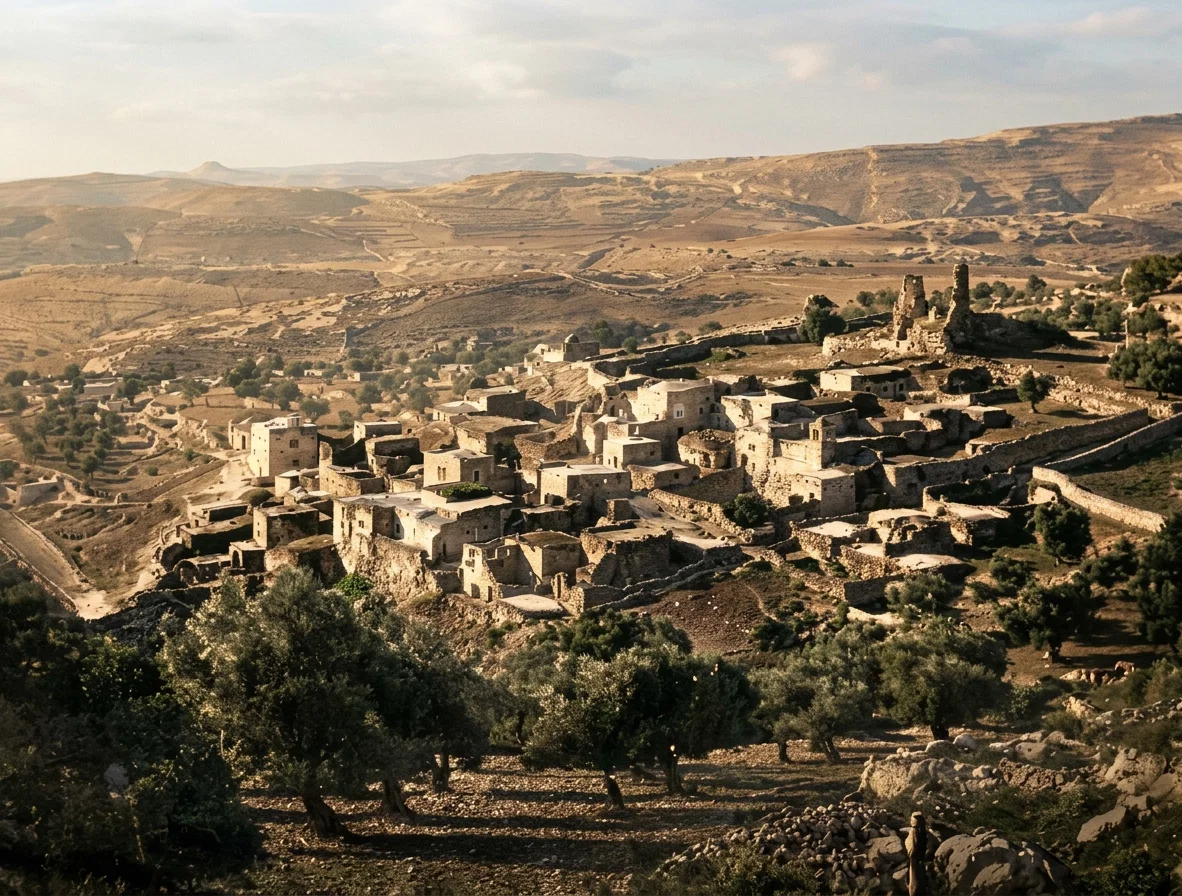
MODERN BETHANY ("EL-AZIRIYEH.")
Bethany is now called Lazarieh, or el-Aziriyeh, “the place of Lazarus.” It is a wild mountain hamlet, containing only about twenty families, yet here is the spot where Jesus often stopped to rest at the home of Mary and Martha; here is where He raised Lazarus from the dead; here is where Mary anointed the feet of Jesus with the costly ointment; and here is where He ascended to heaven.
The incidents that have been mentioned furnish material for many valuable lessons. We will briefly notice some of them. “At the home of Lazarus, Jesus had often found rest. The Saviour had no home of His own; He was dependent on the hospitality of His friends and disciples; and often, when weary, thirsting for human fellowship, He had been glad to escape to this peaceful household, away from the suspicion and jealousy of the angry Pharisees. Here He found a sincere welcome and pure, holy friendship.”
This welcome and cordiality was a source of comfort and joy to the Man of sorrows. “He longed for human tenderness, courtesy, and affection.” He was made in all things like unto His brethren. Heb. 2:16–18. He became weary; He yearned for human love; He enjoyed the association and companionship of His fellows. “In the home at Bethany Christ found rest from the weary conflict of public life. Here He opened to an appreciative audience the volume of Providence. In these private interviews He unfolded to His hearers that which He did not attempt to tell to the mixed multitude. He needed not to speak to His friends in parables.”
On His first visit to Bethany, when Christ was giving instruction, “Mary sat at His feet, a reverent and devoted listener,” while Martha was “perplexed with the care of preparing the meal.” She said, “Lord, dost Thou not care that my sister hath left me to serve alone? bid her therefore that she help me.” The Saviour and His disciples had just arrived from Jericho, and were tired and worn from their journey. “Martha was anxious to provide for their comfort, and in her anxiety she forgot the courtesy due to her Guest.” Jesus said toher, “Martha, Martha, thou art careful and troubled about many things; but one thing is needful: and Mary hath chosen that good part which shall not be taken away from her.” Mary was feasting upon the precious words which fell from the Saviour’s lips. They “were more precious to her than earth’s costly jewels.”
“The one thing that Martha needed was a calm, devotional spirit, a deeper anxiety for knowledge concerning the future, immortal life and the graces necessary for spiritual advancement. . . . Jesus would teach His children to seize every opportunity of gaining that knowledge which will make them wise unto salvation. The cause of Christ needs careful, energetic workers. There is a wide field for the Marthas, with their zeal in active religious work. But let them first sit with Mary at the feet of Jesus. Let diligence, promptness, and energy be sanctified by the grace of Christ; then the life will be an unconquerable power for good.”
Passing over the wonderful event of the resurrection of Lazarus (too long for this paper), near the close of Christ’s earthly ministry, we note another occurrence in the little village—and its lesson. The anointing of Jesus by Mary was an act of loving ministry performed at Bethany, in the home of Simon the leper. Jesus approved the sacrifice made by Mary, saying, “She hath wrought a good work upon Me.” “She did it for My burial.” Matt. 26:10, 12. See also John 12:7. Mary did not understand the significance of her act in its relation to the Saviour’s death, but under the guidance of the Spirit of God she “wrought a good work,” while worldly-minded ones who criticized her, were reproved. They only saw a useless waste. Jesus saw the service of a loving heart, and accepted it as a precious gift.
At Bethany Jesus gave His disciples His parting blessing, and while in the act “He was parted from them, and carried up into heaven.” Luke 24:50, 51. When He first talked of leaving them, His disciples were sad and troubled; but the instruction He gave them, and the experiences gained in connection with the betrayal, trial, crucifixion, and resurrection of Christ, had changed their frame of mind. Now their hearts are filled with praise, even as they view their ascending Lord, and He vanishes from their sight. “They worshiped Him, and returned to Jerusalem with great joy.” Verse 52. Thus it may be with us. Under the divine blessing, with unwavering faith and calm trust in God, we may see earthly joys and hopes fade away, and our friends—and loved ones vanish from our sight, yet we may “rejoice in hope of the glory of God,” and not only so, but we may “glory in tribulations also.” Rom. 5:2, 3. M. H. BROWN.