A HINDU MELA

6%

Pacific Press Publishing Company · Oakland, California · May 15, 1901

FromSigns of the Times, Vol. 27, No. 20.

Read the full edition

A HINDU MELA.

The mela is a great religious festival among the Hindus. A party of missionaries recently attended a mela held on Sangor Island, at the Hooghly mouth of the sacred Ganges. Their purpose was to study the natives and their religious ideas, and if possible to reach them with the Gospel. The following spirited account of the festival was written by Mr. Wroten, one of these missionaries. It shows in a strong light the debasing influence of heathenism. In contrast with this picture consider what the Bible and Christianity do for a people, and you will surely say with the psalmist, “Happy is that people whose God is the Lord.”
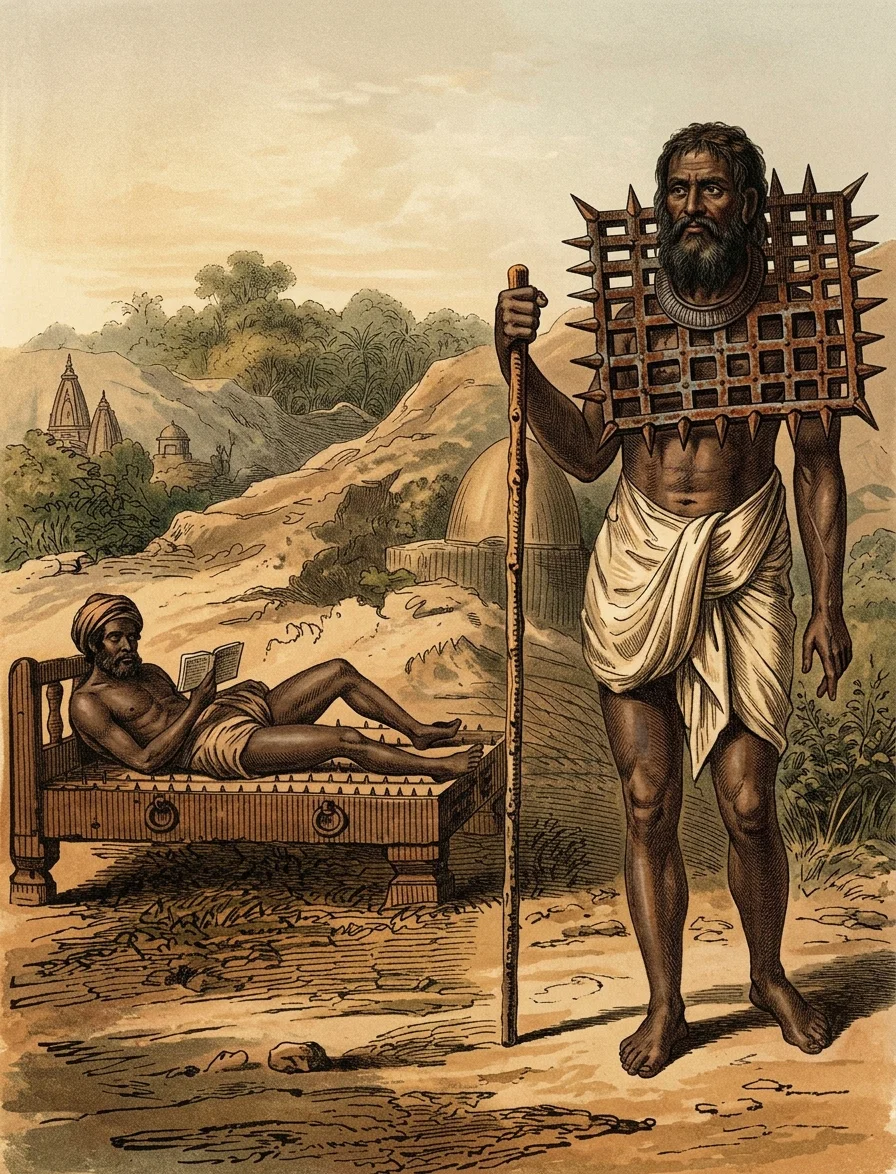
Hindu Tortures.
Hindu Tortures.
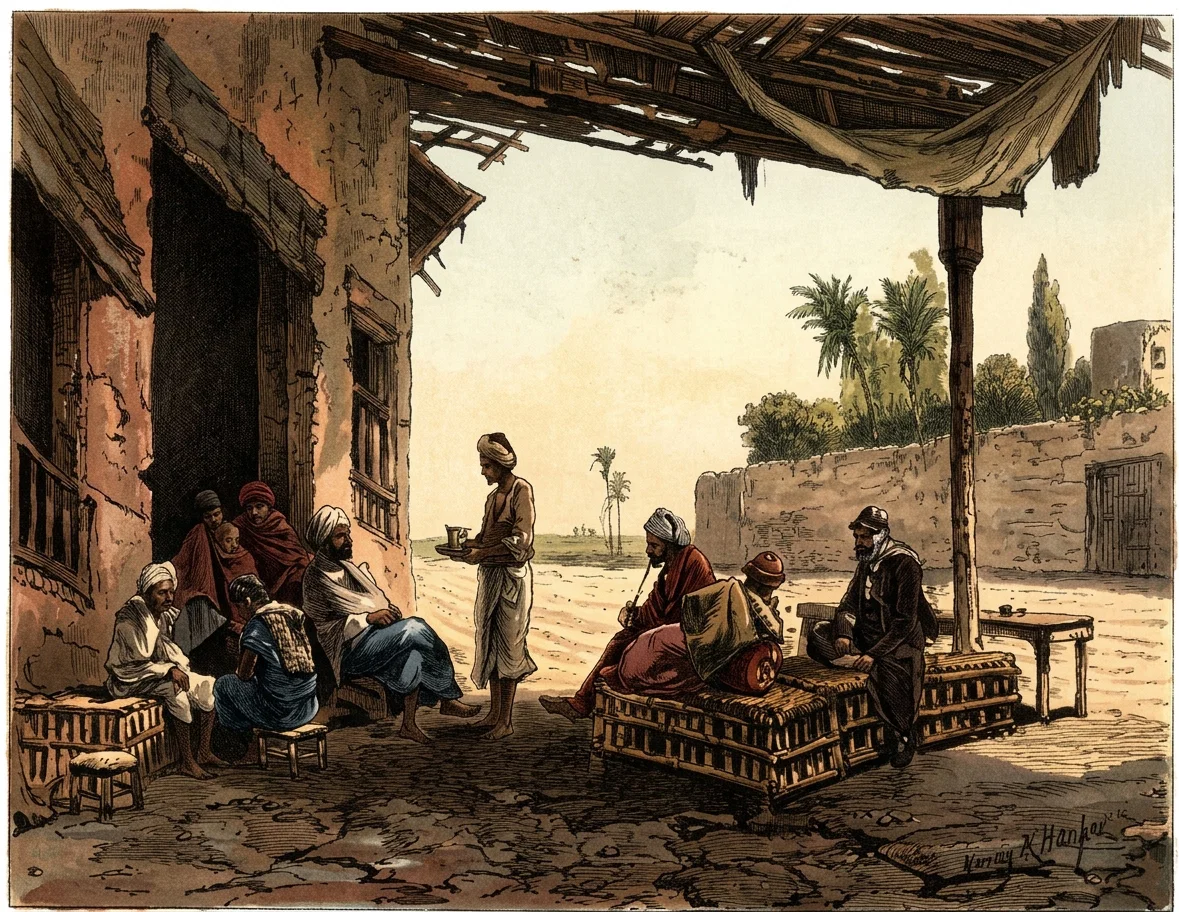
A Native Household, India.
Mr. Wroten says:—
“Sangor Island is densely covered with jungle, offering cover for tigers, cobra, etc., so that people do not wander far from the beach.
“The people come from great distances, at enormous expense and trying experiences, reminding one of the crusades, only perhaps not on so grand a scale. If one dies on such a pilgrimage, he is sure to escape being born into this world again. The one aim of the Hindu seems to be to escape being born into the world again, and if he can not escape another world-life, at least to escape being born the second time a woman. Poor pilgrims are on this journey to whom twenty-five rupees (about $8) would be a small fortune. The cost of the pilgrimage represents the savings of many long and weary months.
“I saw poor human creatures who had been brought down sick to the water’s edge, where the tide might play with their feet, in the hope that, if they died, they might pass away with their feet in the holy water. Shriveled old women and decrepit old men are conducted thither by children and grand children, who believe that death on such a journey would mean immediate absorption into the supreme God.
“As they come, many of the more earnest of them fast, and arrive weak and emaciated. The climate is delightful for a European or an American at this season [mid-winter], yet even he must clothe himself very warmly. These poor unfortunates come with less clothing than they ordinarily wear, and they are pinched and humped up with suffering from cold. The amount of merit accumulated is commensurate with the intensity of the suffering. After such experiences, lasting a month in some instances, they return with the good gods ready to bestow favor, and the bad ones all satisfied.
“I suppose at this mela there must have been thirty or forty thousand worshipers, altogether, and of this number a thousand were fakirs. Such a sight I never saw, and am wholly unable to describe. The fakir is the ascetic of Hinduism, who denies himself and sacrifices in every possible way—always publicly and with great ostentation. They beg and wander about and keep themselves in the most unkempt way, becoming objects that the dirtiest animals might well scorn. To grant them a crust of bread, or serve them in any manner, procures favor, so that they are never at a loss for means to live. These beastly fellows gathered in Calcutta from various directions, and from that place a wealthy native merchant chartered a small steamer to bring them on down to the island. He would surely get some return from the gods for such encouragement and help to these holy men; perhaps larger gains in his business than ever before. To help them out of the ship into the smaller boats and get covered with the ashes and filth of their bodies is meritorious. Their hair and whiskers are never cut nor cared for. The hair becomes long, tangled, matted, and bleached in the sun until it is the most ugly and unsightly head imaginable. At death this wealth (?) of hair is presented to the gods. A piece of cloth, perhaps twelve inches square, serves for raiment entire.
“I saw many of them lying on beds of spikes, which are made and brought along especially for the occasion, and located in the most conspicuous places. Here women come and touch their feet, and then their own tongues and foreheads in adoration. I saw some of them even getting down on their knees and bumping their foreheads on the ground in reverence to these frightfully degraded men. I saw two men who had held their right arms in an upright position until they had become withered and permanently stiff; and I saw one man who had both arms erect and semi-petrified. What untold agony it must have cost no one can estimate. The nails on the fingers were never pared, until they had grown to a length of seven or eight inches, and had curled all about the fingers and hands. In one place I saw fifty-two of them sitting in a circle on the sand eating from pieces of banana leaves something which some benevolent native had furnished, and among them was one with a rigid arm. As I came near them, he motioned with his other hand, asking me to stay back; for they were holy, and I would defile them with my presence.
“From the appearance of these so-called holy men one would gather that their conception of God is the most horrid imaginable. We gather the Hindu’s idea of God from their holy men and their methods of worship. Their temples and idols re-enforce this conclusion that the Hindu deities are horrible objects. To me their presence makes hell instead of heaven.
“Every monstrosity and deformity which could be found was brought along as an object of worship. Idols big and little, gods and goddesses, animals and inanimate,—before them all they cast their sweets, rice, and flowers. A man with a deformed leg, and foot with only two toes, stood with the help of a crutch and received their gifts and veneration. A blind man lay on the ground beating his chest with his hands and pounding his head into the sand, calling upon Ram, while the people showered him with rice—a man sitting near to take care of the money. Some had their heads buried in the sand, and some were entirely under, with the exception of a hand with which they were telling their beads in prayer, and all these received donations from the pilgrims.
“Of course there was more or less chicanery about it, but the ignorant and superstitious believed all they saw and contributed accordingly. There were several calves and cows with extra legs or humps on the back, and, adding this deformity to the sacred ness of the animal as generally received, they were sources of large income to the owners. A commercial aspect pervaded the entire system; nearly everybody appeared to be endeavoring by ‘hook or by crook’ to get money.
“I have said nothing about the obscenity connected with the whole festival, because much of it was deplorable beyond mention. The natural man is not bad enough according to Hinduism, but there is need of manufactured representations to give his evil propensities an added impetus. Men and women before unnamable shrines, and all this under the name of religion. Nothing read from books by the Western world can give a true realization of the depravity of the Hindu mela.
“In the midst of the worshiping throng the Christian feels like stopping his ears to keep out the din and jargon, shutting his eyes to save himself the unseemly spectacle, and closing his nose against the nauseating stench. I wondered at the patience and mercy of a tolerating God, and tried to reason out some excuse why He did not take the foundation from under the island, and let the whole disgusting and demoralizing scene drop into the sea and be no more forever. But these races still exist, and mercy bends to save them.”