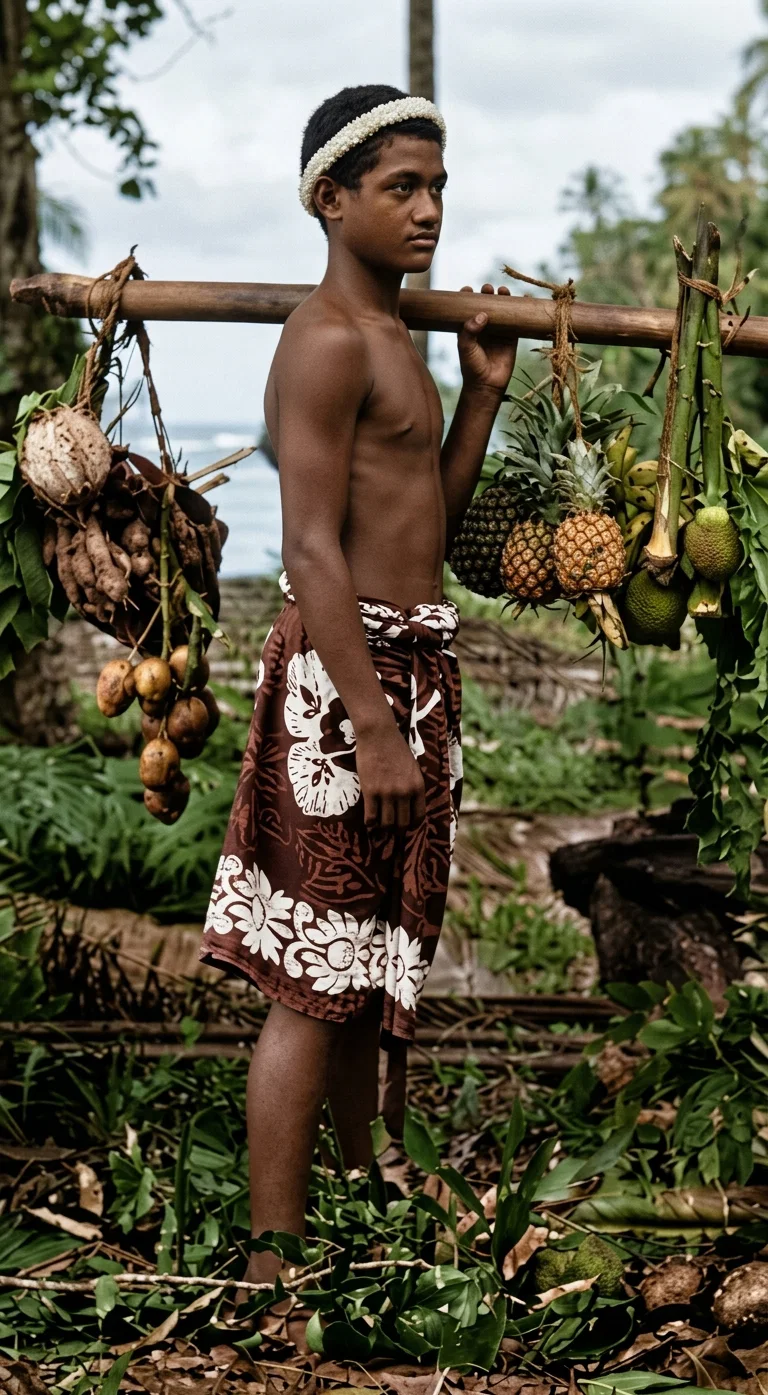
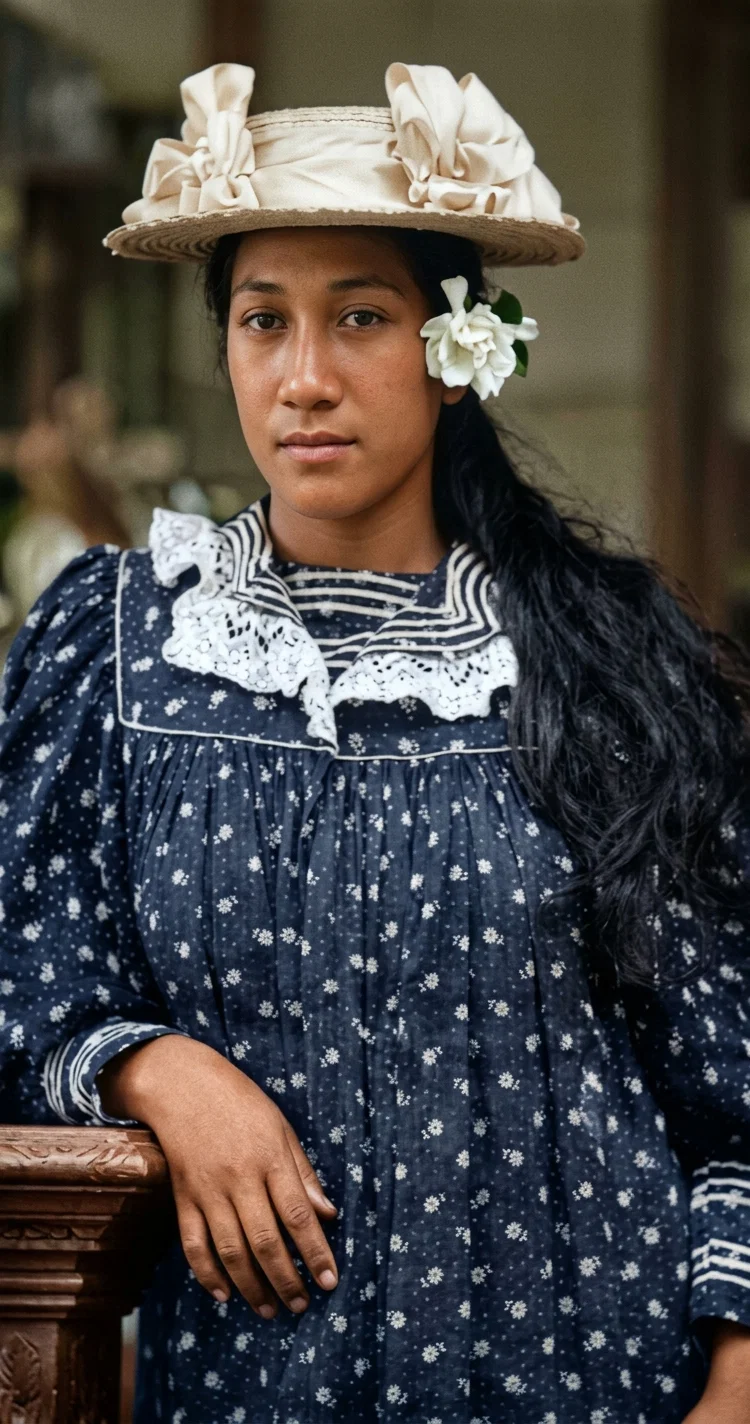
The Tahitians, as the natives of the Society Islands are called, are members of the brown race. In some respects they resemble the aborigines of North America. Like the white races, some have curly hair and some straight; but it is always black, and the eyes are dark.
They are an easy-going people, and are not inclined to do any more work than is positively necessary. They subsist mainly upon the foods which grow spontaneously, tho they might have, and would enjoy, a much greater variety in diet, if they would but do more in the line of cultivation. Plantain grows wild in the mountains, and is free to any one who will go after it. Carrying it home is not very light work, as it is often several miles, and they carry from three to eight bunches at a time, according to the size of the bunches. Breadfruit serves as a vegetable, and is plentiful in its season, and coconuts can be had all the year round.
Yams, taro, and sweet potatoes are vegetables that must be cultivated, so they are not so plentiful as breadfruit and plantain. Of the fruits, oranges and guavas grow wild and are abundant in their respective seasons. The oranges are delicious, and more juicy and sweet than those usually obtainable in the United States. They are in season from March to October; and when they are gone, the mango comes as a substitute, tho it cannot quite fill their place.
A Tahitian Girl.
Bananas and pineapples are native fruits in this climate, and require but little cultivation. The pineapple has two seasons a year, but the banana bears at all times. There are many varieties of the banana, some species being used only when cooked. Other foods, that are scarce, and can seldom be obtained in abundance, are the grape, custard-apple, sour-sop, alligator-pear, sapotin melon, and green vegetables. The climate is adapted to the growing of these fruits and vegetables; and there might be a good supply of them if the people were only more energetic in planting them.
In these islands but little clothing is needed for warmth. The most universal garment is the “pareu,” a sort of loin-cloth, made of two widths of calico sewed together. The calico is either Turkey-red or navy-blue, with large figures of yellow or white. It is worn by the women as an undergarment, or as an apron; and the men wear it instead of trousers. In country places it is often the only article of apparel worn; but in towns a shirt is worn also, and pants are often substituted for the “pareu.”
The women’s dress is a Mother Hubbard; but this, when tastily made, is as neat and becoming as a tight-fitting dress. Shoes are worn but little, except on holiday occasions. The women make their own hats, and also those of the men. The materials used for hats are sugar-cane, bamboo, pandanus palm, ferns, and a coarse grass. They do some very fine work in hat-braids, and have a great variety of plats.
When the men have no regular employment, they take the responsibility of the cooking; but as a rule there is not much work done in that line. The menu is usually composed of one vegetable, eaten with fish or coconut sauce. Sometimes they have beef, or some other flesh-meat, to eat with the vegetable. All kinds of shell-fish, and nearly every live thing to be found in the sea, is eaten, often in a raw state. Canned salmon is commonly used.
For special occasions, different preparations of a dish called “poi” are made. This is made from almost any of the more substantial fruits and vegetables. After the material is grated, coconut milk and a starch made from manioca are added, and it is wrapped in leaves and baked. To us it is not a very palatable food, but by them it is considered quite a delicacy.
In towns where bread can be obtained from the bakery, it is quite customary for those who have the money to make their morning meal of bread and coffee. The coffee is bought, already made and sweetened, at a Chinaman’s store, and carried home in a tin pail. The natives do not use cow’s milk in their coffee, but sometimes use coconut milk. They often use honey in sweetening their coffee, and always want it about as sweet as syrup. Honey is also eaten with vegetables, when they have no bread to use it with.
The islanders are quite intemperate in eating, and on that account have a great deal of sickness, tho many of the conditions by which they are surrounded are conducive to health. They know but little about the laws of health, and have many erroneous ideas in regard to the treatment of disease; but they gladly welcome help in the care of the sick, and we need help in this line for our mission there.