WATER

9%

Pacific Press Publishing Company · Oakland, California · Mar 27, 1901

FromSigns of the Times, Vol. 27, No. 13.

Read the full edition

WATER

ONE of the most important elements of our planet is water. It enters so largely into the composition of the earth, and of every living thing upon the earth, that the constant need of its life-sustaining virtues, and its supply at all times, are matters of much concern. The supplying of large cities with water is often a serious consideration, involving not only great labor and expense, but frequently no little political controversy.
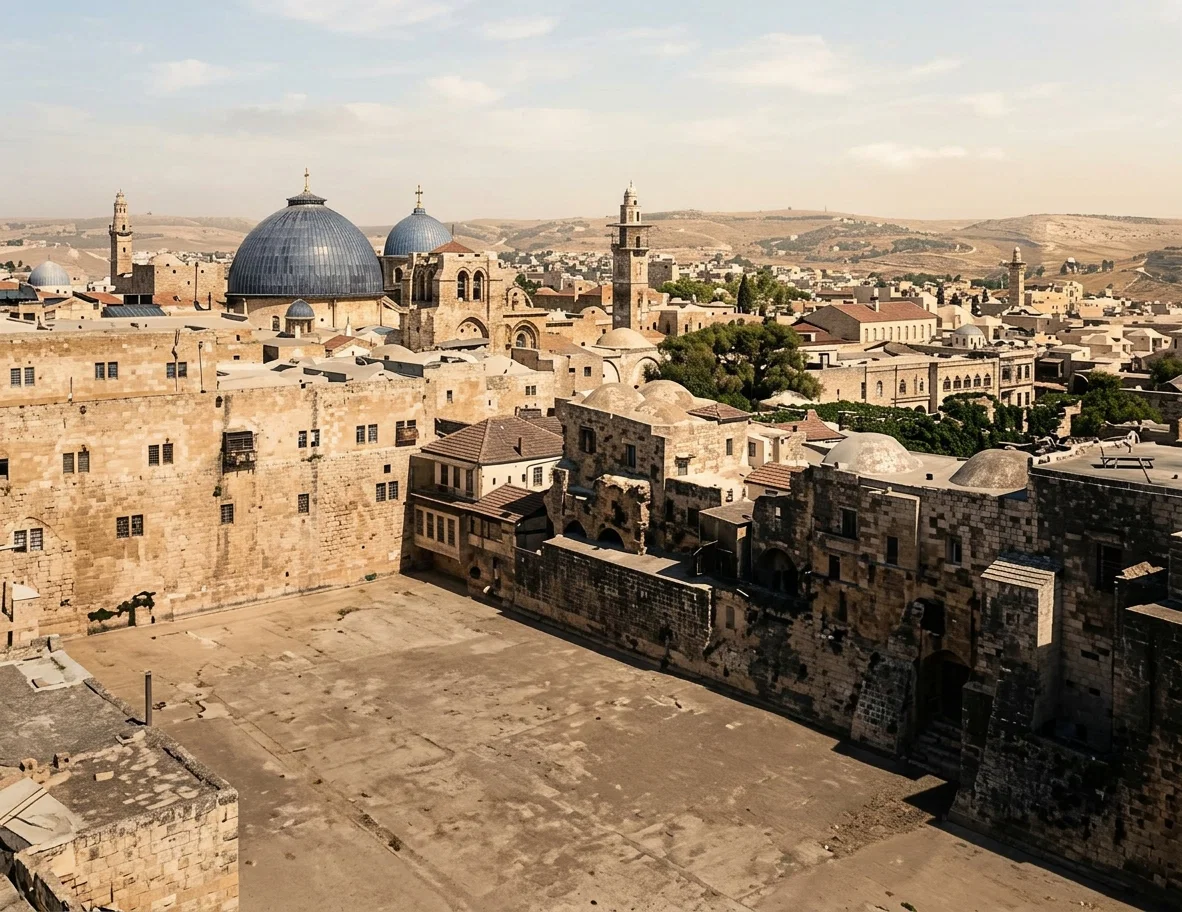
JERUSALEM—POOL OF HEZEKIAH.
ONE would naturally suppose that a city located upon mountain tops would be exceedingly difficult to supply with water. Such is the situation of Jerusalem. Of this city, the “Encyclopædia of Religious Knowledge” says: “Since Jerusalem lies in a rocky limestone region, it is to be expected that it would be destitute of springs; but this natural lack was formerly supplied by an extensive system of aqueducts, pools, and cisterns; so that in no one of her numerous sieges do we read of any suffering for water on the part of the inhabitants, while the besiegers have often suffered severely. At the present day rain-water is exclusively used; and the better class of houses have three or four cisterns, from five to thirty feet long by the same in breadth, and ten to twenty feet deep. . . . But formerly there were aqueducts from the north, west, and especially from the south.”
SOLOMON did a great work in supplying the city with water. He constructed three large pools about three miles from Bethlehem, where he had extensive gardens, and built a large conduit to convey water to Jerusalem. Speaking of the things he did in order to conduce to his temporal pleasure, he says: “I made me gardens and orchards, and I planted trees in them of all kind of fruits; I made me pools of water, to water therewith the wood that bringeth forth trees.” Eccl. 2:5, 6. There are traces of two conduits by different routes from the south, but it is not certain whether Solomon built them both. It is said that one was repaired and used from 1856 to 1860, but was afterward stopped up by the Bethlehemites.
IN a work entitled, “City of the Great King,” by Dr. Barclay, there occurs this passage: “The artificial provision for supply of water in Jerusalem in ancient times was perhaps the most complete and extensive ever undertaken for a city. The aqueduct of Solomon (winding along for twelve and a quarter miles) poured the waters of the three immense pools into the enormous temple wells, cut out like caverns in the rock; and the pools which surrounded the city in all directions, supplied to a great extent the want of a river or lake.”
HEZEKIAH, who is accredited with much enterprise in the line ofpublic improvements, has this Scripture record: “This same Hezekiah also stopped the upper watercourse of Gihon, and brought it straight down to the west side of the city of David.” And one of the pools now existing in the city is called the Pool of Hezekiah. It is located near the present Jaffa (Joppa) Gate, on the west side of the city.
WATER is used as an emblem of purification and of life. 1 Cor. 10:4; Eph. 5:26; 1 Peter 3:18-22. Its practical uses are to cleanse and to revive. When the Lord planted a garden in Eden, and caused to grow therein every tree that is pleasant to the sight and good for food, a river went out of Eden to water the garden. Gen. 2:8-10. Water is also an element of destruction, as in the case of the destruction of the antediluvians by the deluge, and of the Egyptians in the Red Sea. Like Paul’s experience with the law of God, that which was “ordained to life” they “found to be unto death.” Rom. 7:10.
IN Isaiah’s prophecy against apostate Judah, water is used as an emblem of both mercy and wrath: “Forasmuch as this people refuseth the waters of Shiloah that go softly, and rejoice in Rezin and Remaliah’s son; now therefore, behold, the Lord bringeth upon them the waters of the river, strong and many, even the king of Assyria, and all his glory; and he shall come up over all his channels, and go over all his banks; and he shall pass thru Judah; he shall overflow and go over, he shall reach even to the neck; and the stretching out of his wings shall fill the breadth of Thy land, O Immanuel.” Isa. 8:6-8.
THE prophet David says, “There is a river, the streams whereof shall make glad the city of God, the holy place of the tabernacles of the Most High.” Ps. 46:4. Here reference is had to the New Jerusalem, whose water-supply is a very prominent feature of the many blessings provided for its inhabitants. In John’s description of the “holy Jerusalem” which in vision he saw “descending out of heaven from God,” we note this item: “And he [the angel] showed me a pure river of water of life, clear as crystal, proceeding out of the throne of God and of the Lamb. In the midst of the street of it, and on either side of the river, was there the tree of life, which bare twelve manner of fruits, and yielded her fruit every month.” Rev. 22:1, 2.
AFTER describing the New Jerusalem, the “Revelation of Jesus Christ” makes this earnest appeal to sinners: “The Spirit and the bride say, Come. And let him that heareth say, Come. And let him that is athirst come. And whosoever will, let him take the water of life freely.” Verse 17. Come, “now is the accepted time; behold, now is the day of salvation.” 2 Cor. 6:2. G.