One hundred years before that hero of the cross, Captain Allen Gardiner, had conceived the idea of carrying the Gospel to the natives of Patagonia, the United Brethren and Moravian missionaries had entered the Guianas in the northern part of South America, and were teaching the bush negroes and Indians the way of salvation. Many were converted, and for more than 150 years this little spot in the “neglected continent” has radiated with light and hope.
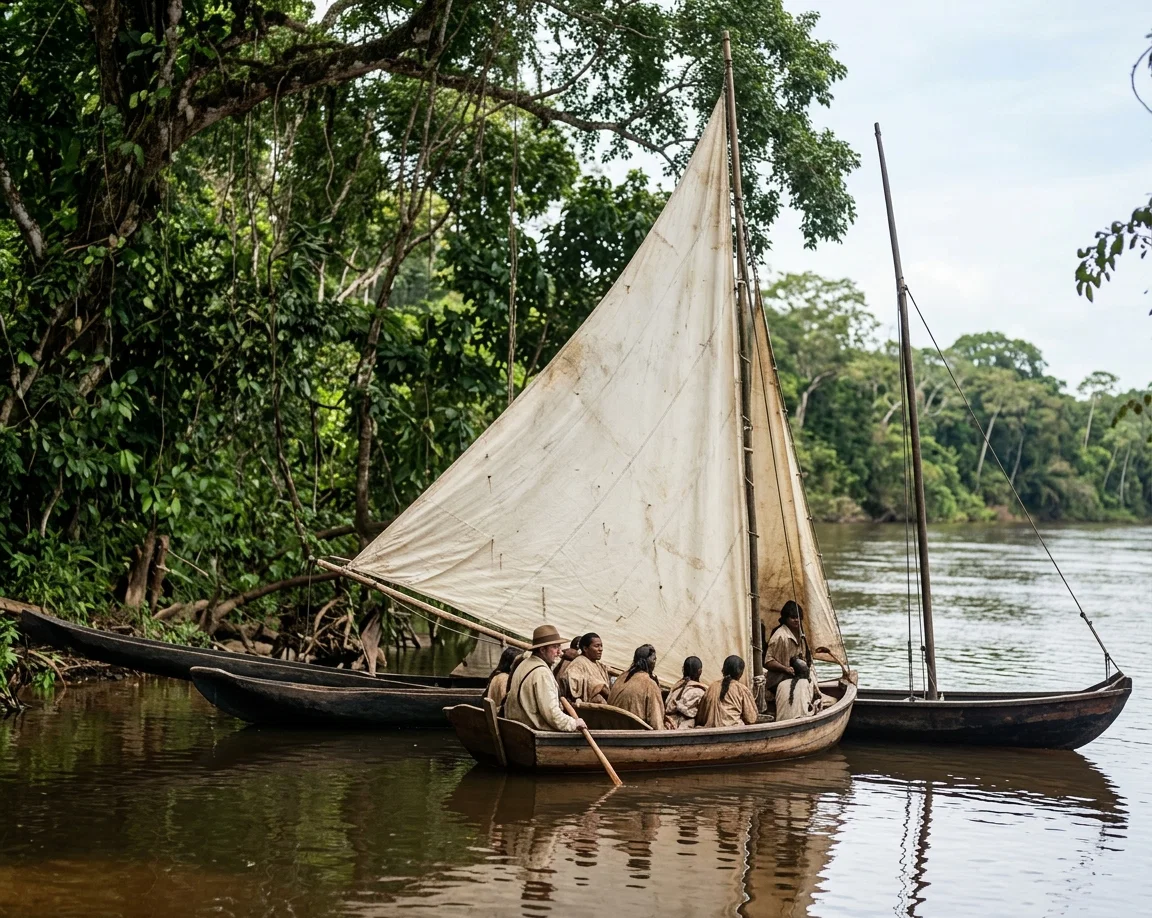
The Boat Used by Missionaries on the Essequibo River. Mr. Daniels, the Owner, Sits in the Back End of the Boat; the Others Are Natives Going Out with Him for a Sail.
Its missionary history is one of thrilling interest. First victory, and then seeming defeat,—over and over again was this experience repeated. For many years it seemed that every convert would cost the life of a missionary; but another was always ready to take the place of him who fell, and hundreds are to-day sleeping in the Guianas who will respond to the Master’s call at the first resurrection.
British Guiana, the most northern of the three colonies, has a population of about 300,000. Of these almost one-third are Hindus, who, since the abolition of slavery, have been brought out from India under five and ten-year contracts, to labor on the large sugar plantations. The major part of these remain after their contract expires, and many have little homes of their own and are engaged in some line of trade. The remaining two-thirds of the population is divided among the negroes and aborigines, with a few English, Portuguese, Chinese, and mixed races.
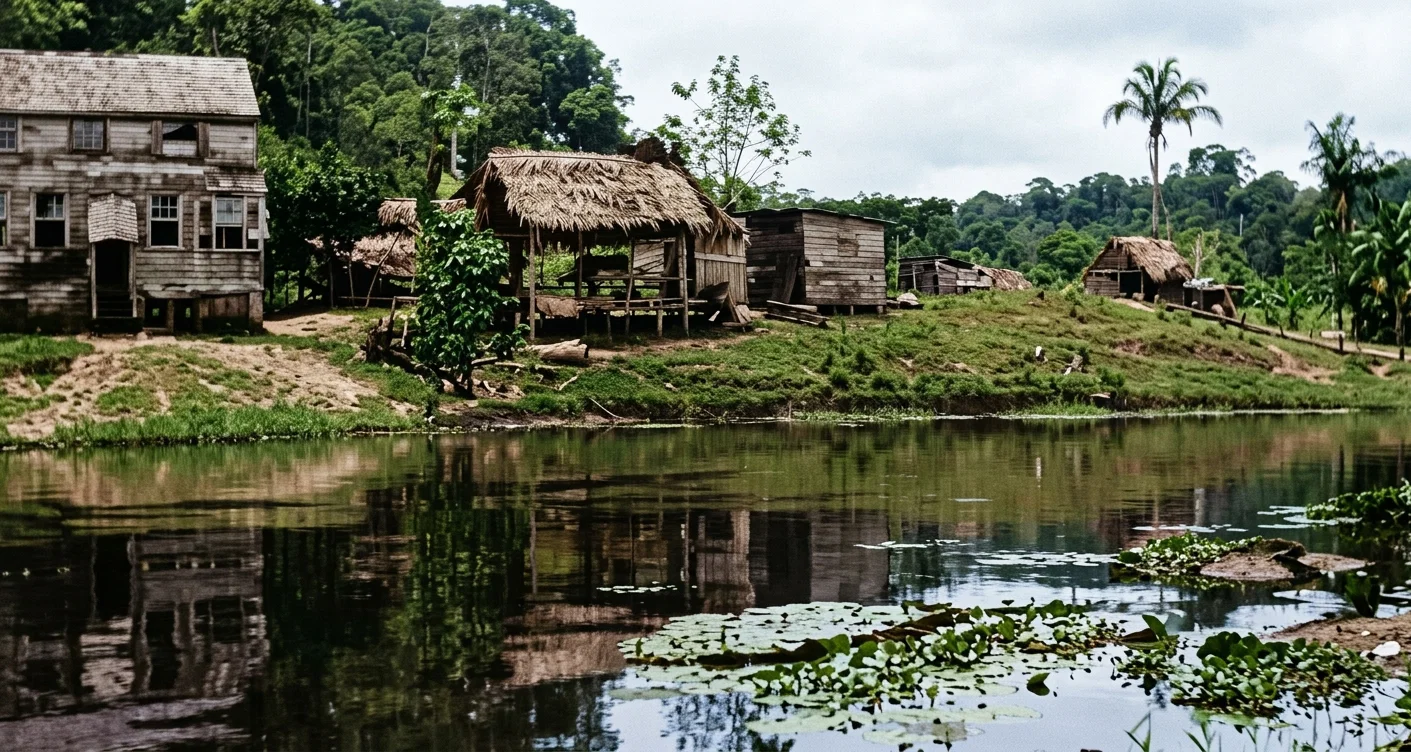
A House in Bootooba.
The aborigines are remnants of various Indian tribes, such as the Arawaks, Warraus, Caribs, and many others, scattered in the interior.
The country is level for one hundred miles back from the seacoast, when it becomes very rugged and mountainous. It is interspersed with a perfect network of streams, navigable and very deep. Many not more than fifteen or twenty feet wide are found, on examination, to be as many feet deep. Every village and hamlet can be reached by boat. Indeed, at least one-third of the population can not be reached in any other way. Besides this, often during the rainy season the towns become so submerged that boats must be used as the people go from one part to another. One of our missionaries relates the following incident: Riding one day, during the rainy season, along the graded road (these are covered with burnt clay and earth, and are built above the high-water mark), he heard some one singing. At first he could not locate the voice; but on looking closer, he saw a black girl about sixteen years old, in the draining ditch beside the road. She was bringing in a load of wood, and having thrown it into the water, was wading along pushing it ahead of her. The water came to her chin, and as she moved slowly along, she was singing, “Peace, be still.”
The scenery on every hand is magnificent. The earth is clothed with living green, interspersed with flowers of various hues, while their fragrance and the songs of the many birds fill the air with delight. Were it not for the sin and degradation on every hand, it would almost seem that here the earth had again been restored to her Edenic beauty.
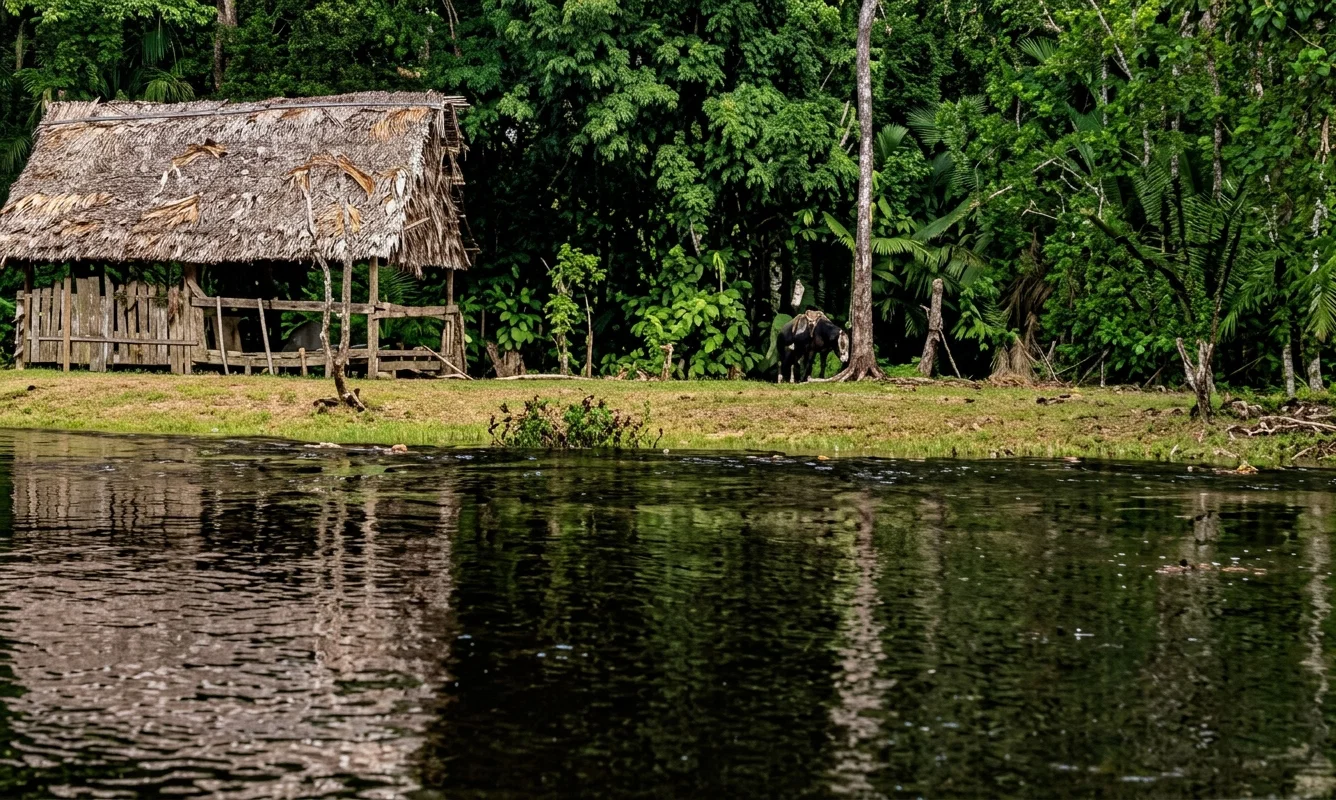
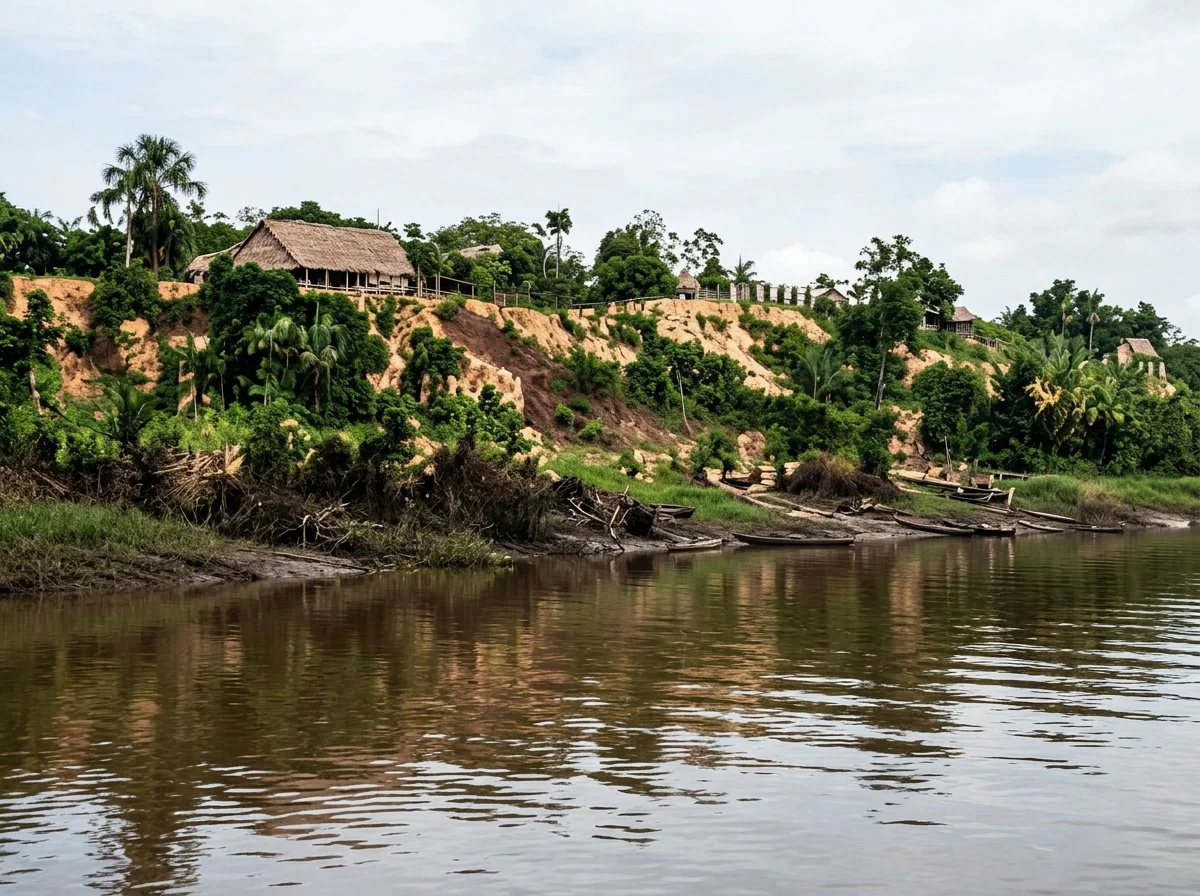
None of the Guianas can really be called heathen; the professing Christians can be counted by thousands, but the faithful missionary can find much to employ his time. A mission was opened in Georgetown, British Guiana, in 1887, which has now developed into several mission stations, with work among the negroes, Indians, and Hindus. The experiences of the laborers have been varied. The climate in many parts is unhealthful, and, being compelled to travel by water, frequently in open boats, the missionaries have endured much discomfort as well as ill health. The little vessel which we have illustrated is the one usually furnished by a Christian Indian to carry the missionaries up the Essequibo River, where they visit the Indians at several points. The other illustrations have been taken by the missionaries while in the field.
After ten years the mission of which we write was apparently abandoned, all the laborers having been compelled to leave; and the work was cared for by two natives. The converts were praying for a minister, and urgently calling on the home board to send them help. About this time a missionary who had formerly labored in West Africa was assigned to the British Guiana field. He arrived in Georgetown before the little church at that place had been apprised of his appointment. Imagine the joy of these Christians to find the answer to their prayers right among them.
The first missionary effort was to build up the little company of believers in Georgetown; but in a short time the outside interest grew to such proportions that the congregation became a crowd. The little church was seated to its utmost capacity, and some nights numbers were turned away because they could not find standing-room. The congregation has since grown until the church-building must now be enlarged.
The Lord has blessed in this effort; but the work for the Indians is of deeper interest. Generally speaking, the Indians are totally ignorant of God’s Word, and have but a vague idea of worship, even the worship of their heathen gods. They are timid; but they appreciate kind treatment, and will faithfully serve one who is their true friend. They seem to have but little mental capacity, yet they are capable of understanding God’s Word.
Seba, Once a Dutch Settlement, about 105 Miles up the River.
The first mission was opened on the Essequibo River in 1894. They met for worship under the spreading branches of a large mora-tree. Soon a building became necessary to accommodate the Indians that began to attend these services, and a small house 12x20 feet was erected to be used as a dwelling and meeting-house combined. This very soon proved inadequate for the attendance; and in the fall of the same year, 1896, land for a mission farm was leased, and in December a church 18x30 feet was ready for dedication. This is known as the Bethany Indian Mission.
The Lord not only blessed in bringing these people to a knowledge of their sins and giving them hearts to confess and forsake them, but several were healed of serious maladies; and this has had a permanent influence for good on the community. One was a girl who had been forsaken by her friends, even her mother having left her to die. She had heard that Jesus was a good “doctor,” so she requested that prayers be offered for her. It was done, and she recovered, to the astonishment of all and to the glory of God. Their old custom of making a hideous noise in the night calling for demons to heal the sick, has since that time been abandoned in this region.
The susceptibility of these people to the influence of truth is illustrated by the efforts of one young Indian lady. With but a limited and self-acquired education and with defective hearing, she supported herself while devoting one-half of her time to missionary work. As a result a company of twenty-one have been converted, among whom are her father and mother, four sisters, and two brothers with their wives. Besides these, many others are studying the Bible with her.
View of Dord, the Church of England Mission.
These innocent folk love the house of worship.13
On one occasion when our missionary visited them after several weeks’ absence, they received him most enthusiastically. In the Sabbath meeting one of the Carib Indians said: “I am so glad to come back to this God’s house [place of worship]. Beforetime when I come nobody here. I just come in here, and sit down and cry. My wife come with me, and we just cry. And when we are in the bush, I cry many times for God’s house; but now, praise God, we are here in God’s house once more.” These Indians know very little of how to work; and when told how we do in the United States, they plead for some one to come and teach them. Not one man in one hundred even owns an ax; the cutlass is the universal tool. They use it to cut brush and clear land, to plant all their fields, to gather their crops, to cut grass; indeed, it is almost their only farming implement.
There are thousands of these simple children of the forest roaming about like sheep without a shepherd. This is not only true of British Guiana, but of other parts of South America as well. They need help. Self-supporting missionary farmers would here find a fruitful field. Missions must be established among them, and faithful men sent to teach them the way of life.
Another important phase of the missionary enterprise in British Guiana is the evangelization of the Hindus, inasmuch as the increase of population is quite largely due to immigration from India. Thus far the little that has been done for the Hindus has yielded excellent fruit. Two brethren, who are truly converted, have united with our laborers, and are doing what they can for their own people. One of our missionaries writes: “As I have bowed in prayer with these two Hindu brethren, and heard their petitions in behalf of their own people, and seen their hearts become so full that they could scarcely utter a word, I must assure you that my heart went out in sympathy for them.”
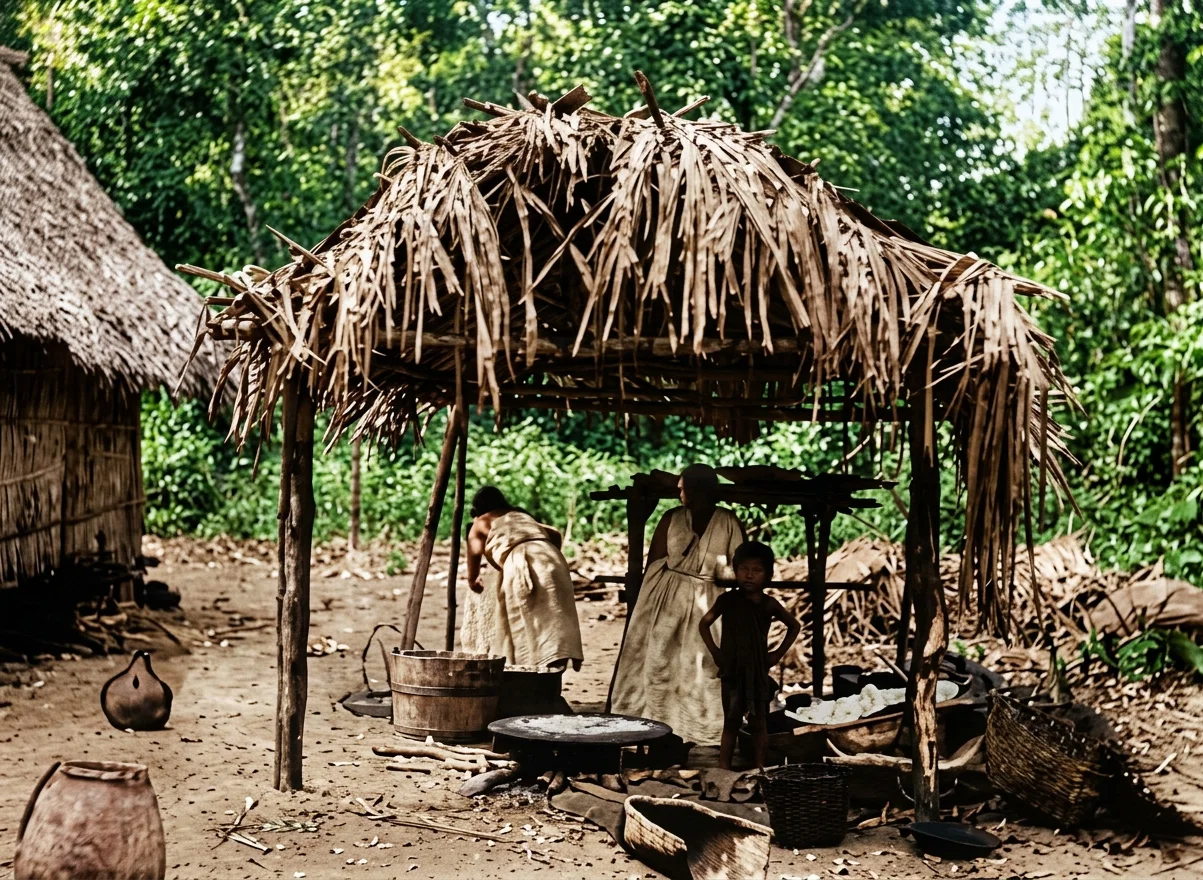
Kawio Women and Child in Native Dress, Making Cassava Bread.
One of these, who has been laboring as a self-supporting missionary, was unable to make sufficient to pay his rent, and was ejected from his home before the missionary learned of the situation. With his family he had been sleeping in an old cow-shed. When asked where he was staying, he replied: “In the same place that the Saviour stayed when he came to this world. When I lie down at night, I look up to my Father, and remember that my Saviour was in this same kind of place when He was here.” Although his wife was sick and his son in need of clothes, yet he gladly sacrificed to labor for his people. Such love and devotion has not been lost. The few who have been converted give evidence, by the marvelous change in their lives, that a work of grace has been begun in the heart.
But much more must yet be done for the Hindus as well as the Indians. The work seems but begun. No Christian is released from the responsibility of carrying the Gospel to the uttermost parts of the earth. What has been accomplished is but an earnest of what we shall see when God’s people awake to a sense of their relation to Him in this world-wide work.