A FEW months ago I was talking with a veteran in our Civil War, in 1861-65, who had seen active service in several of the Gulf States. He said that on one occasion, near the close of the war, he was talking with the skipper of a flat-bottomed sloop on the gulf, off the coast of Louisiana. He asked the skipper if he would be willing to go to Cuba in his sailboat. The answer, given without hesitation, was, “Yes.” The soldier asked him, “Would you have gone in such a boat four years ago?” The reply came quite as promptly as before, “No.” Familiarity with the dangers of war for so long, had made him comparatively indifferent to all dangers.
We have a somewhat similar experience here, in Rarotonga, in relation to the dangers of persecution. At first we even shrank from the notoriety incident to our position as the recognized friends and helpers of those whom the native rulers were trying to intimidate and keep under their control, in both civil and spiritual matters. Threats of fines and imprisonment then gave us a great deal of anxiety, causing some loss of sleep. After a few months of suspense, and seeing many of our friends tried and imprisoned or fined without just cause, and contrary to the law, an increase of faith and familiarity with danger has combined to dissipate all our former dread, and to make us comparatively indifferent to repeated threats. We praise the Lord for this experience. The occasional threats are still heard from different quarters, active persecution is held somewhat in abeyance at the present time. It has been two or three months since the last fines were imposed, for not going to meeting on Sunday, in the case of those who attended religious worship on Sabbath. More than fifty convictions have been procured in this island for that crime (?) in the several native courts.
Two or three weeks ago I went into the “bush” on preparation day, to carry a message. I accidentally came across an old native woman, a near neighbor in the village, whom I had not seen for months. She was preparing food for the Sabbath in her native oven near her hut, to which she had retired from her good house in the village, having been fined for showing disrespect, in words which were not pleasant for the court to hear, for those who brought about the persecutions. She told me all about her experience, and declared her fidelity to the Bible and the law of God, even in the face of persecution. I need not say she was delighted to receive my call, and to have me bow down and unite with her in prayer. Tears of joy were in her eyes for the sympathy she received, which had been withheld by her pastor.
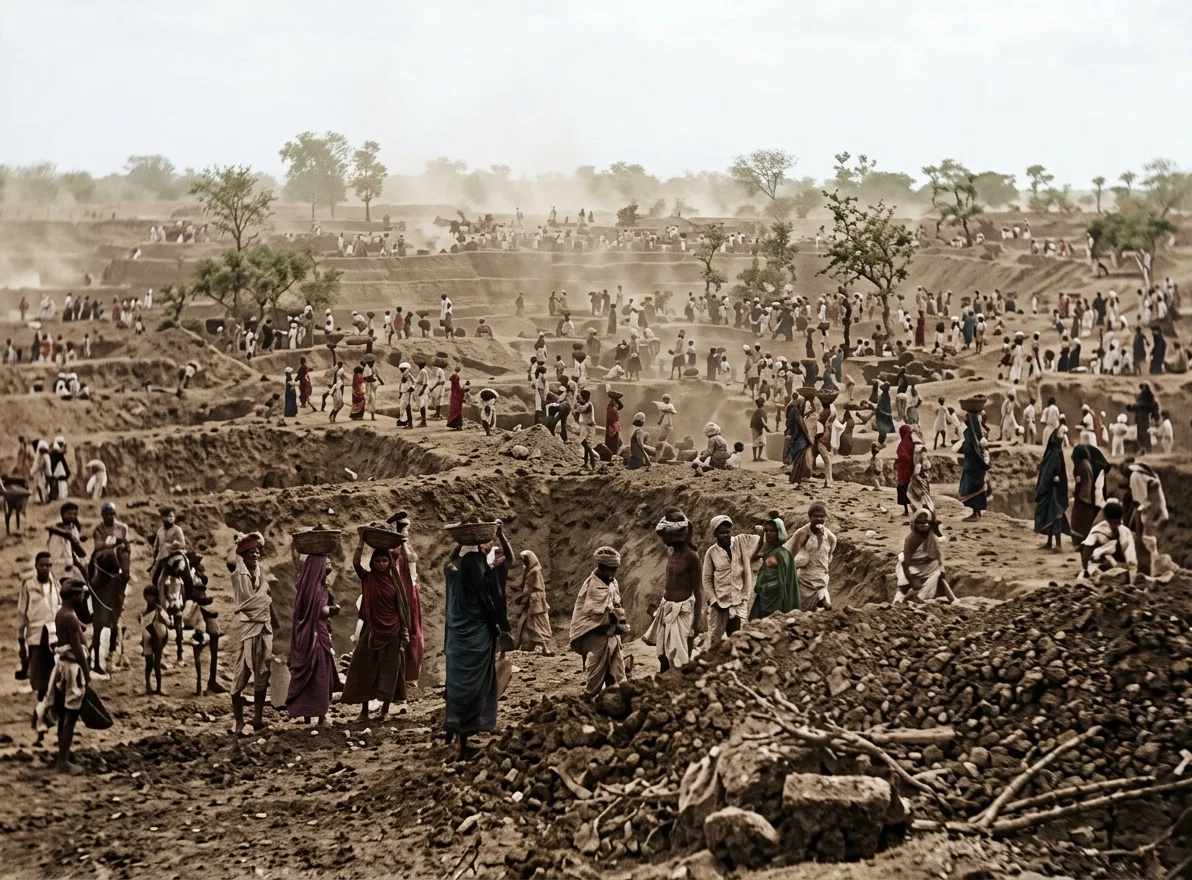
Excavating a Reservoir on Government Works, India.
Not infrequently have such cases come to my notice, quite in contrast to the general rule; for since the pioneer missionaries have led in disregarding the law of Jehovah by attempting to lead the people away from the Sabbath commandment, nearly every evil tendency in their church-members has gained the ascendency. Before there was drunkenness enough on the island; but it was chiefly among young fellows who made no profession of religion, or among confirmed drunkards. Now it is not uncommon to see church-members, and even deacons, and judges of native courts, all of whom are leaders in the church, drinking liquor or “bush beer.” One of the native pastors has been known to drink freely of late. All these things are the natural result of dishonoring the law of God on the part of those who should have been champions of the truth.
It has been charged that those natives who refused to change their day of worship to please the leaders in their rebellion against God’s law, were not moved by conscientious scruples, but were pandering to a love of notoriety and superstitious sentiment. Any one who could have stood by during my interview with this old native servant of Christ, would know in his own soul that such a charge was false, in her case at least. Tho the natives do not generally possess highly sensitive spiritual natures, some of them are as conscientious and true to the light they have received, as are Christians in more favored countries.
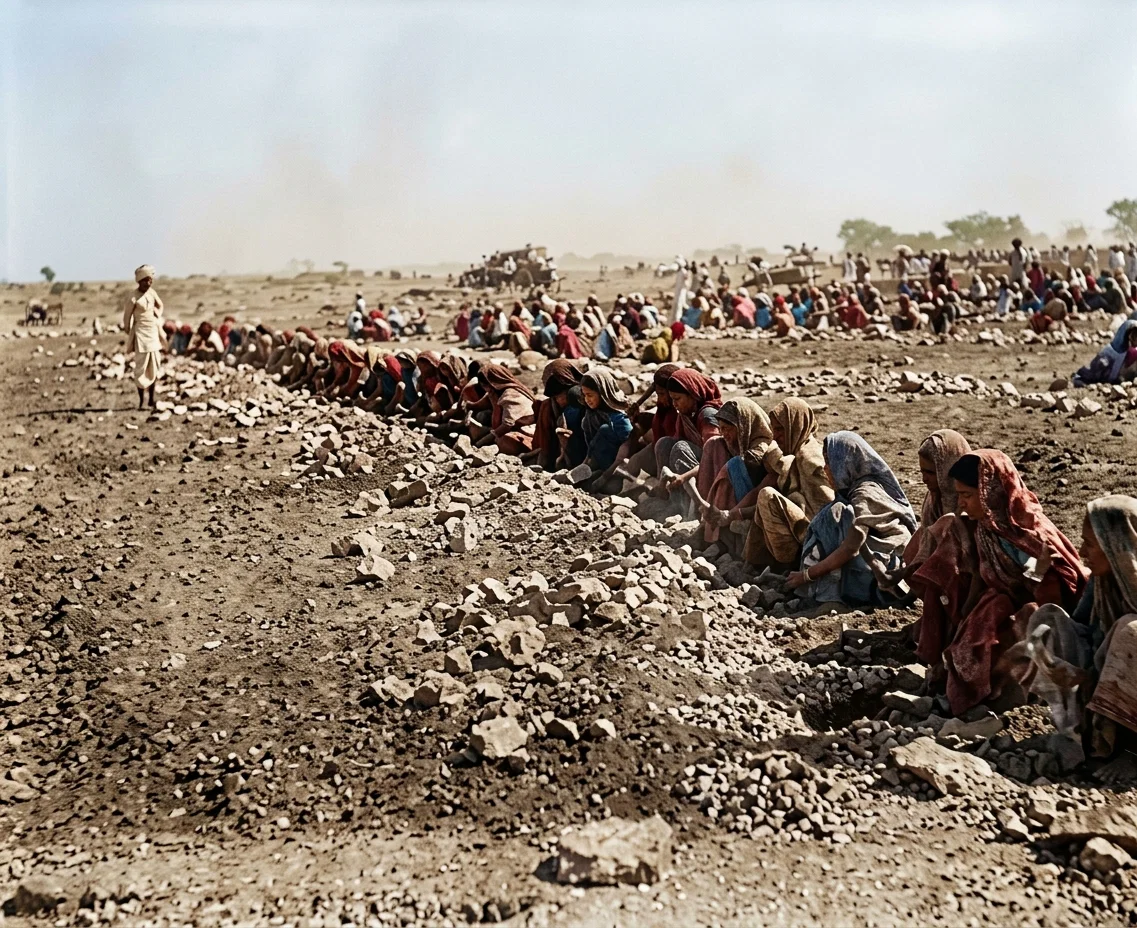
Women Breaking Stone on Government Relief Works, India.
In regard to our work among the natives, there is much to be said of an encouraging character. Pastor E. H. Gates, superintendent of the Polynesian mission field, came to visit us a month ago, arriving early in August. He has now gone on to Tahiti. During his stay on this island he did much to encourage and assist us. His labors were much appreciated by the native friends, to whom he spoke several times through an interpreter. On Sunday, August 26, he baptized eight precious native souls, and on Sabbath, September 1, he buried in baptism, in the likeness of the Lord’s burial, ten more natives, who had given good evidence of repentance and faith. The experience of some of these was exceptionally bright. We now have a company of twenty baptized natives, besides the members of the mission families. Brother Gates organized them into a church before he went away. To God be all the praise.
Let none of our friends at home be anxious for our personal safety on account of a report of a native uprising against the whites on Rarotonga, which has been going the rounds of the American newspapers. There is no truth in it. There has been no armed uprising, and will be none. It is true, however, that the natives, almost to a man, opposed the innovation when the authorities, headed by the L. M. S., sought to carry them over in a body to Sunday-keeping. One member of the native Parliament favored the change from the first, but his character is seen at once when it is known that, though a leader in the church, he may often be seen drunk on Sundays after the church services. The judge who convicted most of the natives for not going to meeting on Sunday, is often seen on the streets disabled from drinking too freely. These facts show what kind of moral support the Sunday cause has in this part of the world.
The line of separation is now being drawn13between those who serve God and those who serve Him not, preparatory to the great day of our God. So I believe.