THE BATTLE FOR BREAD

5%

Pacific Press Publishing Company · Oakland, California · Oct 20, 1898

FromSigns of the Times, Vol. 24, No. 42.

Read the full edition

THE BATTLE FOR BREAD.

TRAMP, tramp, tramp, they are coming from every direction, the poorly-clad men, women, and children, imploring for bread. Beyond the shadow of a doubt, their numbers are steadily increasing. Quietly and rapidly the wheels of time have turned, and with each revolution, without our consent, and almost without our knowledge, some have grown richer, while others have become poorer, until to-day, to a great extent, the rich have developed into millionaires, and the poor have dwindled into paupers.
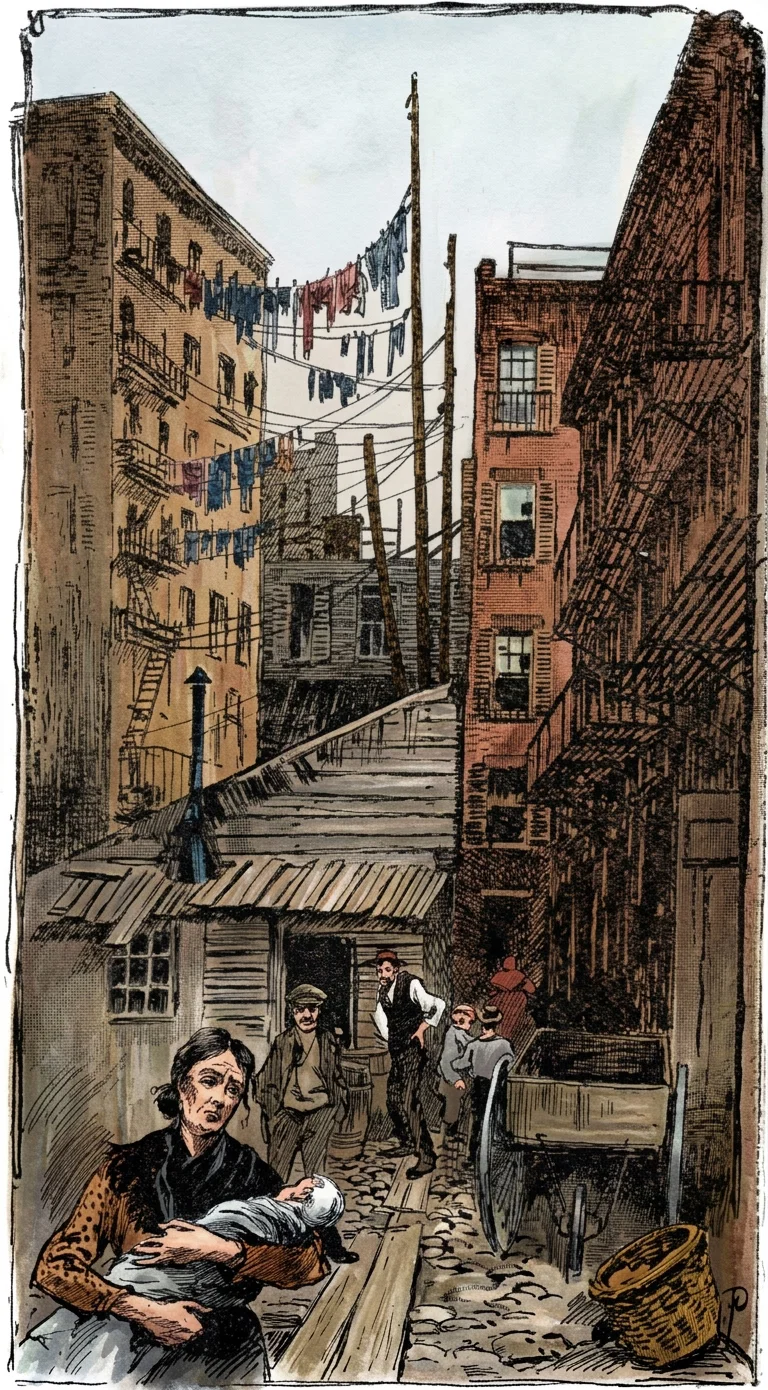
A Modern Tenement House.
Looking back twenty-five years over the road we have traveled, it is easy to recall the time when the name “tramp” was first given to a man in the United States. This person was traveling on foot from place to place, looking for employment, and begging for food as he tramped along. It was not long before another tramp was seen, then another, until they became so numerous that a general complaint was sent to the councilmen of the village and to the board of aldermen of the city, praying them to try to provide food and shelter for this floating army, which had become a nuisance and a menace to the people.
Ordinances regulating this perplexing tramp question have been passed in villages and cities throughout the land; but tramps come, and tramps go, like the restless tide, until to-day there is not a house, be it ever so remote, but that the tramp has found it.
Arrest him for vagrancy, lock him up for from thirty to ninety days, and we do not miss him; for others take his place. Turn him from the jail after he has served his time, and he is still a vagrant; for he has no visible means of support. He is hungry, homeless, friendless, ragged, dirty, heart-sick, and footsore; but every door is closed against him, and to beg now on the public highway or from door to door is a crime. The friendly curbstone offers him a seat; and frequently while in this discouraged state, here pondering over his sad fate, looking for some way of escape, the hand of a policeman is again laid on his shoulder, and once more he is obliged to travel the same old prison route. But he is not alone; hundreds go daily over this road, and hundreds more are on the way. And what for?—Simply for joining the ranks of a growing army who are fighting the battle for bread.
We are told, truthfully too, that insanity is on the increase. Can we wonder at it? Exchange places for a few days with this poor tramp. Deprived of every friend and home comfort, how long would it be before the stoutest-hearted would become frantic and perhaps be driven to desperation?
The world’s population is estimated at 1,500,000,000, and of this vast number 150,000,000 are paupers, and on the dismal brink of starvation. Almshouses, asylums, poor-farms, jails, and penitentiaries are becoming filled to their utmost capacity. Additions have yearly been built, and new buildings are now in process of erection; but the growing army of mendicants and criminals fills them to overflowing .
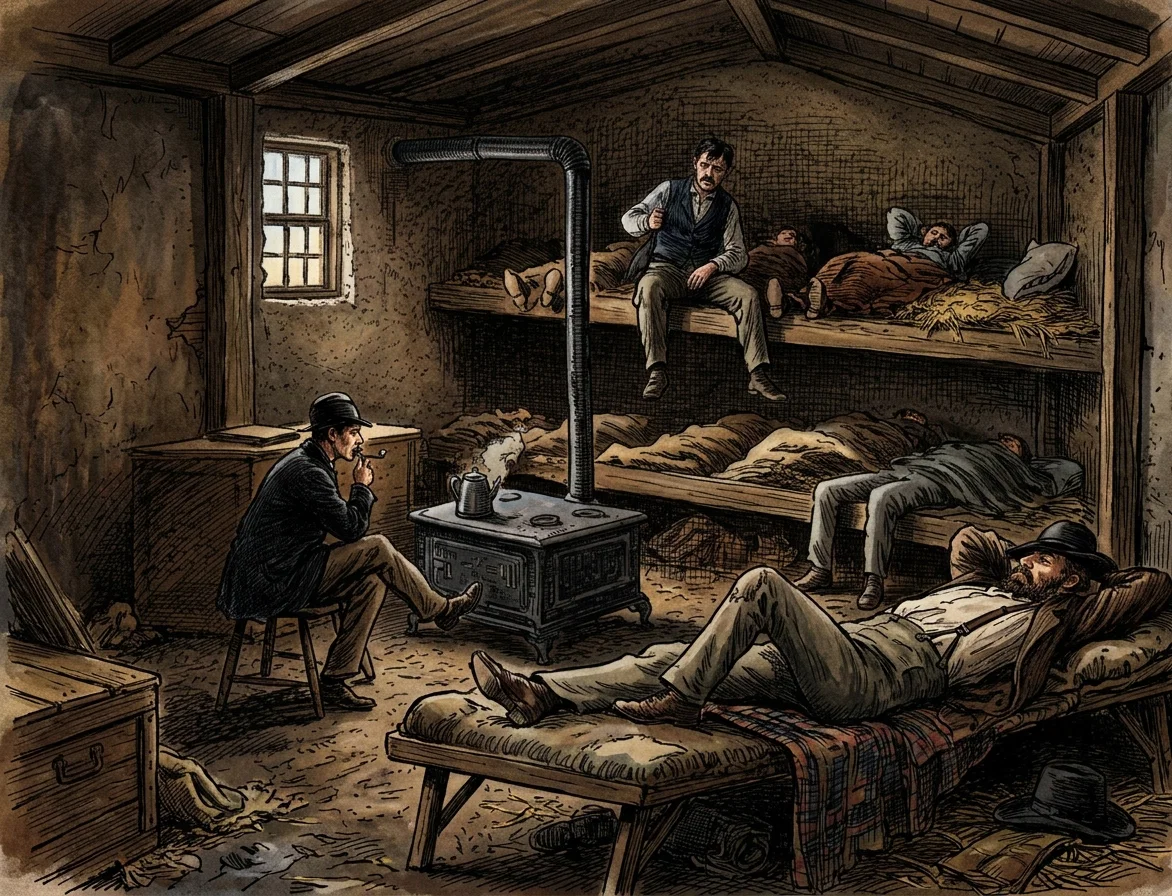
Here are a few facts and figures bearing on this subject. During the winter of 1896 and 1897 the writer was connected with the Workingmen’s Home and Medical Mission of Chicago. We had been taking one or two hundred men, and sometimes more, from the station-houses each night, and providing them with suitable beds in the mission. These men were homeless and penniless, and had gone to the station-houses for shelter during the cold nights. On the morning of December 16, we called on the superintendent of police, and asked him to be kind enough to tell us how many men his departments had provided with floor space to lie on, during the fifteen nights just passed. And, to our astonishment, after he had received the reports from the precincts, he said 15,521. Then we asked him to see how many he had taken care of during the same nights in December of 1894 and 1895, and the report kindly given us by the chief of police shows how rapidly and alarmingly the homeless and dependent are increasing. In 1894, from December 1 to 15 inclusive, 321 men were given shelter; during the same time in 1895, 642 men; and in 1896, 15,521 men were taken care of. And last December, during the same time, missions and station-houses had all they could do in caring for the thousands of poor souls who called on them for bread and shelter.
Men and women who are stationed in missions, and officers and superintendents of places of charity and houses of detention, witness the daily growth of this vast army of crippled and wandering humanity, who are in the struggle, fighting the battle for bread.
What does it all mean? Why all this suffering, these broken homes and broken hearts? Is there no lesson in it for us to learn? Can we not see that this old world, that has been running the race so long, has gathered itself together, and is plunging down the home-stretch at a breakneck pace? History is now being reeled off to us at an astonishing and fearful rate. Think of it! The year 1875 marked the appearance of the “tramp” in the “land of the free, and the home of the brave;” and since that time tramps have overrun towns, villages, farms, cities, poorhouses, almshouses, prisons, missions, streets, lanes, highways, and hedges, till, like the “rolling stone that gathers no moss,” they find themselves landed in “poverty row,” at the foot of the hill, poor, maimed, halt, and blind, so wrecked and disfigured that not a trace of their former selves remains. With life’s race rapidly closing, they look into a widening, immeasurable eternity, and see that the crop of present reaping is the result of past planting. In that moment of awful, indescribable despair, goaded to insanity and desperation by the sleepless and ever-busy devil, they snuff with their own hands the flickering light from the wasted candle, and life’s realistic dream is o’er.
Is there nothing about this struggling pile of wretched humanity that will enlist the sympathy of tender hearts and the aid of helping hands? Mother, where are you to-night? Surely you have not forgotten when that prattling babe nestled close to your breast, when you told, as only a mother can, your love by the kisses you placed on baby’s brow. Where is that boy or girl to-night? Perhaps the cries of your loved one help to swell the doleful chorus that is rising like a funeral knell from the city’s slums.
How long will this soul-destroying and life-taking condition continue?—Not long; for as all streams when nearing the falls move swiftly, so with this world. It is close to eternity’s brink, leaping and rushing madly on to its ultimate doom.
The “slums” of the city have become a great cesspool, into which the country road and the city street are emptying their human freight. Saloons, with their counterfeit attractions, opium dens, with their usual quiet exteriors, and houses of ill fame are here, as numerous as the bathing huts near a fashionable bathing resort. “For wheresoever the carcass is, there will the eagles be gathered together.” Matt. 24:28.
This state of things did not escape the far-seeing eye of the Lord Jesus Christ. He looked down the ages past the destruction of Jerusalem, through famines, earthquakes, pestilences, floods, tornadoes, and typhoons, through persecutions and wars, both on sea and land. His eyes rested on the age of invention, when the genius of man would turn out great steamships, moving about on the ocean as things of life, and on land the locomotive, pulling its train to earth’s remotest bound. He saw the telegraph, telephone, phonograph, and printing-press, and the hundreds of greater or minor inventions. Then He saw that machinery would take the place of men; that men would be thrown out of employment, and would travel from place to place looking for work, but unable to find it. They and their families would become discouraged; and, with starvation staring them in the face, they would reach the “slums,” where cries for bread would come from the throats of thousands.
It is now the “supper time” mentioned in Luke 14, and the Lord has sent out a broad invitation, “Come; for all things are now ready.” But the guests decline; they are not hungry; other matters require attention. From the “slums” there comes a cry that moves the heart of the “Friend of the poor,” and He speaks with majestic authority: “Go out quickly into the streets and lanes of the city, and bring in hither the poor, and the maimed, and the halt, and the blind.” “Go out into the highways and hedges, and compel them to come in, that My house may be filled.” Luke 14:21, 23.
This is the last call for “supper,” the last appeal to a sin-laden people to “come; for all things are now ready.” It is the last summons from the God of love, the Saviour of men, to come and be saved. This call could not go forth before the “supper time;” when it could be said, “All things are now ready.” All things were not in readiness till after the poor began to gather and live on the streets, lanes, highways, and hedges of the cities. This took place when the tramp was introduced in the United States, in 1875; and the following year, as if in direct answer to the command of the Lord, Gospel meetings began to be held by the Salvation Army, among the slums and dives of the cities, where the poor and unfortunate were obliged to live.
Reader, “come; for all things are now ready.” This is your chance. Look! the day is far spent; the shades of night are creeping on. God’s last call to the marriage supper is now going forth. His house is fast filling up with willing souls who have heard the call. Will you not hear and accept the invitation? It comes to us fresh from the King of Glory, and He wants you to enter the field as a worker together with Him, feeding the hungry, clothing the naked, visiting the sick, and in a general way caring for the poor; and in a little while, when the banquet takes place, every faithful soul will be there, and will hear the address of welcome given by the King. Matt. 25:31–40.
A large army of workers are needed now to engage in active labor in behalf of the Helping Hand and Medical Mission in San Francisco, gathering in clothing, bedding, fruits, peas, beans, and nuts, so that we can help the souls who are calling on us for these things. You can begin work for the Master where you are, in the country on the farm, in the village, town, or city, anywhere, but begin now.
B. F. RICHARDS.