Or, in a word, filial righteousness. Do right by your parents. So much is commanded; so much may be demanded. Whatever more there is to it is of love, and depends upon the kind of parents.
“Children, obey your parents in the Lord.”
“In the Lord”—second in command—God first. Why?—“For this is right.”
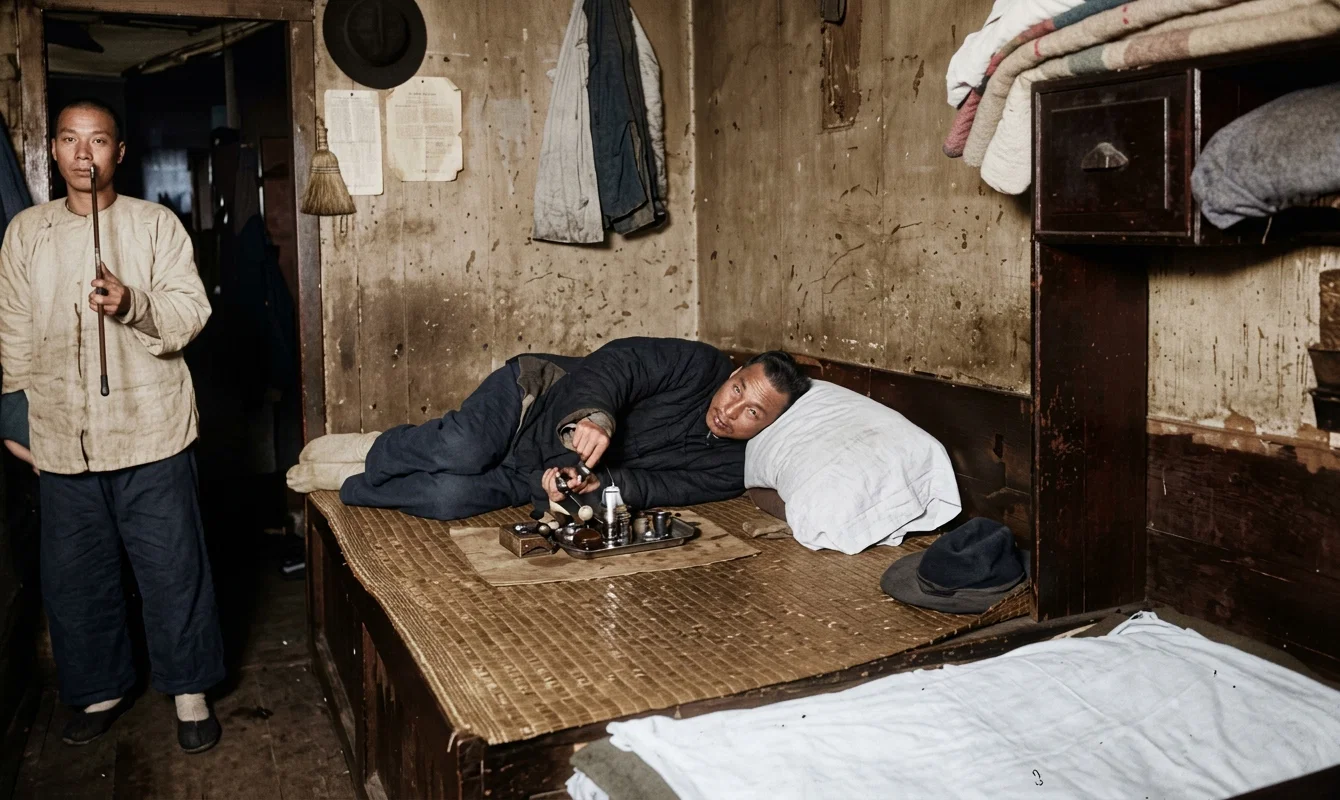
CALIFORNIA SCENERY, No. 26.—From a flash-light view of a Chinese opium-den in San Francisco, by Taber. Opium has become the great curse of China, and it is sad indeed that it was forced upon that nation by a professed Christian power, England. Its benumbing, narcotizing influence is death to all moral feeling. It has been said that the English have received in compensation the Chinese curse of gambling, which has increased marvelously. Many white people are habitual users of the deadly narcotic, and the number is growing.
Honor thy father and thy mother—if you can. You can not honor what is dishonorable; you must not obey what you know to be wrong; but you can and you must behave toward them with kindness and righteousness. At any rate, honor thy good father and mother. If the meaning goes beyond that, it is too deep for me—and probably for you also.
But this plain surface meaning is enough for one lesson, full of interest, full of pathos, and most important. If you have—or to the extent that you have—a good father or mother, show special deference to that good.
You may take the goodness of other people as a matter of course. They expect nothing, need nothing—or little else—of you. They come and go to you, as you come and go among them, careless, comparatively. It is not important to them nor to you what you think of each other, or whether you understand each other fully. Their peace and progress do not depend on you, urgently and immediately. They feel no solicitous responsibility for you. They would not hesitate to compete with you or to defeat you, at need.
But the case is very different as to your parents. They hold the most important, difficult, and dangerous office in the world.
It usually comes to them in the years of their immaturity. Their work is very blind, even to the wisest; and all their hope and fear center in you. You are their only instructor, their only loss, their only gain: your good weighs upon them, night and day. Things which seem trifles to others—that seem trifles to you—rob them of rest and of appetite, and keep them praying when they ought to be asleep. If they get encouragement from others, it only makes them long for a sign from you.
Confide in your father and your mother. It will delight them, and help both them and you. It will surprise you to find how much more they know than you do—or even than the faculty knows—about things that are vital.
If you pity, approve, or admire your father, let him know it. If you love your mother, tell her so—not only because that is right and kind, but because it is so wise also. It will help them so for you to do it—and help everybody.
I doubt if the best of you have ever thought very much about this. Parents are such commonplace things that you are almost unconscious of them. They toil and fade and get gray and bald and stooped, and you never notice—until some day you look helplessly into a coffin, and shudder to see how thin and tired the dead face is when you come to look close.
If the good children were to begin to honor the good parents, it would fill the earth with singing, and with power also; for the most ennobling thing in life for parents is to know that their children honor them, and the most uplifting thing for a child is to know that he is honoring his parents.
I saw three people come aboard the train the other day, a strong young business man, and an old man and woman—very old—his father and mother, evidently. They sat just opposite me, and I could not, if I had wished to, fail to learn the meaning of their journey.
The young man lived in the West, and, it was clear, had prospered. I call him “young,” but his hair was gray and all his ways bespoke maturity. He had come back to Pennsylvania to take the old folks to his Western home. They were feeble, but he was strong enough for three; and how he tended them and “fussed” about them! And how they leaned upon him!
I could see that there was something sad13about it too—certainly not poverty, but something. These old roots are so hard to pull from their accustomed soil! But they were going to live with him. I wondered whether it would please the daughter-in-law, and whether they would grieve for the old home.
But whatever happened, it could not be for long. And I think I saw the sweet old eyes of the woman wondering what the man across the isle was crying about.
O my friends, if your parents are yet alive, thank God, and begin to-day to “honor” them!
If the old graveyard down in Illinois where my dead are lying were to be pricked in its heart and give me leave to speak a single message to my father and mother, I should only say: “Father, mother, I did honor you, all those years, altho I did not speak of it. Only tell me you know that, and then lie down and rest again, and the hardest fate that life may have in store for me will be like heaven for the knowledge.”—John G. Woolley, in The Voice.