GETHSEMANE

6%

Pacific Press Publishing Company · Oakland, California · Sep 1, 1898

FromSigns of the Times, Vol. 24, No. 35.

Read the full edition

GETHSEMANE

“And they came to a place which was named Gethsemane; and He saith to His disciples, Sit ye here, while I shall pray.” Mark 14:32.
“And He was withdrawn from them about a stone’s cast, and kneeled down, and prayed, saying, Father, if Thou be willing, remove this cup from Me; nevertheless not My will, but Thine, be done. And there appeared an angel unto Him from heaven, strengthening Him. And being in an agony He prayed more earnestly; and His sweat was as it were great drops of blood falling down to the ground. And when He rose up from prayer, and was come to His disciples, He found them sleeping for sorrow, and said unto them, Why sleep ye? rise and pray, lest ye enter into temptation.” Luke 22:41-46.
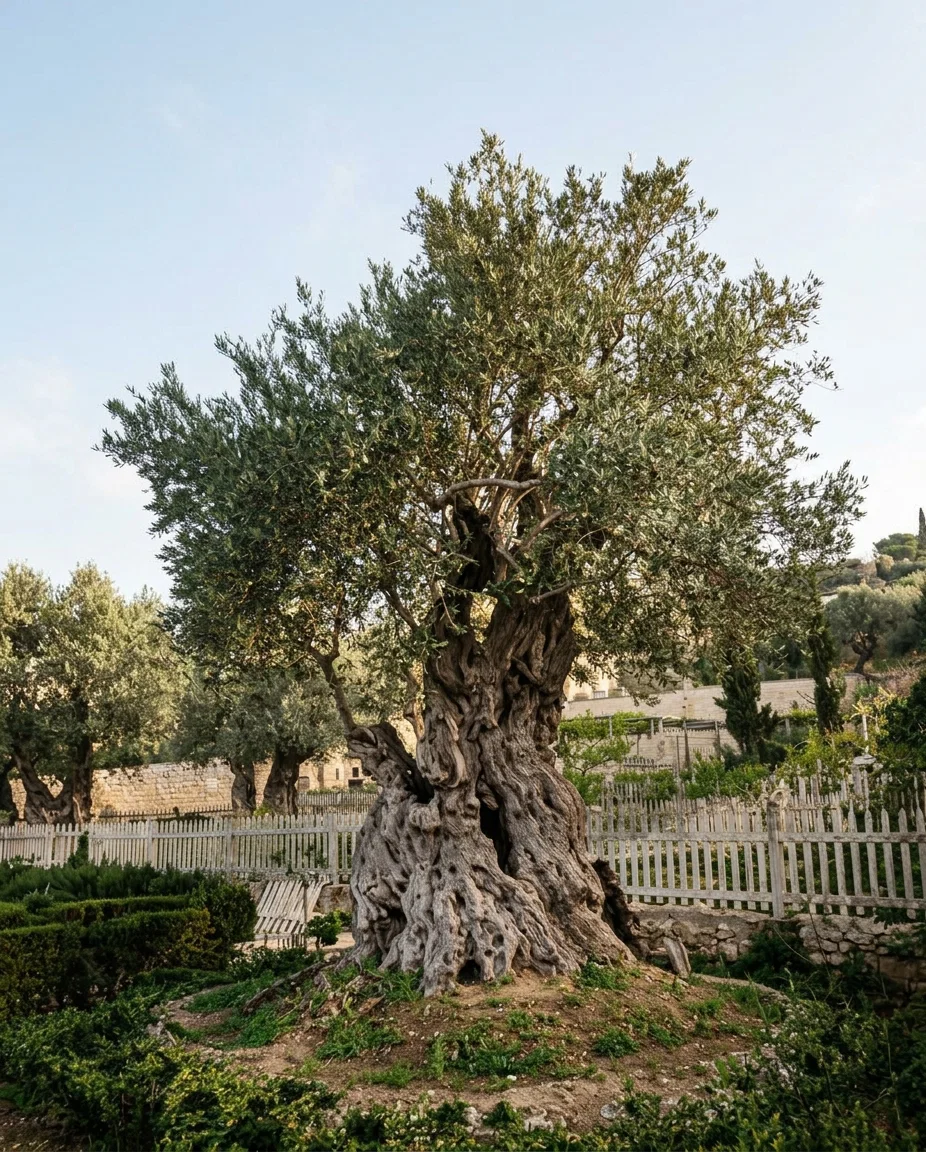
OLIVE TREE IN GETHSEMANE.
The inspired description of the suffering of the Master in Gethsemane is sufficient, if one allows himself to consider it, to tender the heart and fill it with an undying love for Him who was willing to endure such agony on our account. Not a single pang that swept in upon the soul of the great Sufferer was occasioned by anything that pertained to Himself. All the throbbings of that wo, all that sorrow, all that bitter distress, all that indescribable storm of mental anguish, in the which every emotion of the mind was rolling great tides of grief in upon His sympathetic heart, yes, all was for some one else; not a single bit of it for Himself.
But why would He do it? Why would He endure such grief on another’s behalf?—One simple word is the answer,—love, love alone was the cause of it; love, and love divine, in which there is no selfish thought, no self-centered emotion; love, heaven-born love, that finds its only joy in loving another and seeking another’s happiness.
Is there a sinner who doubts that Christ loves him? Then let him view the scenes of Gethsemane. Let him witness the agony of the Son of God as His heart of divine love is there being torn with grief. Are you impressed by that grief, that rending sorrow, that suffering that reached to the very lowest depths of all that is comprehended in despair? Then know that Jesus suffered it all, yes, all! all! and all because He loves you.
“Sing, O heavens; and be joyful, O earth; and break forth into singing, O mountains; for the Lord hath comforted His people, and will have mercy upon His afflicted. But Zion said, The Lord hath forsaken me, and my Lord hath forgotten me. Can a woman forget her sucking child, that she should not have compassion on the son of her womb? yea, they may forget, yet will I not forget thee. Behold, I have graven thee upon the palms of My hands; thy walls are continually before Me.” Isa. 49: 13-16.
Yes, even Zion, the professed church herself, is sometimes tempted to say, “The Lord hath forsaken me, and my Lord hath forgotten me.” And the open sinner is almost sure to say within himself as he finds his heart drawing toward the Lord, “I am too sinful; the Master can not receive me.” But listen to the Lord’s impressive answer: “Can a woman forget her sucking child, that she should not have compassion on the son of her womb? yea, they may forget, yet will I not forget thee. Behold, I have graven thee upon the palms of My hands; thy walls are continually before Me.”
Can you conceive of a love that could be tenderer than that of a true mother? Can you imagine one who would be more attentive than the fond mother who is devotedly guarding her offspring? “Yea, they may forget.” In a moment of extreme weariness the mother may fall asleep and for a little while expose her guarded treasure to peril. But the Lord says, “I will not forget thee.” No, the Father in heaven can not forget us, for He says, “Behold, I have graven thee upon the palms of My hands; thy walls are continually before Me.” What precious assurances to us defiled sinners are these priceless promises of our Lord and Saviour!
Did you ever witness the disconsolate expressions of grief as a devoted mother wept at the death-bed of her child? The thought that her darling can never speak to her again; that those blanched cheeks will crimson no more with the flush of buoyant youth; that her eyes can not now be greeted with the mirthful expressions of that childish face; her ear will listen in vain for those romping footfalls that have so often started every impulse of her heart into thrills of joy—O, that indescribable grief! Only a mother’s heart as she is stepping into these deep waters can fathom their depths of crushing sorrow and blighting sadness. She alone can tell of the pain when her heart-strings were breaking. She alone can tell of the withering blasts of anguish that racked and shook her heart, well nigh to breaking.
And yet in the greatest depths of this mother’s grief, the keener pangs of despair are driven back before the Lord’s promise of theresurrection of the dead. She says within herself: “My child will rise again. ’Tis sad to part, but there is a grand reunion time ahead. My Lord is coming, and He has promised me that ‘all that are in the graves shall hear His voice, and shall come forth.’” And so her sorrow is softened and assuaged.
But not so with the Master as His heart was broken and crushed and ground with grief in Gethsemane. He was not in agony and despair because of His own approaching suffering on the cross. His heart was too completely unselfish to think of that. No, He was standing at the death-bed of the whole race. The face of this one and that one and the other one was rising before him. He loved them with an everlasting love. O, He loved them with a love that was divinely deeper and more constant, and that was more affectionately and tenderly woven into his heart and soul, than the love of mother. The expansive heavens can not fathom it. The eternal ages can not reach to the ends of it.
Now, sinner, will you listen? That anguish in Gethsemane was occasioned by the fact that after divine love has done all that such tender love can invent to win you from sin, and turn your feet into the ways of joy and righteousness, you still refuse. The despair and suffering of the Master on that memorable night in the garden, was all because He saw so many of those for whom He had devoted His life, going down into the jaws of eternal death. He had done all that He could to redeem them, but still they would not turn. And so that heart, that was tenderer than a mother’s, is feeling all the cutting anguish of despair as He sees those He loves so dearly, leaping out into the midnight gloom of irredeemable destruction.
“And being in an agony He prayed more earnestly; and His sweat was as it were great drops of blood falling down to the ground.” The rigors of death are upon the Son of God; He is dying there in the garden. He finished His life on the cross, it is true. But it was in Gethsemane where the bitterest wo was felt, and the cup of the bitterest anguish was drunk. And, O, the infinite depths of the suffering that would cause the Man of Calvary to sweat the life-blood itself! Can there be any doubt that He loves you and me? If such a doubt is still lingering in your mind, then go to Gethsemane. There behold the Lamb of God. Behold Him in His agony, and remember that it is the expression of divine, despairing love; the Master is tossing amid those throes that finally break His heart when His own loved ones nail Him to the cross.
All this suffering was pressed down upon the Son of God by those who will not yield to His tender and merciful entreaties. And instead of halting and stumbling, while Satan tempts you to think that the divine Father has no care for you, lift up your eyes and view Gethsemane. “Behold, what manner of love the Father hath bestowed upon us, that we should be called the sons of God.” T.