BARBARA'S ORPHANTS

5%

Pacific Press Publishing Company · Oakland, California · Aug 11, 1898

FromSigns of the Times, Vol. 24, No. 32.

Read the full edition

BARBARA'S ORPHANTS.

Baker an' me went off on a vacation one summer. It's not very frequent we do, but I'm no ways sorry we did that time, fur we see a heap an' come back cheered up like everything.
We went to Canady. Only staid a month, an' wusn't afraid to go boat-ridin' onto them big lakes, nur to come home when 'twas out nuther; fur Baker hain't no bank cashier nur nothin' that-a-way. We wus to my oldest sister's that I hadn't see fur—well, I couldn't have been more 'an five I persume when she married Mark Williston an' went off up there. I kin mind how mother wept their weddin' day when the folks all shook their han's an' wished 'em well. Barbara wus twenty, an' right smart o' help an' company, an' goin' so fur off mother didn't never 'low she'd see her ag'in. An' she didn't, fur travelin' wus a mighty big job in her day to what we hev it.
Williston wus a Englishman an' 'peared stiddy-goin' an' good like. His folks lived in Canady, some on 'em, an' some in England; an' after him an' her got up there to 'em, she foun' out they wus tremenjus rich. Barbara nur none of our folks knowed nothin' about it before, fur he jest worked like common folks, an' tho he wus pretty well dressed, he didn't act stuck up.
But it turned out that the summer he come to father's he wusn't needin' work at all. Him an' another young chap had come acrost the lake 'lowin' to ride round a spell a horseback an' see the States an' gether up flowers an' rocks fur botany. The other one got homesick, never bein' used to takin' things as they come, like pore folks, so he went back; an' when Williston got to our house after ridin' a month or so, he thought he'd be prouder to take Barbara back along than any amount of botany an' bugs. Not wantin' she should hev him jest fur his money, he said nothin' about hevin' it, an' asked fur work after boardin' a spell. Father didn't need him, so he teached our school two winters an' clerked fur Riley John Wheeler the summer between 'em. He wus at our house considerable offen, an' at last they married—him an' Barbara—an' went away off there.
Father an' mother hung back about it till they'd learnt his ways. His folks couldn't help takin' to Barbara, if they wus high up an' her pore; fur she wus that good an' kinder quiet an' gentle like, an' no ways bad looking nuther. Williston an' her lived along, an' didn't have no children; but they both liked 'em, an' liked to teach 'em; so, after thinkin' an' talkin' over about how many little ones wus in the worl' a'ready that hadn't no sort of trainin', an' them havin' so much money to do with, they went at it, them and his folks, an' started up a orphants' home an' school both together.
She kep' writin' about it now an' ag'in, fur years an' years, an' allus wanted that Baker an' me should come up an' pay 'em a visit after we wus married, an' see them orphants. Fin'ly she writ a kinder pitiful letter about father and mother bein' dead so long, an' her so fur from us all, an' 'peared like she thought we'd orter come up, fur she couldn't nigh leave them children to come to Bean Blossom. So Baker says: “It don't look right not to go, mother. People likes their folks if they air rich; an' we'd best to go.”
Baker's awful kinder clever that-a-way about all my folks. So we went. She'd tol' when in the very last of June they'd hev a commencement, an' we laid out to be there an' see 'em commence. Baker had all his hay an' grain cut, it being a unusual forred year, an' the other work jest laid till we got back. We hev a heap of milk an' fruit that time of year, but Uncle Dan'l Philip's girls an' Ben picked an' canned, an' milked an' churned on the sheers, besides seein' to the stock, etc. Baker had a good suit an' shoes by him, an' so a white vest, mohair coat, cravat, an' Panama hat fixed him out.
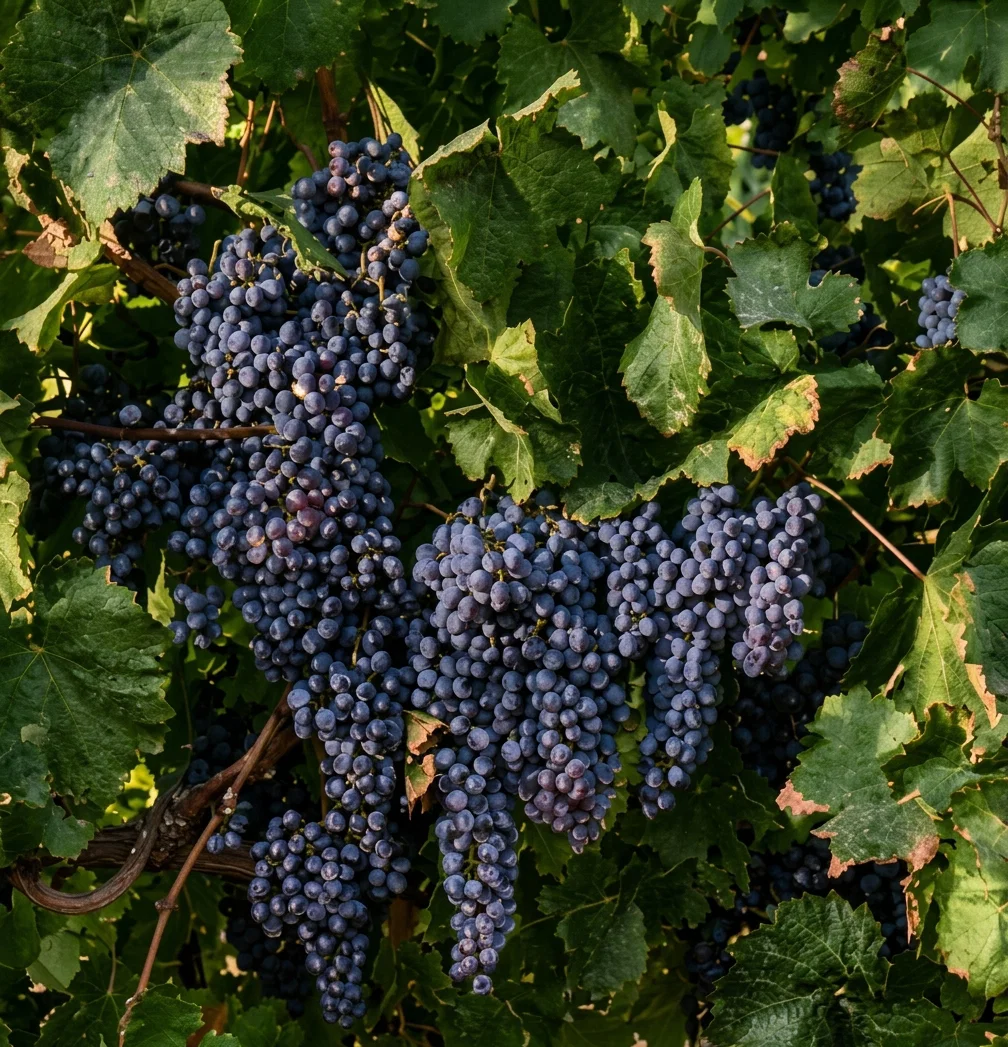
A SAMPLE OF GRAPES, SONOMA COUNTY, CAL.
I got Maria Pillsbury to make me a black grenadine, with big sleeves an' two ruffles. I had a black lace shawl I hadn't wore none to speak of, an' Maria he'ped me to pick a new bunnet. I never had one I liked no better. 'Twas black lace with satin strings an' bows an' a bunch of laylock blows kinder hangin' over to one side like. When I got all them on, and my congress gaiters an' half-handers, I looked mighty spruce; an' Baker wus right decent lookin'.
I never thought of donnin' my fin'ry till we got there, tho. A gray poplin's plenty good enough to ride 'roun' in the dust an' smoke in, an' then it'll bresh, an' a chip bunnet's far becomin'er fur meetin' cinders an' rain in than all the lace ones a-goin'. But Baker hain't me by a long ways. He wus jest boun' to wear that white hat an' vest a-travelin', but I hel' out till he see 'twouldn't do.
We started a Monday and sailed along all night on the railroad cars, then went acrost Lake Erie in a wonderful big, fine boat run with a biler under it, that I wus plum certain would blow us all up every minute, an' then more cars, till we got there Wednesday evenin'. Baker hired a hack, an' we wus tuck clean out to the edge of the city, an', if you'll believe me, we foun' the buildin's that Barbara's man an' her owns looks like a young town theirselves. There's a great, wide, high house, with towers an' trimmin's here an' there over it, besides a lot of plainer ones and barns. Up over the gate we druv in at, onto a arch, it says, “Williston Park,” an' the house does set right back into a park of trees, flowers, fountains, an' everything nice. We got out onto a side gal'ry. Baker paid our hack fare, an' then a young feller showed us into a room an' give us cheers; an', turnin' to Baker, said somethin' about cards.
Says Baker, “I—I—I've quit playin', an' mother don't know how.”
I wus that 'shamed! He didn't think what the feller wus peggin' at, but I did, an' turned it off by sayin', “Don't you pay no 'tention to him,” meanin' Baker. “You jest go tell Mis' Williston her sister's come, an' I don't 'low she'll want no pay fur lettin' of us in.”
He 'peared right tickled we'd come, fur he bowed to me an' went out kinder laughin'. We didn't hev to wait long; fur most d'rec'ly a fine, tall woman, with nearly white hair, come hurryin' in to us, an', lookin' me straight in the eyes, says she, “Are you my sister, really?”
“Yes,” says I, “if you're Barbara Williston. This is Baker an' me.”
I can't tell jest how it wus then, but I know we grabbed an' kissed an' cried, an', when she got time frum me, Barbara shuck han's with Baker, an' tuck us off upstairs to her own settin'-room, an'; I'll warrant, 'twould hev tuck a extra nimble-jinted reportin' chap to a writ us down, fur a spell. She sent out fur Williston, an' he couldn't 'a' be'n frien'lier or treated us cleverer than he did that evenin' an' the hull time we wus there with 'em. We eat supper up there, but next mornin' we went downstairs with all of 'em, an' it wus a reg'lar sight—them orphants, from three years old up to eighteen, an' every one as lively as a cricket. They all stood behind their cheers till they'd sung grace, one young man a-leadin', an' then set down an' acted as good as I've seen some grown folks to hotels. I wus that tuck up watchin' the older ones helpin' the little fellers an' learnin' 'em,I forgot to eat, till I see one boy punch another one's ribs an' wink towards me.
Breakfast over, we all went to a big back parlor to family prayers. One girl played a organ while they sung. Williston read part of a chapter, talked a little, an' answered some questions they asked about it, an' prayed; an' then they sung ag'in, an' all went out quick an' quiet like. Then Barbara tol' me all how they do with 'em. She said they teached 'em some good, useful book learnin', an' how to work too, so they could take care of theirselves when they wus growed up. They learn every boy a trade of some kind, how to keep accounts, how to garden, mend his own clothes, and cook a few easy victuals. The girls all hev trades, too, an' accounts, besides plain sewin', cookin', an' how to keep a house, an' all of 'em hev their schoolin'. While we wus there I went all over an' through them buildin's an' groun's an' see the children to work an' hear 'em recite their books, too. It wus downright interestin' to look at 'em. They cook, wash dishes, sweep, make beds, dairy, iron, wash, scrub, typewrite, print, kindergarten, carpenter, trim hats, hoe, prune, blacksmith, carve wood, make toys, dresses, bricks, an' 'tend the stock, besides playin' the pianner an' fiddle, an' paintin' of pictur's. There 'peared to be a good, stiddy, knowin' woman at the head of each of the girl's work, an' the same sort of man a-showin' the boys; an', tho there's some lazy an' some mean ones, they hain't liked by the rest; an' they're all powerful proud of their work, a-sayin', “Look here, auntie, at my flower bed,” or whatever they'd worked at, an' I'd bug my eyes out, an' tell 'em the youngsters to Bean Blossom couldn't nigh tech that.
PRISCILLA ANN BAKER.