TO-DAY is to be a day of delightful privilege; for we are to walk along the shores of Galilee,—the shore so oft traversed by our Lord and His disciples. As we descend the long corridor, a slight wave of confusion disturbs the usual quiet of the hospice. What is the trouble?—An Englishman who had made the trip from Jericho to Tiberias, on the east side of the Jordan, had arrived the evening before, and, not being able to speak the French or the German, the languages of the host, he was not able to make his wants known. In fording the Jordan, his shoes were filled with water, and he desired to have them dried. The host and attendants not being able to understand his wants, imagined all sorts of things not desired; so the longer they continued, the greater the confusion. How much trouble and confusion arise over very small matters when people do not understand one another! In fact, most of the troubles in this world come from misunderstandings.
In less than five minutes we have reached the rocks just beyond the north wall of Tiberias, whence we have a fine retrospective view of Tiberias and the sea to the south. In five minutes more we have rounded a cape and have lost sight of the city. Here, the shores are quite abrupt; our path leads close to the water’s edge; the sea is here fringed by a band of pebbles washed smooth by the action of the waves. The only signs of life are birds and water-fowl, grass and occasional bushes.
After an hour’s walk, we reach the border of a plain—it is the plain of Gennesaret, half a mile wide, and extending nearly three miles along the shore. At the entrance to this plain are a few huts, the melancholy abodes of poverty. But not the present abodes interest us; our thought wings its way back to the time of the Saviour; for in our walk to-day we are living largely amid the scenes of sacred memory; so, losing sight of the squalid huts, we see standing here Magdala, a flourishing, busy place in the time of Christ.
It was here that the Mary lived out of whom Christ cast seven devils. Being from this place, she was called Mary Magdalene, as Christ was called a Nazarene. Yes, this was the home of that Mary that was most devoted to our Lord during His earthly pilgrimage. She followed Him and ministered unto Him in Galilee; she was present with Him during His last visit to Jerusalem; she followed Him to the cross, and watched as He hung in silence under its agonies; she followed Him to the sepulcher, to see where He was laid; she came early in the morning of the first day of the week to the sepulcher, and, not finding her Lord, lingered weeping; it was to her that the risen Saviour first revealed Himself; and it was Mary that brought the glad news to the unbelieving disciples. Ah, none of the disciples called from the shores of Galilee followed the Lord more devotedly or more faithfully than did Mary of Magdala!
Near Magdala was Dalmanutha, to which Jesus came after having fed the four thousand on the other side of the lake; and it was here on the same occasion that the Pharisees questioned11Him, asking Him a sign from heaven. Nothing of the works of man of that time remains to mark the place; but the works of God,—the sea, the outlines of the shore, the plain, the surrounding hills, and the varied hues of the sky,—remain the same.
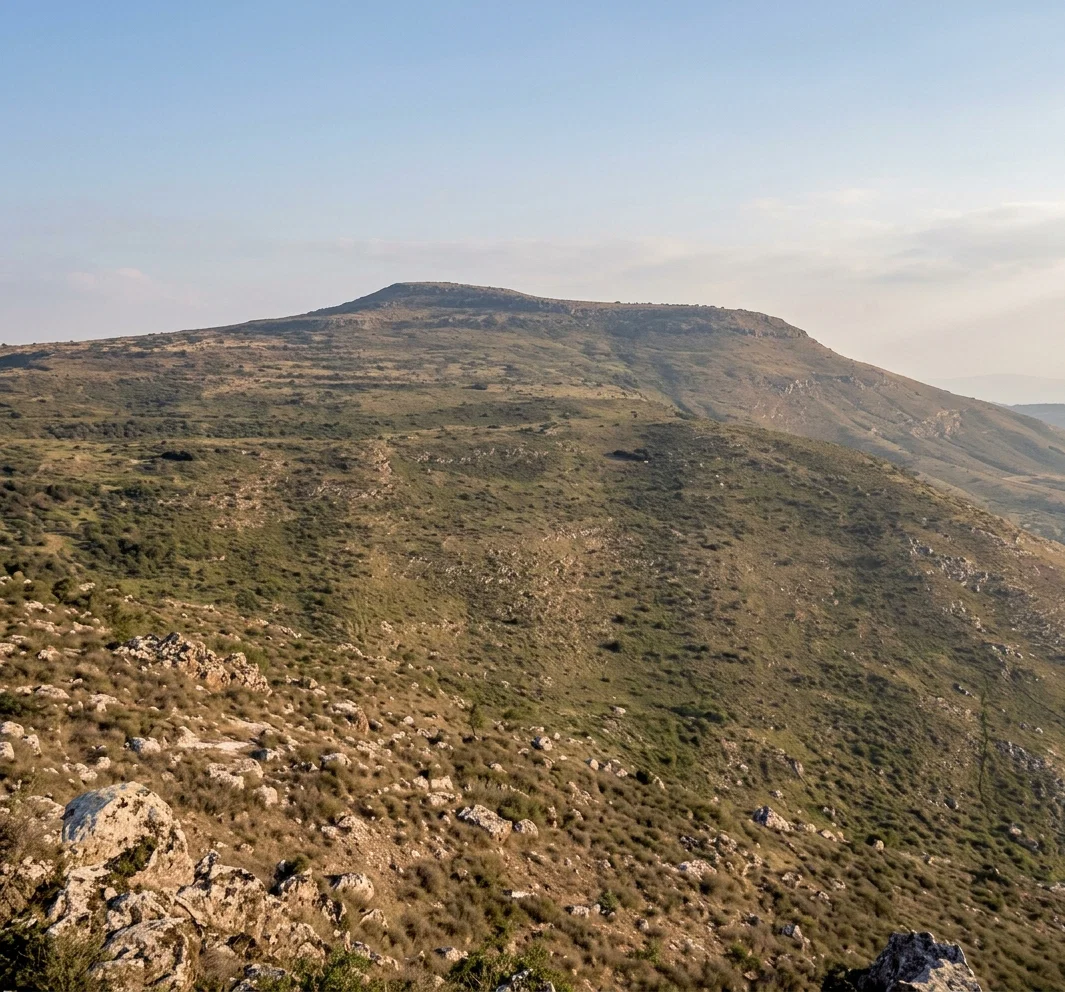
To the west of us is the ravine extending to the Mount of Beatitudes. The precipitous sides of the ravine are a thousand feet high in some places, where those notorious robbers took up their abode in caves high up in the rocks, and baffled all attempts to bring them to justice till Herod destroyed them by letting down soldiers in cages from above.
And now we pass on towards the north end of the lake, to the site of Capernaum; this is about eight miles from Magdala. Here we enter on the most interesting part of our journey. Doubtless our Lord walked along these shores more than any other part of the sea, or any other part of Palestine. It was in this vicinity that He did most of His mighty works. It was from here that He crossed and recrossed the sea; it was here that multitudes numbering thousands followed Him; it was here that He called the fishermen to be His disciples; and doubtless it was in this vicinity that He appeared to them after His resurrection, and, besides giving them a miraculous draught of fishes, prepared a meal for them on the shore. We are in no hurry as we walk along; we move on slowly, with open Bible, reviewing the inspired account of scenes which these shores and these waters have witnessed. The sea is calm, as if in illustration of how it appeared after the Master said to the raging billows, “Peace, be still.”
Mount of Beatitudes.
A walk of two hours takes us from Magdala to the site of Capernaum, at the north end of the sea. This is of most interest of all; for it is spoken of as “His own city.” Here we find nothing but ruins extending half a mile along the shore and quarter of a mile inland. But when Jesus dwelt here, it must have been a flourishing town. The ruins indicate that there were some fine structures in Capernaum. Here dwelt the nobleman whose son the Saviour healed by a word from the distance; here the man with the palsy was let down through the roof; here the servant of the centurion who built the Jews a synagog was healed; here the woman with an issue of blood was restored; here Jesus taught in the synagog and gave that remarkable sermon about the bread of life; and here Matthew was called from the customs office.
A little over two miles back of Capernaum are the ruins of Chorazin. How much heavenly light these places had! And what fearful woes were pronounced against them because they did not heed the light! And how completely those woes have overtaken them! Nothing but ruins remain of these favored, exalted places. This is the complete darkness and desolation that inevitably follow the rejection of light and privileges.
About two miles east of Capernaum, at the head of the sea, is the influx of the Jordan; and just across the river, a short distance inland, was situated Bethsaida Julia. In this vicinity is a plain a few miles in extent, in the vicinity of which it is believed the Saviour fed the five thousand. While He sent the multitudes away, and went into the mountain to pray, the disciples were crossing over the sea to Bethsaida, and were caught in the storm; and Jesus, coming to them, walking on the water, stilled the tempest. It was on this occasion that Peter walked on the water.
Walking down the east shore, where the mountains are more precipitous, about half way we come to Kersa, the town of the Gergesenes; a short distance below, about eight miles inland, is Gadara. The district of Gadara included Kersa; hence the land of the Gergesenes was in that of the Gadarenes. This makes it plain why Luke and Mark call it the land of the Gadarenes, while Matthew calls it the land of the Gergesenes. It was here that Christ cast out the legion of devils and the herd of two thousand swine ran down the steep place into the sea.
The ruins in these regions indicate that they were densely populated and contained many fine structures. The projected railway from Carmel to Damascus passes through here. Not far from the south end of the lake are important mineral springs, where some capitalists are erecting extensive buildings for baths and hotels. The Jordan leaves the lake at its extreme southern point; from here it is two hours to Tiberias.
Thus we have completed a hasty tour around the sea—to the Christian, the most interesting body of water in the world. It is in the form of an oval, seven miles wide by thirteen miles long. Its depth is 154 to 230 feet; but at the north end there are places over 800 feet deep. We will now turn in at the hospice, and continue our journey on the morrow.