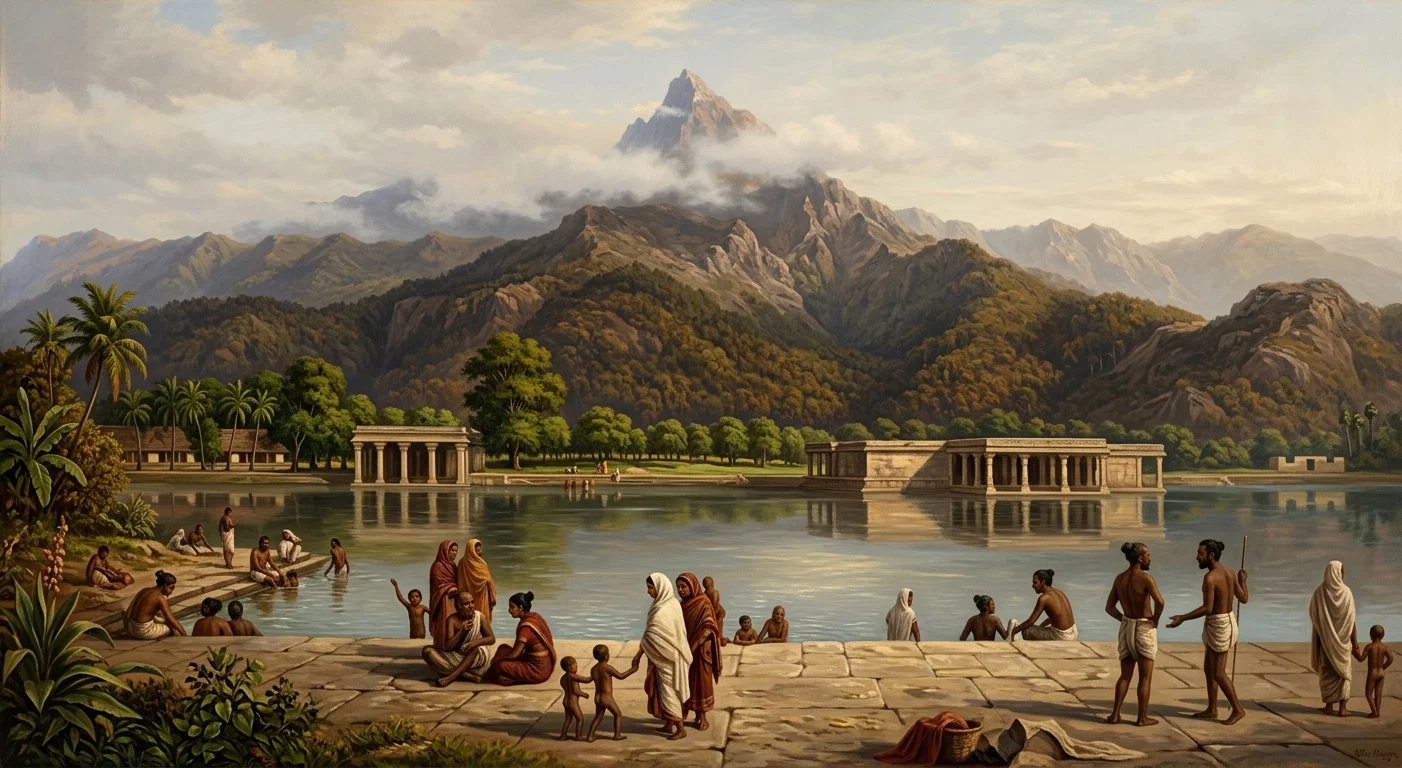
PHANTASMAGORIA, such as it seems, a strange, incredible dream, yet it is a reality. Benares! this is India, this is heathenism. In the golden light of the morning sun flows the broad Ganges, past the crowded flights of steps, extending inch after inch along the bank, covered with worshiping thousands, men, women, children, in white or colored costumes, or no costumes, undressing, dressing, washing, chatting, praying, pouring the sacred water on their bodies, plunging their bodies into the sacred stream, washing their hands in it, their feet, their legs, their arms, their chests, their faces, their clothes, their wet garments clinging to their bodies, the water streaming off their limbs, their prayers babbling from their lips, washing away, as they imagine, both the filth of the flesh and the sin of the soul, in the self-same sacred stream, holy Ganges; the ever-flowing river of salvation.
The ill-savored drainage of the city pours into the sacred stream; it issues from wide openings on the banks, black and fetid, and mingles with the waters of the river; a corpse floats by, swollen and bloated, face down, or face up, in the mighty flood; the vultures sit on neighboring walls of shrines and temples, or wheel on lazy wing above the wave, or light upon the floating or stranded dead. Side by side on the shore burn the funeral pyres, great piles of wood blazing and smoking around newly-brought corpses, the feet of the dead protruding from the crackling flames, crowds gazing without concern at the daily spectacle. Hundreds of Brahmans sit or stand in ceremonial worship on wooden rafts, built out from the stone steps, on which the people of the city, or the pilgrims from distant places, are performing their religious ablutions. Suniassis, Yogis, or Fakirs, naked, smeared with mud, giving a hideous ashen color to their faces and bodies, with disheveled locks, gaunt limbs, stiff attitudes, and demoniac aspect, sit on raised platforms, and gaze at you, or stare into emptiness, or worship the stream, or grasp the offerings flung to them by admiring crowds.
Above them on the river banks rise the walls, the sculptures, the terraces, the towers, the pinnacles of countless temples, some dark with age, others glowing with color, or glittering with gilded roof and spire against the clear blue sky, while beyond the shrines which line the river bank, stretch the roofs of houses closely packed together in maze-like masses,11whose narrow, winding streets are filled with swarming thousands, struggling in the crossings, crowding round the shrines, jammed in gateways; or courts, or temples, pouring water on the idols, scattering flowers on them, muttering prayers, chattering or shouting in half a score of tongues, beggars adding to the Babel by imploring bakshish from every passer-by, while rich and poor cast food or money at the feet of proud and lazy priests, squatting half naked beside these senseless and abominable idols, idols in many cases too indecent for description, foul objects, on which the priests publicly pour the consecrated libation, or the devotee hangs the garland, or flings the flower, as to a god. Thy Pantheon a pandemonium; thy millions made in the image of God prostrate themselves before beasts and devils, as tho they were divine; and this is thy daily habit and thy delight; this has been thy way for ages; never hast thou known the revelation; truth has never been truth to thee; from time immemorial things have been inverted, falsehood has been to thee truth, and truth falsehood.
A Sacred Bathing Place in India.
Who shall deliver thee from thy delusions? Who shall break thy adamantine chain? Who shall bring thee forth from thy dark prison-house, from thy horrid chamber of imagery, from the groveling pit of thy perdition, into the sunlight of reality, the fair open day of truth and righteousness?
O pitiable spectacle! Look at those women, grave, earnest, elderly women, walking in procession round and round that dusty old tree by the roadside, which they are taught to hold sacred, reverently sprinkling it with water from the neighboring Ganges, each carrying a pot of water in her left hand, and a brazen spoon in her right. Round and round they go, with weary feet, sprinkling and still sprinkling as sacred the gnarled trunk and knotted roots of an unsightly tree. And this in the name of religion.
Sitting under his umbrella by the wayside, the Pundit reads to the passer-by out of some old Sanskrit book, words which the common people can not comprehend; the language in which he reads has long ceased to be spoken; it is a dead tongue; and this is all they have by way of moral or spiritual instruction. No voice that we could hear was lifted up to protest against idolatry, or to point to the way of righteousness or salvation; and this while Christendom crowds her cities with places of worship, and has pulpits with preachers, scatters her religious books and tracts among her favored children by millions, fights over petty parish rights and local privileges, oblivious of the great world's needs and of the state of the outlying millions of the race.
Say not there are missionaries in India. There are; but what are the missionaries there to the needs? Who shall waken the Christian church to her duty? Look, O ye favored ones, on the people of India! They are real men and women, with bodies and spirits, with hearts and consciences, with sins and sorrows like your own. But, unlike you, they are living and dying thus as we describe, without the knowledge of God, and without the knowledge of salvation. Who will come in a Christlike spirit to help them? Who will bring them the message of the Gospel which Christ commanded His disciples to proclaim to every creature of mankind?—Missionary Review.