HIGH EXPLOSIVES

6%

Pacific Press Publishing Company · Oakland, California · Jun 23, 1898

FromSigns of the Times, Vol. 24, No. 25.

Read the full edition

HIGH EXPLOSIVES.

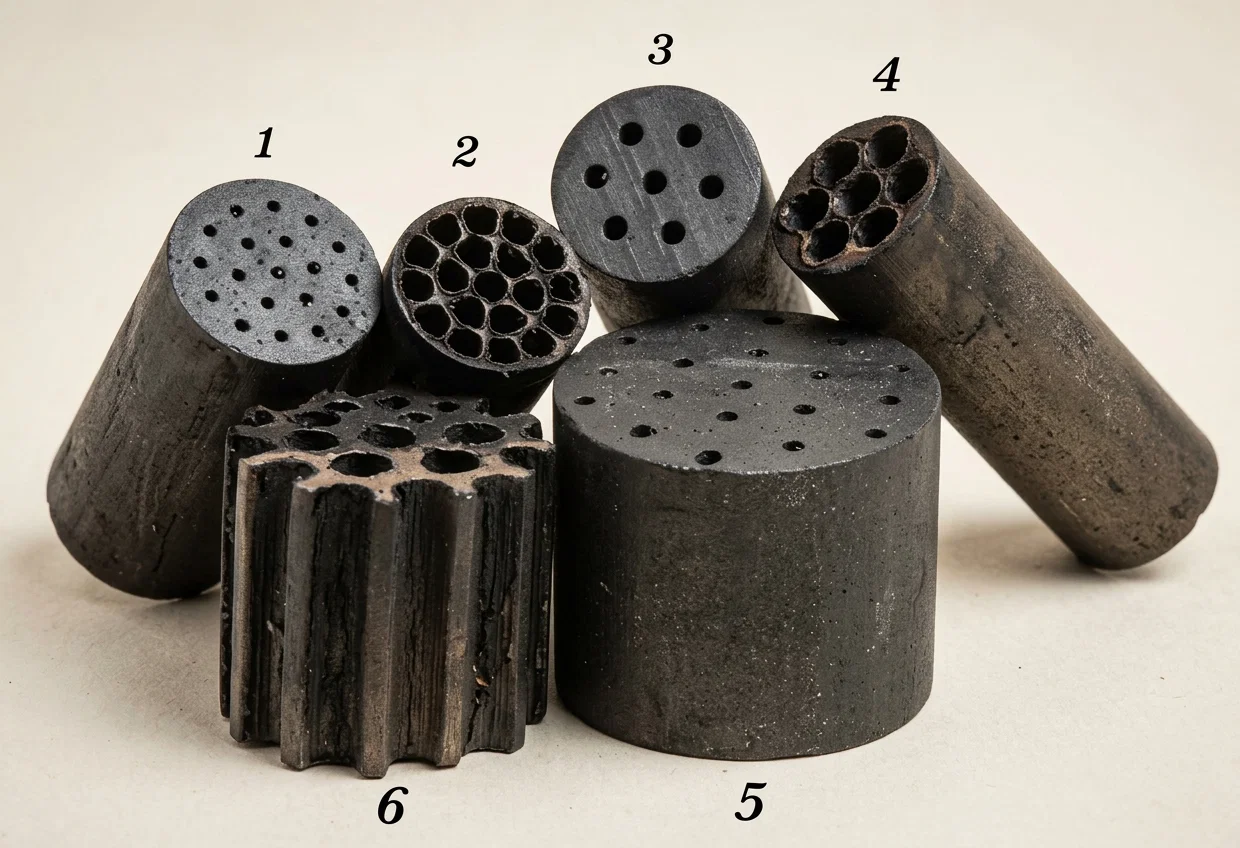
The highly-developed machinery of modern warfare would not be so very effective were it not for the high explosives that have been discovered during recent years. And not only have high explosives been devised, but these explosives have been arranged in a most ingenious manner. And without this the high-power gun of to-day would be an impossibility. The grains of powder shown in our engraving are an illustration of this ingenuity. Those grains with the small holes in the end have not been burned. The others show the remains after the powder has been burned out.
FIG. 3.—SECTION OF MAXIM 46-TON TORPEDO GUN, SHOWING TORPEDOES CARRYING HALF A TON AND A TON OF GUN-COTTON.
FIG. 4.—SECTION OF WOOLWICH 67-TON GUN WITH ARMOR-PIERCING SHELL.
Ordinary grains of powder commence to burn from the outside, and as the outside surface is the largest, the greater mass of the powder is ignited at once and it explodes with a sudden bang. But the powder shown in our engraving is ignited on the inner surface through the little holes that are seen in the end of the large grains. It will readily appear that as the fire is applied to grains of powder constructed in this way, it can not all be exploded with one big flash, but it must begin to burn slowly from the little holes in the center. This is why it is called “slow-burning” powder. Then, as the burning continues, these holes burn out larger and larger, and consequently the pressure behind the projectile becomes stronger and stronger as it travels through the long barrel of the modern cannon.
Thus it will be seen that by this process of slow burning, only a comparatively small part of the powder burns at the start, and this serves to give the projectile a sort of shove or push rather than such a sudden explosive shock as in the old way. And as the power of this slow-burning powder keeps getting stronger and stronger, the force that it exerts behind the projectile is such that it throws the great steel missile with a terrible force, and does not produce the heavy strain on the gun that would be the result of suddenly exploding so much powder.
This slow-burning powder is now being quite successfully experimented with for throwing shells charged with “high explosives,” such as dynamite, gun cotton, picric acid, etc. It was deemed extremely dangerous at first to undertake to shoot any of these shells; for fear that the sudden shock might burst them in the cannon from which they would be fired. So various kinds of pneumatic guns have been devised for throwing dynamite and other high-explosive shells. But the necessary machinery for compressing the air for the pneumatic guns was so cumbersome that they are quite impractical for field fighting, and then the shells can not be thrown a very great distance by pneumatic pressure.
But the elastic pressure of the slow-burning powder makes it possible for these high-explosive bombs to be shot from a cannon in about the same way that any ordinary missile would be fired. The principal difference between the ordinary high-power cannon and the one designed for throwing these high-explosive shells is that the latter has a much larger bore.
A few months ago the Journal of the Military Service Institution copied an article from the Scientific American Supplement, by Hudson Maxim, in regard to the use that may be made of these high explosives in what he calls aerial torpedoes. Hudson Maxim is the brother of Hiram Maxim, the inventor of the machine gun that bears his name. Both of these men have given their lives to the study of how to make more destructive weapons of warfare. Mr. Maxim gives the results of some of his experiments with the aerial torpedo. Figure 3 is a sectional view of a gun designed by him for throwing the torpedo or shell through the air. Figure 4 is a section of a high-power cannon for throwing the ordinary armor-piercing shell. It will be seen that the guns are built alike, only the torpedo gun is 21 tons the lightest. This difference in weight is occasioned by the chamber of the torpedo gun being bored out to a 27-inch caliber, while the 67-ton cannon has a bore of only 13½ inches.
Mr. Maxim calculates that his torpedo gun will throw half a ton of gun cotton about nine miles, and one ton about five miles, while a mortar made for the purpose would throw 500 pounds of gun cotton four miles, half a ton about three miles, and one ton nearly two miles.
Mr. John T. Bucknill, in his book on “Submarine Mines and Torpedoes,” estimates that it would take a pressure of 12,000 pounds to the square inch to be fatal to a big battle-ship, while other authorities do not place the figures nearly so high, General Abbot placing his estimate as low as 6,500. And Mr. Maxim informs us that an aerial torpedo charged with 500 pounds of gun cotton would destroy a battle-ship if it should strike either the vessel or the water anywhere within 38 feet of the ship, while half a ton of gun cotton would destroy the powerful man-of-war at a distance of 85 feet, and a ton would be fatal at 168 feet; and a ton of nitrogen in the most powerful of the commercial explosives, would destroy the battle-ship if exploded within 250 feet of it.
The effect of exploding these substances is simply terrific. Just think of a substance so powerful that the exploding of a ton of it would exert a pressure of 12,000 pounds to every square inch at a distance of 250 feet. Even if the ship should not be broken all to pieces and suddenly go down, it is quite certain that no man could endure such a terrible shock. How frightful, at least when we view it from the human standpoint, are all of these death-dealing elements and devices. But we need not take a human standpoint view; for if we will, we may see all of these things in the light of prophecy and know just what they mean.
I have seen a statement from a third one of these Maxim brothers—and one, by the way, whose mind does not run to the fashioning of war implements—to the effect that Hudson and Hiram are both working to the end that they may construct such deadly weapons that men will fear to go to war, and so a universal peace may be brought about. The genuine sentiment favoring a general peace is one of the most noble that can be conceived; for the heavenly Master is himself the Prince of Peace. But a little reflection will show that the proper method for producing a secure peace is not found in the direction of setting the whole world to whirling in a feverish and universal preparation for war.
We have the unmistakable evidence that the Prince of Peace is not the author of this war epidemic that has so completely filled the world. But when the judgment day is imminent, as we have abundantly shown in previous papers, the spirit of Satan stirs up war all over the world. “The nations were angry,” says the prophet. And there is something so superhuman and awful in these modern war agencies that there can be no mistaking the fact as to what it means.
Much has been done by professing Christians to inculcate the idea that war and Christianity go hand in hand. But the precepts of Christ do not warrant any such teaching, even tho many a man who is perfectly honest at heart may have been or still is earnestly proclaiming it. All are familiar with the Lord’s instruction to “put up again thy sword into his place; for all they that take the sword shall perish with the sword.” Matt. 26:52. “But I say unto you, Love your enemies, bless them that curse you, do good to them that hate you, and pray for them which despitfully use you, and persecute you; that ye may be the children of your Father which is in heaven; for He maketh His sun to rise on the evil and on the good, and sendeth rain on the just and on the unjust.” Matt. 5:44, 45.
The Slow-Burning Powder.—1, 3, and 5 are the powder before it is fired and 2, 4, and 6 after firing. From this cut it is evident that as the powder is ignited and has to burn off through the small holes, the force keeps getting greater and greater as the inner surface becomes enlarged by the burning.
Now think seriously on these Christian sentiments taken directly from the Bible, the Book of Christianity itself. And if you have been carried away unwittingly by the sentiments of war, ask yourself seriously if the heavenly Father can possibly be the author of such inhuman destructiveness. We are in the last days, and it behooves us to be right on all these questions.
T.