The education of native workers has justly been considered as a matter of vital importance ever since the pioneer missionaries first came to the island in the early days of modern missions. On Raiatea, workers were trained who became pioneers in carrying the Gospel to Samoa and the Cook Islands. From the school in Samoa came native missionaries and teachers to Savage Island, New Guinea, Fiji, and other places.
The various denominations that are operating among the islands are now conducting schools for the education of native helpers,—teachers, local preachers, foreign missionaries, etc.
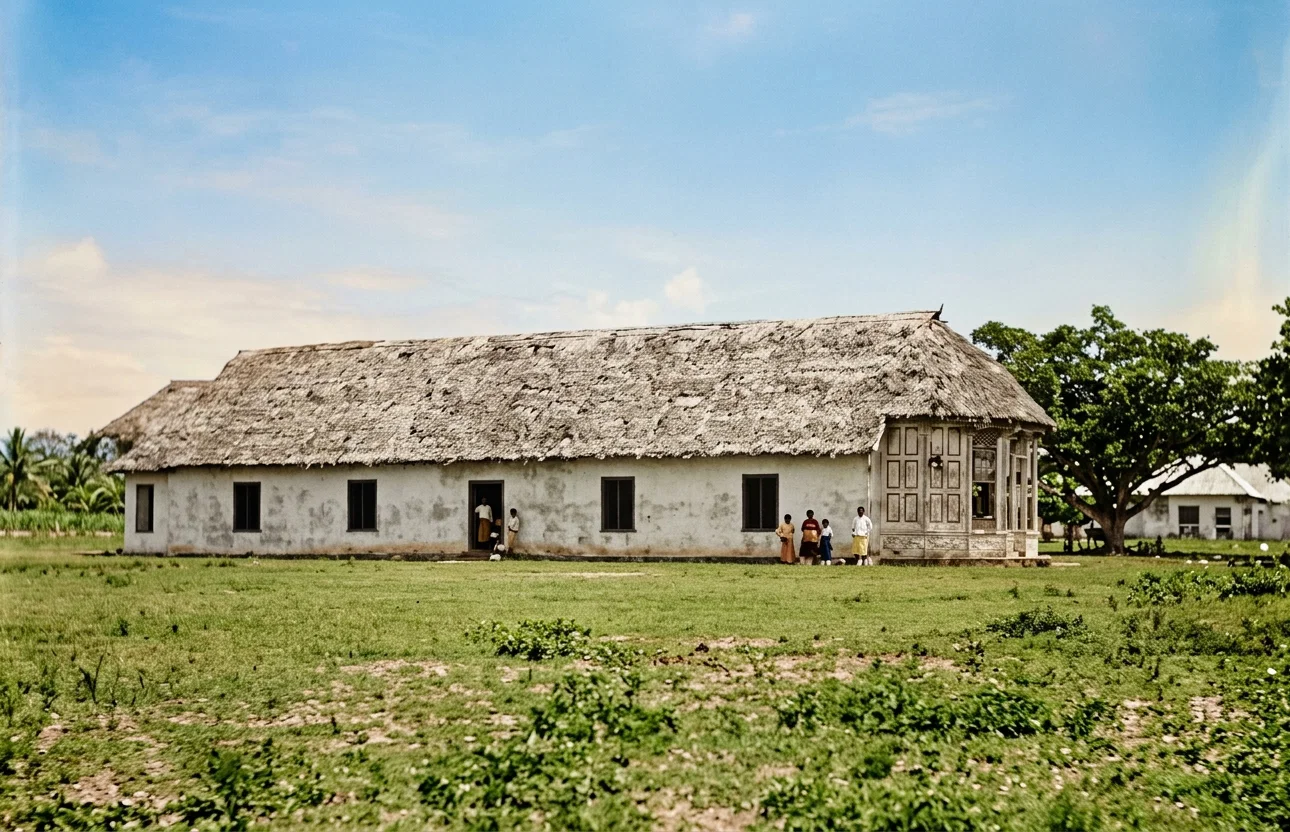
In Nukalofa, the capital of the Tongan Islands, is located the college of the Wesleyan mission, which has, with slight interruption, been in operation for the last twenty years. The school had at the time of our visit 100 in attendance.
Adjoining the college yard are the buildings occupied by the students of the school. Upon one side of the street are the houses of the married people, and upon the opposite side the unmarried boys live. They are all under the supervision of the Wesleyan missionaries, who are thoroughly conversant with the Tongan language, having been there over twenty years engaged in the mission work. These pioneer laborers have done a good work for the natives by translating Scripture, writing and printing school-books, and also in introducing the tonic-sol-fa system of music that has enabled the natives to master difficult pieces in a way that would do credit to many American choirs. The principal of the school, who kindly showed us about the institution, stated that the native boys show special aptitude for mental arithmetic and history, but are generally poor in language.
Since the year 1867, the Melanesian Mission of the Church of England have conducted their school on Norfolk Island for the education of native teachers and missionaries for the work among the groups and islands of the western Pacific. There are sent out each year from the school about twenty-five native missionaries and workers. These are generally located on the islands they left to enter the school, that they may exert a good influence over their former associates. There were 162 boys and 45 girls in attendance at the school in 1895. New recruits are obtained for the school by the mission schooner, the Southern Cross, which makes regular cruises among the islands of the11Solomon, New Hebrides, and other groups of the Western Pacific.
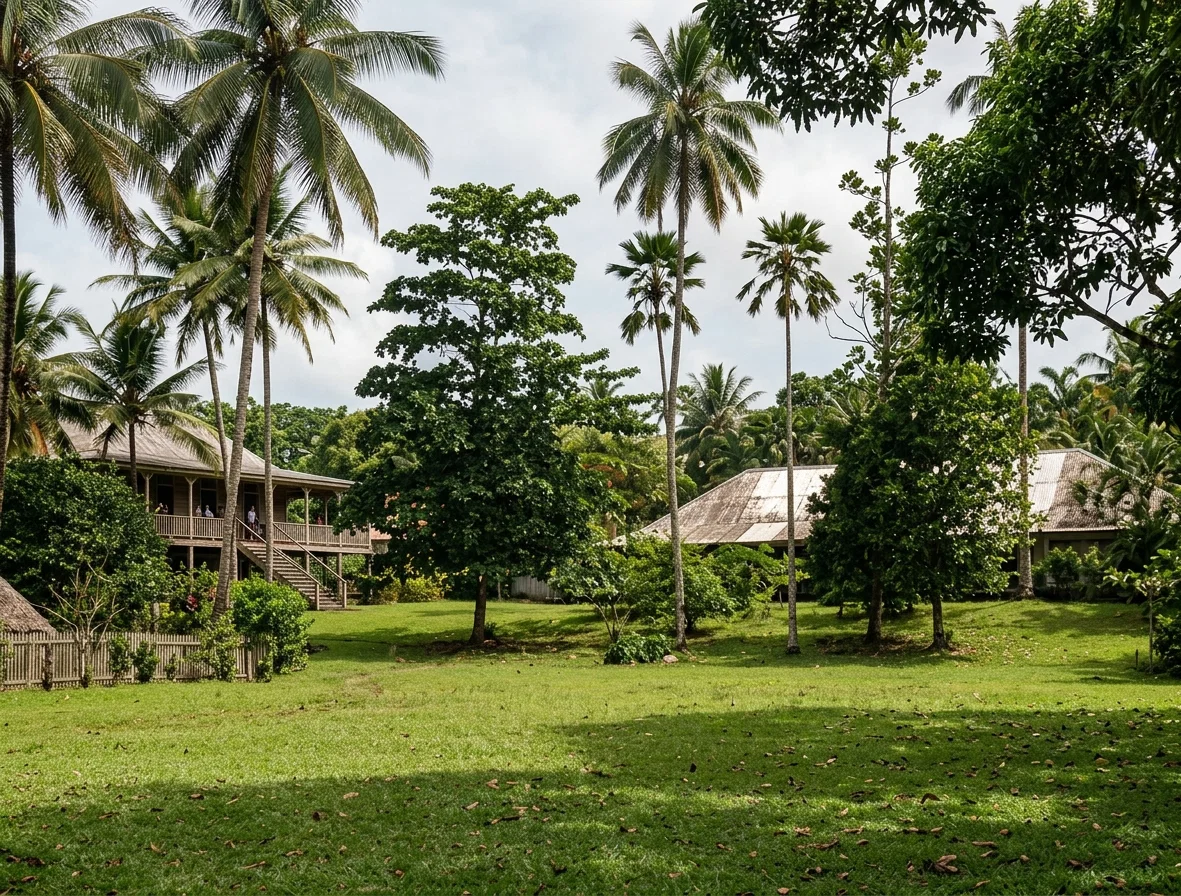
In no group of Polynesia are more systematic efforts being made toward educating the native youth for places of usefulness than at Samoa, where there are several fine schools, which are conducted at the expense of the London Missionary Society. One of these institutions is for boys and young men, another is for girls, and a third is for the married ones who are studying for the ministry. It was our pleasure while at Apia, Samoa, to visit the school for the girls, in company with Pastor Goward, of the London Missionary Society.
The buildings of the girls’ school are finely located on the higher ground back of the principal village. The site is magnificent, from which is obtained a fine view of the lowlands. Eighty girls find a home in the institution, where they are instructed by two experienced lady teachers. The buildings are large and well arranged, and as the work has been in progress for many years, a good degree of system has been arrived at in their efforts in behalf of the young. As the institution can not accommodate all who need instruction, their work is largely confined to the children of native pastors and to those of the most influential native families.
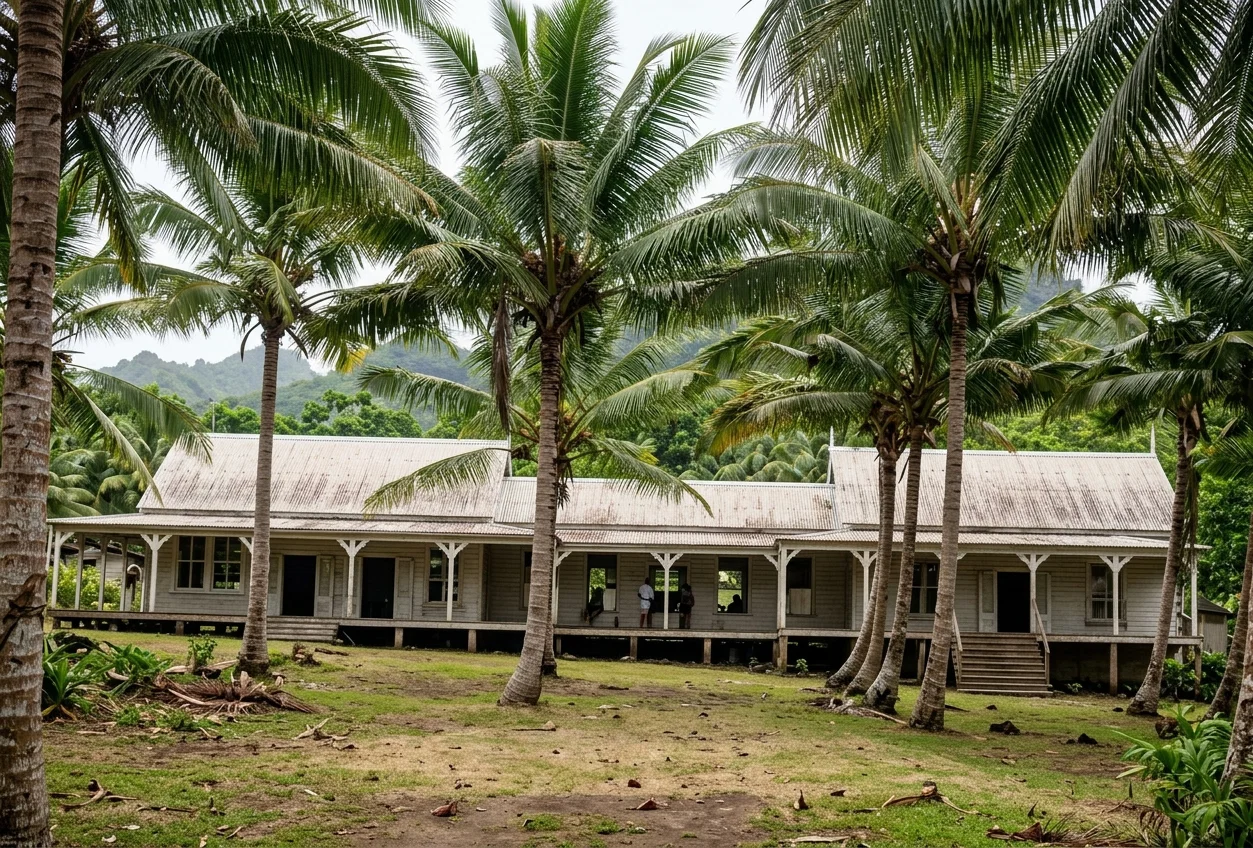
London Missionary Society's
School on Rarotonga.
London Missionary Society's headquarters at Apia, Samoa, and home of the hospitable Pastor Goward. These illustrations are kindly loaned by E. C. Chapman.
Wesleyan College, Nukalofa, Tonga Islands.
A small charge of $5.00 a year is made to each student. This does not begin to cover the running expenses of the institution, which must be mainly sustained by the society. As far as we were able to observe, excellent discipline is maintained over the students, who apparently enjoy the hours of study and the seasons of play as much as any young people. Their sleeping-room is one large apartment, where nearly every girl has a chest, with her mat and bedding, which at night is spread upon the floor. No bedsteads, bureaus, or chairs are to be seen. As the students are well looked after, and such evil habits as smoking and idleness are prohibited, we could but wish that all children of the careless islanders enjoyed such privileges as those of these institutions.
Much might be said of the work of the London Missionary Society school on Rarotonga, as from here many native workers have gone to the outlying islands to the northwest of the Cook group; some have faced the cannibals of the New Hebrides; and others have laid down their lives in the work of the Master in the unhealthful wilds of New Guinea.
The experience of these pioneer missionary societies in working for the Polynesian people all goes to show that the best results are obtained through developing the young; and in no way can this be more successfully accomplished than through the boarding-school. Manual labor is in most cases alternated with study, so that considerable quantities of produce come from the gardens of the institution to supply the needs of the table.
We feel sad at thought of the large proportion of the youth of the South Pacific who are growing up in indolence and vice, without proper home training. We long to see the day when much more of this needed work will be done. Consecrated laborers should hasten to perform it.