FARMER JOHN

5%

Pacific Press Publishing Company · Oakland, California · Apr 21, 1898

FromSigns of the Times, Vol. 24, No. 16.

Read the full edition

FARMER JOHN.

“THERE’S farmers and farmers,” said the dear old wife of one of them, as we sat on the veranda of the quaint old farmhouse one summer evening. The red gold light of the setting sun streamed over us. Tall hollyhocks nodded to us from the high side fence. Sweet old-fashioned pinks wafted their fragrance to us. There were cabbage roses beside the steps, and over on the western slope a mass of tangled shrubbery. Over all was the red gold glimmer, tinging the face of nature and making it glow with beauty.
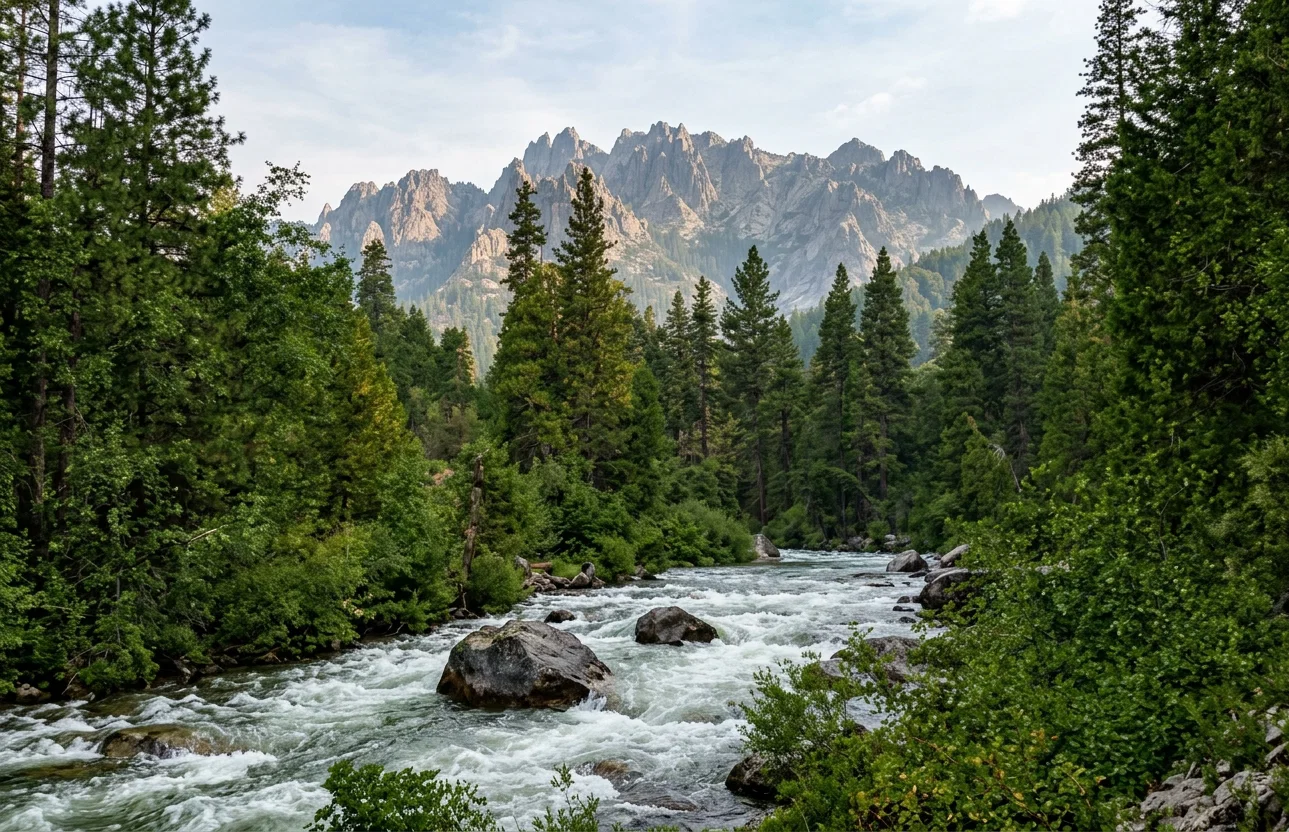
CALIFORNIA SCENERY, No. 14.—“Castle Crags,” the name by which the wild, craggy mountains in the background are known, are among the splendid views of the Sierra Nevadas in Northern California, near Mount Shasta, fourteen hours from San Francisco, by the California and Oregon Railway. This region is among the most picturesque mountain scenery accessible to the tourist or lover of nature. These mighty rocks rising sheer for 4,000 feet above their visible base, have been riven and splintered by some mighty convulsion of nature. Other views give a better idea of the castellated forms of the mountains, and the naked eye sees the many turrets, towers, spires, and pinnacles, which the camera fails to catch. This section of the State is noted for its pure air and water and sublime scenery.
“Now there was Farmer John—he was a farmer worth the name.”
“Is he dead?”
“Dead!” said she; “why, no, such a man as Farmer John couldn’t die. ‘He sleeps in Jesus.’ That’s what it says on his tombstone, and that’s what Farmer John is doin’—sleeping in Jesus. He sleeps—that is well, he needs the rest, but some day he’ll awaken and then—”
“And then?”
“Well—well—I hardly know how to put it, but that day—you know, when He makes up His jewels, why, Farmer John’ll be there. I’m sure of it; I wish I was as sure of my bein’ there.” She sighed, thinking of herself, then she smiled, thinking of Farmer John.
“You see it wasn’t ’cause he was any richer than the other farmers ’round here; he wasn’t; but it was because he could see better, that he managed to lift so many burdens for folks that weren’t able to bear ’em.”
“See?”
“Why, I don’t mean just seein’ with the eyes. You might know that there’s other ways of seein’ ’cordin’ to my thinkin’. Mebbe it’s seein’ with the soul. I dunno—anyway it’s seein’. Now, there was Almiry Crane. Some folks thought ’twas all clear sailin’ with Almiry, fer she had that pride she wouldn’t let on but ’twas. Now I don’t mean that Almiry was uppish, ’cause she never was. The pride she had was the kind that keeps folks’ affairs to themselves. Almiry kept her poverty to herself. Most folks knew, or thought they knew, that she was as well off as she’d ever been, an’ she let them think so, but Farmer John knew better. She’d had some money in the bank, but it had dwindled away, and Almiry used to lie awake nights wonderin’ what would become of her. Mebbe you’re thinkin’ that Almiry was doleful-lookin’, but ’twant so. She was as cheerful and chipper, apparently, as any one.
“But there was one person who could read between the lines, as it were. He saw the lines deepening around the thin lips, and he knew what it meant. This was Farmer John. Almiry had a little garden. She had sowed, and planted, and cared for it herself, notwithstanding her weakness and lameness and the burden of her sixty-five years. She raised herbs, too, peppermint, catnip, tansy, and thoroughwort. One day, toward evenin’, Almiry put up her knittin’ an’ fell upon her knees. She didn’t pray her usual prayer, she couldn’t, but she wailed forth:—
“I don’t know what I’m goin’ to do. O Lord, I don’t know!”
The sun peered into the western window to say good-night, touching the thin white hair of the bowed Almiry tenderly; then it vanished and the shadows deepened around her. She was still on her knees, but her prayer was now voiceless. The light died out. The darkness wrapped her in a winding cloak. She tried in her grateful way to thank the Lord for her little home, her dear old home, with its precious memories, and the “things,” but she was faint from hunger. She couldn’t eat the house, you know, nor the “things,” and she had no work or money. The vegetables were all gone long ago. As for meat, she had most forgotten the taste of it.
“Again came the words, ‘I don’t know what I’m goin’ ter do, O Lord; I don’t know!’ an’ then there fell a perfect storm of weepin’. In the midst of it some horses drew up to the door, an’ then came a rap. The rap was repeated two or three times before the door opened, for Almiry had to wash her tearful face first and summon a smile to her blue lips. She lit the lamp, too; then she opened the door. There stood Farmer John with his sunshiny face and cheery greeting. He shook hands in his warm-hearted way, but he declined Almiry’s invitation to ‘come in.’
“‘I can’t,’ he said; ‘the horses are out here; an’ it’s getting late. I just stopped to leave this basket. We’ve been killin’ up to our house, an’ I’ve brought you a taste. And now, Almiry, could you give me a little catnip? Our folks didn’t gather any, and there’s that baby.’”
“He was pretendin’, you see, that he wanted that catnip as a favor. And then when he carried that big basket in, he managed to get a good look into Almiry’s face. That was enough. He knew the Lord had led him there that night. After he’d gone, Almiry looked into the basket; then she set down and cried, but this time ’twas fer joy. What was in the basket, do you say? Why, there was sassage an’ tenderloin an’ spare rib an’ a fresh ham. An’ the very next day there come a bag of flour from Farmer John’s mill at the ‘Corners.’
“‘I want you to try it, Almiry,’ was Farmer John’s excuse for sendin’ it. ‘I want to get your opinion.’ An’ so it went; sometimes it was chickens, sometimes eggs, or potatoes, or apples, an’ he always wanted somethin’ in payment, peppermint or thoroughwort or some caraway seeds, a-pretendin’, you know, so’s not to hurt her feelings.”
“But my! Almiry wasn’t the only one Farmer John helped in his lovin’, hearty way, just goin’ round quietly, not lettin’ his left hand know what his right hand was doin.’ Now when poor Hetty Snow’s baby died and there wasn’t a cent to buy a coffin fer the dead or bread fer the livin’, Farmer John knew he was wanted, an’ there he was. An’ then that night when ‘Drunken Joe’ died, there was poor little Sue white an’ scared an’ miserable until Farmer John come along. He lifted her up and carried her off to his home, where she still is. Then there’s Burt Havens; his father was in prison, an’ because of that, people give the cold shoulder to the poor boy.”
“‘’Tisn’t right,’ said Farmer John. ‘What’s the use of blamin’ the poor boy for what he can’t help?’ And then he took him in, an’ if Ido say it, there ain’t a better boy anywhere than Burt Havens. It’s all because of Farmer John.”
“When did you say he died?”
The old lady smiled. “He isn’t dead, you know, I told you, he’s asleep in Jesus. He will be awake in that day when ‘He maketh up His jewels.’”—Ernest Gilmore, in New York Observer.