Having learned that an atonement for sin means a reconciliation of the sinner to God, and that it can not be accomplished so long as he cherishes sin, it follows that no one receives complete atonement unless he does renounce sin. It matters not how completely the provision for atonement has been made for all by the death of Christ, if any choose to ignore that preparation, and end their lives in sin, which is enmity to God and opposition to His plan of salvation, they surely receive no benefit from the provident measures taken for their salvation.
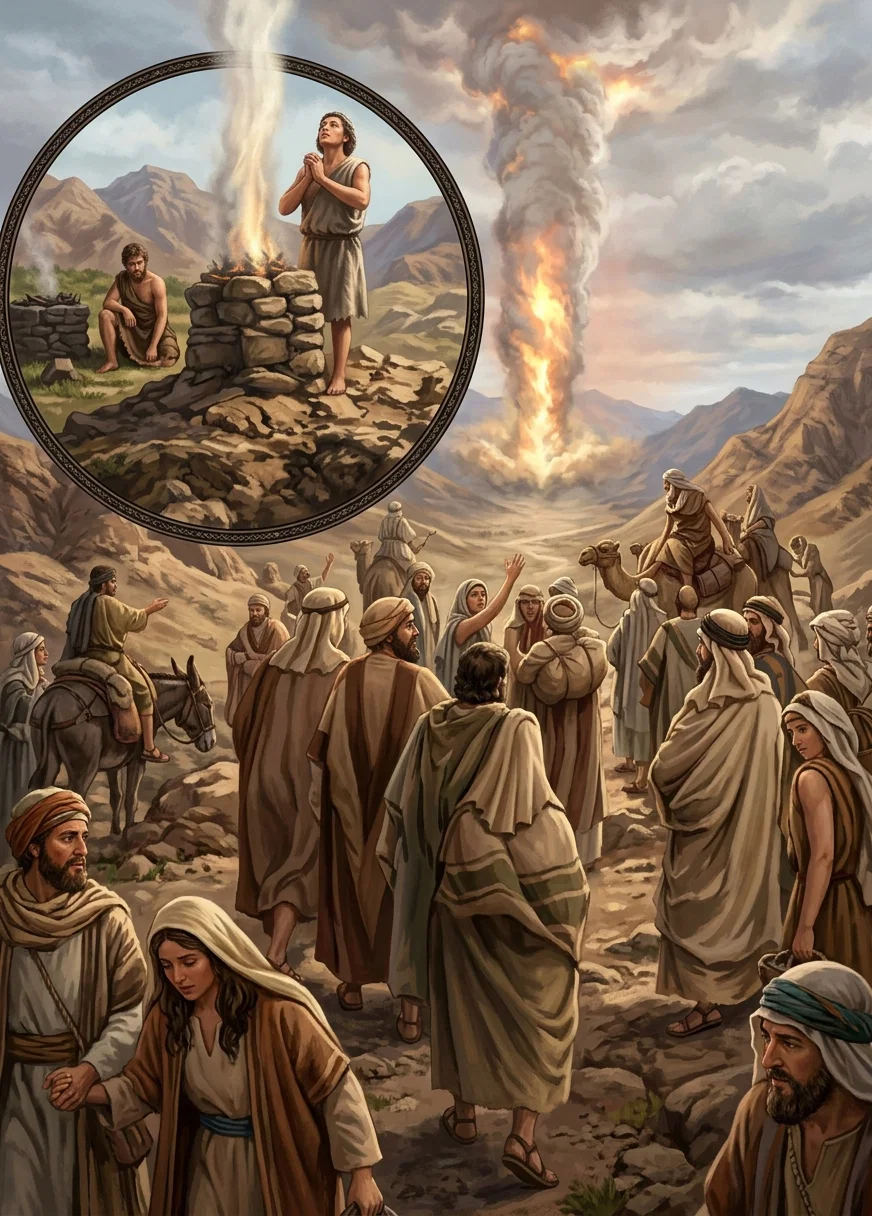
“By faith Abel offered unto God a more excellent sacrifice than Cain, by which he obtained witness that he was righteous, God testifying of his gifts.”
“The fiery cloudy pillar which led the Israelites in their journeyings through the wilderness, was the visible manifestation of Christ’s presence to them.”
Altho Christ tasted death for every man (Heb. 2:9), it by no means follows that all are saved irrespective of their own action. The death of Christ made provision by which every one may become reconciled to God; but if he chooses to remain an enemy in mind to his great Benefactor, no power on earth can compel him to recede from his position. Force may, through fear, restrain outward acts, but the mind can not be forced to accept what it does not desire to receive. Man’s reconciliation to God depends, therefore, on the combined action of the individual to be reconciled, and the provision by which that reconciliation may be effected.
The provision for this work is plainly set forth as follows: “If, when we were enemies, we were reconciled to God by the death of His Son, much more, being reconciled, we shall be saved by His life.” Rom. 5:10. The death of Christ, the sinless One, in place of the sinner, is the manifestation of love that draws the sinner toward God and begets the desire for reconciliation. Looking into his own heart, the sinner there beholds his enmity to the expressed will of God, and confesses before the throne of mercy that he is a sinner, and entirely undone. This is putting himself on God’s side; for inasmuch as God’s law proclaimed him a sinner, his own confession is an agreement with what God has said. Having the mind of God thus far, the sinner is received, because he is reconciled, and his sins are faithfully forgiven, and unrighteousness stands no longer registered against him. 1 John 1:9.
But there is an additional point in Rom. 5:10, which it is well to notice here. It is stated that having been reconciled to God by the death of His Son, we are then saved by His life. In other words, the sinner’s reconciliation to God places him where he desires to perform constantly the will of God. But to do this he must receive the mind of Christ, which can be had only by receiving the life of Christ, from which that mind emanates. This is the first need of the reconciled sinner, that he may continue in harmony with the reign of heaven, a thing which he can not do with his human power. The life of Christ, which is His righteousness, is therefore bestowed in response to the faith of the penitent one, not only as a sign of his new relationship, but as the power by which that relationship may be continuously sustained while in a world of sin.
It being true that we are saved by Christ’s life, it follows that without that life, none can be saved to eternal existence. This is made plain by the words of Peter: “Neither is there salvation in any other; for there is none other name under heaven given among men, whereby we must be saved.” Acts 4:12. It is certain, therefore, that whoever is eternally saved, be he patriarch, prophet, or disciple, must gain his salvation through the merits of Christ’s atonement. Since Christ has assured us that Abraham, Isaac, and Jacob, with all the prophets, will be saved in His eternal kingdom (Luke 13:28), we conclude that they, like all others of later generations, must have been reconciled to God through the atonement of Christ. How this could be so with those living hundreds of years before the death of Christ, is an interesting problem, worthy of the most patient and careful study.
Life eternal is to know God, and Jesus Christ, whom He sent into the world. John 17:3. Since such knowledge is eternal life, there can be no eternal life without that knowledge, either to Jew or Christian. But as “no man hath seen God at any time,” how is it possible for man to know Him? This has been answered in the statement of Christ: “The only-begotten Son, which is in the bosom of the Father, He hath declared Him.” John 1:18. So, then, whoever has heard of God, and learned of Him, did so by coming to Christ, the only source through whom God has ever been declared. John 6:45.
Christ having been the Word of God from the beginning, that Word has ever come to men through Christ alone. John 1:1, 14. Through Him the Word of God spoke the worlds into existence. Col. 1:16; Heb. 1:2. By Him the voice of God proclaimed the law from Sinai. Acts 7:38. Moses was acquainted with God through Him, “esteeming the reproach of Christ greater riches than the treasures in Egypt.” Heb. 11:26. Faith in this Christ made him forsake Egypt, the land of his birth, with all its wealth and honor, to follow Him who was the Word of God, because he looked forward to a future recompense of reward. This decision placed him in direct communication with Heaven, so that he ate of that spiritual meat, and drank of that spiritual drink, which come alone from Christ, the Rock, who accompanied him and the host of Israel on their way to the promised land. 1 Cor. 10:1–4.
The fiery, cloudy pillar which led the Israelites in their journeyings through the wilderness, was the visible manifestation of Christ’s presence to them. Before the assembled host, that2cloudy pillar came down before the door of the tabernacle, and the voice of Christ from its midst talked with Moses. Ex. 33:9–11. There could be no mistake about their knowledge of Him who was to lead them to the promised land. But, like many who now, when difficulties come, question whether the Lord is really with them, so these people asked when in perplexity, “Is the Lord among us, or not?” Ex. 17:7. Referring to this, the apostle said that in asking this question, they tempted Christ.1 Cor. 10:9.
But going back to the days of Abraham, we learn that the Gospel was preached to him. Gal. 3:8. The promises contained in that Gospel were to be fulfilled to him through Christ. Verse 16. He accepted these promises through faith. Heb. 11:8–10. Through this faith he looked forward to Christ’s appearance on earth, and rejoiced in the work He came to do. John 8:56. Even Abel, the son of Adam, understood something of the work of Christ in reconciling man to his Maker. By faith he offered unto God “a more excellent sacrifice than Cain.” Heb. 11:4. His was the offering of an innocent lamb, the blood of which fittingly prefigured the blood of Christ, the “Lamb of God,” who was to be offered for the sins of the world. In this alone consisted the excellence of his offering as compared with that of Cain’s, which was but the fruit of the ground, and therefore unfitted to typify the offering of Christ.
When the descendants of Abraham went to Egypt, and there became associated with the heathen worship of that country, they forgot the significance of those early offerings, and so lost, in a large measure, the knowledge of God and of Christ. When that people were brought out again from the land of bondage, it was necessary, before establishing them in the country of promise, once more to teach them the principles of the atonement, by which they were to know God, and be reconciled to Him. But this point must be reserved for a following study. JOHN ORR.