LIKE every other word in common use, “faith” has a wealth of meaning that is not always appreciated by the mere utterance of the word. Its hidden treasure has been sought for many times through the analysis of human wisdom, but without great success. The best because the most comprehensive definition of the thing called faith, is the following inspired one: “Faith is the substance of things hoped for, the evidence of things not seen.” Heb. 11:1. Faith is not, therefore, a theory, woven in the looms of one’s imagination; it is not logic, drawn from the syllogisms of nature, but a simple giving up of the mind to rest content, without reasoning, upon the word of another. In this way alone does the Word of God become to the Christian the expectation of all that his soul longs for amid the trials of life, and makes real in the present, things of the distant future, which otherwise would appear misty and uncertain. This makes it the substance, or ground, of the things hoped for.
“As a Little Child.”
Faith is evidence of things outside of reason,—things not open to physical eyesight, and, therefore, not demonstrable by comparison with tangible objects. We believe in future existence as taught in the Bible because God said it. Our only evidence of its truthfulness is our faith. There can be no other evidence, because we have never been there, nor have we ever seen those who have, and so we have no basis of proof but simple faith. But there is nothing strange in this method of procedure; we act the same with reference to many things.
For instance: We believe that the first letter of the alphabet is “A,” but we can not prove it. We fully believe it, notwithstanding, and that simply because we were taught it. Faith is the only evidence we have of its correctness. So with the promises of God; we just believe them to be so, and our faith is the evidence that they are so, and we cling tenaciously to this evidence amid the storms and strife of the world, assured that over yonder we shall be forever free from every annoying thing. Say what we may, there is comfort in this evidence, too.
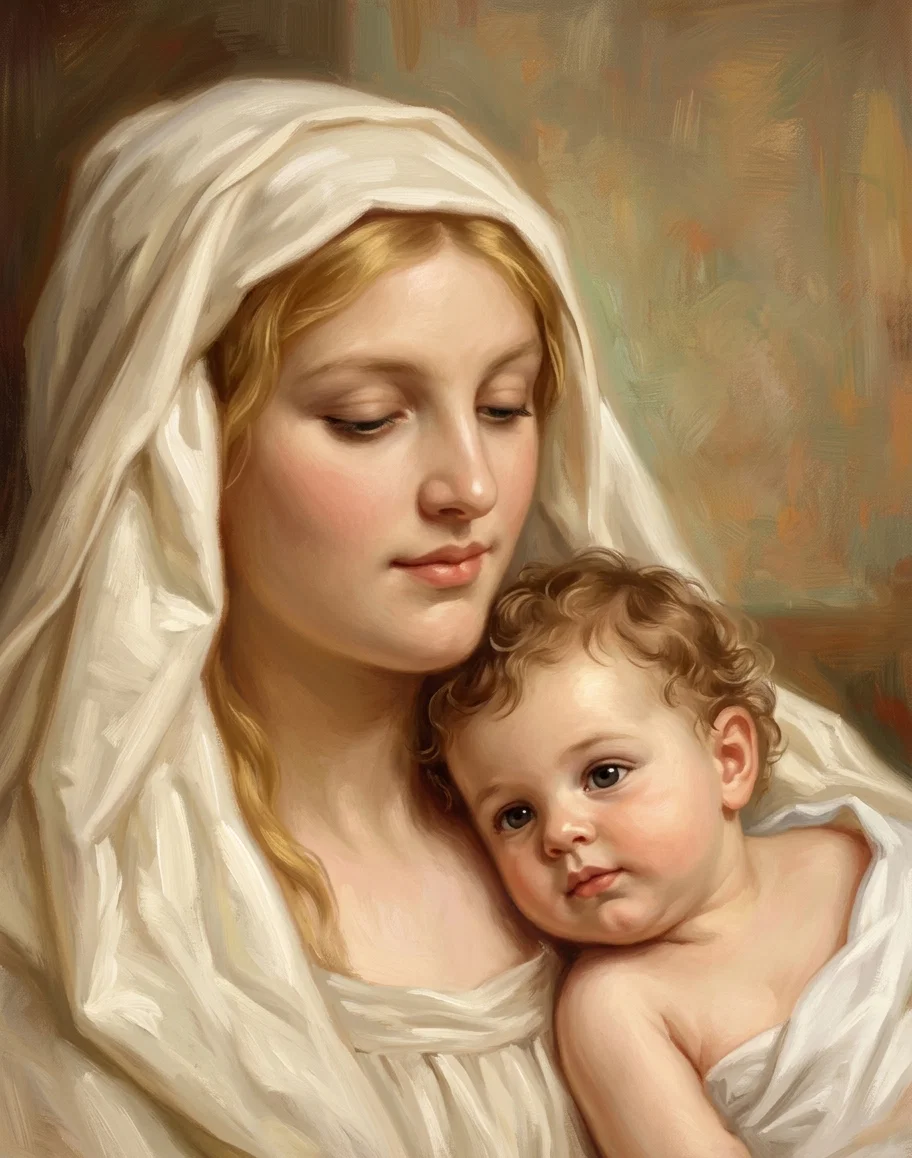
Faith, too, is as natural and simple as it is great in consequences. Indeed, its simplicity is the key to its power. Watch the little child; that confiding smile it carries resting in its mother’s arms is begotten of faith. How quietly it sleeps in its chosen refuge! When old enough to understand what is said, its simple, trusting nature believes every word mother utters, and that without the shadow of a doubt. It has no anxiety about its food or clothing, but when hungry, expects a satisfying portion upon asking for it. Where the necessities of life come from is a question that never occurs to its mind. It simply trusts loving parents for everything.
In the exercise of its natural trusting heart, the little child is a living example of what God would have all become. In its simplicity, it represents the faith of those who dwell in heaven. Being a representative of God’s handiwork at the beginning, it was born with a God-given faith. So in pointing out the nature of conversion to God, the Saviour said: “Except ye be converted, and become as little children, ye shall not enter into the kingdom of heaven.” Matt. 18:3. Again He said: “Suffer little children to come unto Me, and forbid them not: for of such is the kingdom of God.” Mark 10:14.
From these scriptures we may understand that the little child is an example of what men in Christ should be. But the faith of the little child is not acquired through education; for it has had none. It is a direct endowment from God, as an evidence of His care for the human race, even tho fallen under sin. It is the means of salvation which God has so kindly placed within reach of every one born into the world. Every one, therefore, has been given, not simply a measure of faith, according to his power of mind, but the measure of faith, a definite quantity to every one, and that, just what God would have all cultivate into permanent trustfulness. Rom. 12:3. Like the grain of mustard seed, which is also a symbol of the kingdom of heaven, the faith thus bestowed of God should be permitted to find genial soil in every heart, that in its growth, the rule of God may fill every part of the individual. The mustard seed of faith possessed by the little child, should be vigorously cultivated by parents into rapid growth, before the soil of the heart becomes cold and hardened by contact with opposing influences. Unless this is done, association with the world will lead him to lose confidence in human veracity. This in turn is extended, by natural process, to include the Word of God, and so in time he becomes a confirmed doubter.
Faith being the natural gift of God, that is the only thing which pleases Him. Heb. 11:6. Doubt is as unnatural as it is ungodly. It is the cultivation of an evil seed in a fleshly mind. To be able to please God, the sinner must therefore have undone in his mind all that the world has done for him, and return to the natural state of mind which he possessed when a little child. To refuse this is evidence that one is not in harmony with God, but is carnal, and so not in subjection to God’s law, which is spiritual. Rom. 7:14; 8:7.
Again the apostle says that “whatsoever is not of faith is sin.” Rom. 14:23. But sin is the transgression of the law, the very action of the carnal mind. 1 John 3:4. To doubt God’s Word and goodness is, therefore, to transgress His law, because doubt is the manifestation of supposed superior knowledge on the part of the doubter. To call God’s Word in question is to lower His character, and to elevate one’s self above Him as judge. But in doing this, human judgment is arrayed against the mind and will of God, which is revolt against His government; another is put in the place of God, and so His law forbidding such a course is violated. It is therefore plain that the amount of faith possessed by any one is measured by the simplicity with which he submits his judgment to the expressed mind or will of Him who is over all.
“If our faith were but more simple,
We should take Him at His word;
And our lives would be all sunshine
In the sweetness of our Lord.”