Independence

8%

Pacific Press Publishing Company · Oakland, California · Aug 26, 1897

FromSigns of the Times, Vol. 23, No. 33.

Read the full edition

Independence

Independence.—The feeling of independence is inherent in human nature. The first declaration of independence against God was made by Lucifer, in the courts of heaven, and next, at his instigation, by man in the Garden of Eden, when he set about to make himself equal to God, and thus independent of his authority. The first marked feature to manifest itself in the infant is the disposition to have its own way; and unless this disposition is checked, it grows stronger with years until even in early youth he declares his determination to have his own way, regardless of what anybody else may say or think.
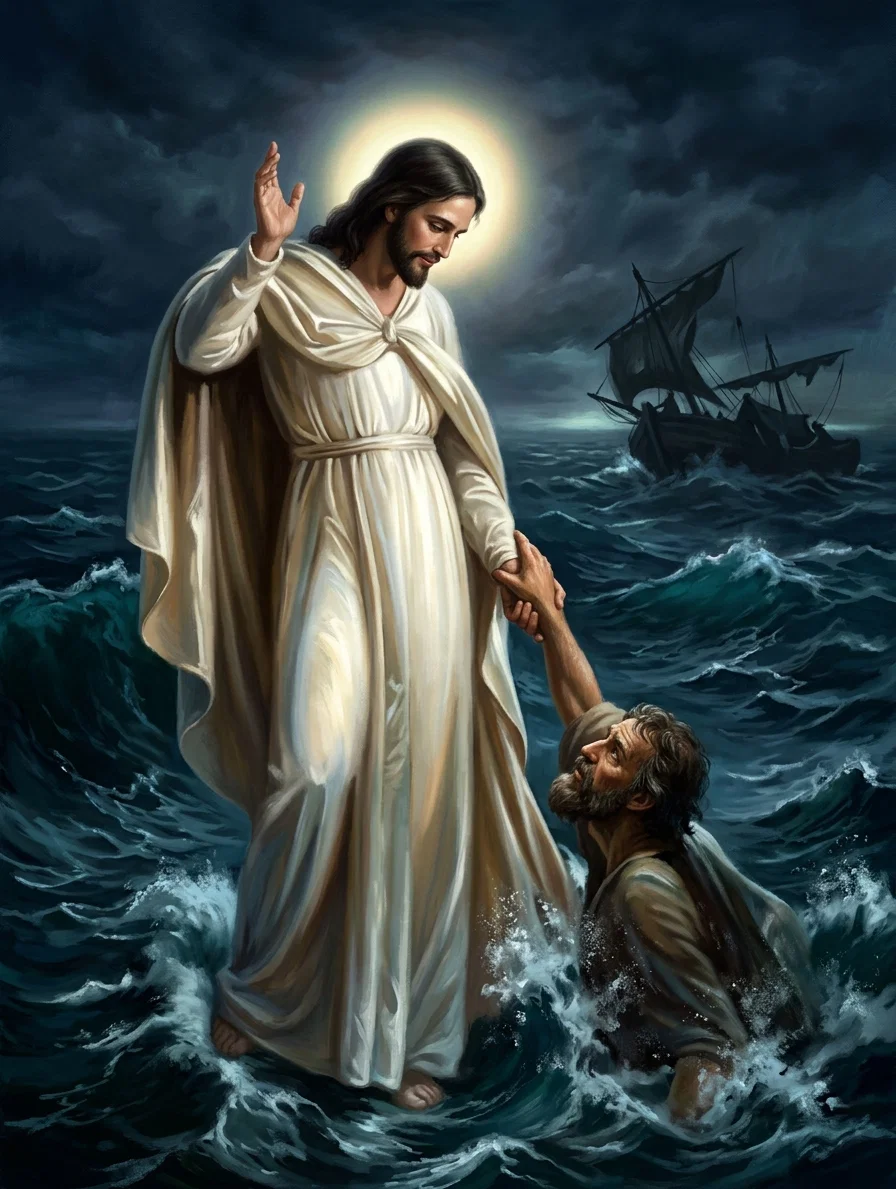
“Without Me ye can do nothing.”—“Lord, save me.”
Who Shall Rule?—This is easily answered in the case of the infant. That the child is of right subject to the parent, is so self-evident as to need no special argument. The child is not independent of its parents. Why not?—Simply because it is not.
It can not be. It depends upon them for existence in this world, and after it sees the light of day it is as dependent as before. It is absolutely impossible for it to maintain an independent existence. If forsaken by its mother, and left with no one else to take her place, it would perish in a very short time. For years the child is the most helpless of animals; it is absolutely dependent on the exertions of others for its existence. Then of course it must be subject to those who provide for it, because—
Dependence Means Subjection.—He who provides a thing has a right to say how that thing shall be used. To partake of one’s bounty,—to be absolutely dependent on it,—and at the same time to rail against him, and to use all one’s power against him, is the basest ingratitude. Whoever does that is by common consent regarded as lost to all sense of justice. So long as one is absolutely dependent on another, that other must of right have the controlling voice in the dependent one’s affairs.
Who Is Independent?—Who is there that is indebted to no one for his existence?—Not one; as already seen, every child is of right subject to its parents. But the parents themselves,—whence do they derive their support, their life itself?—“God that made the world and all things therein, . . . giveth to all life, and breath, and all things; . . . for in him we live, and move, and have our being.” Acts 25:24–28. The parents of every child, yea, every person in the world, are as absolutely dependent on God for existence and its continuation, as the infant is upon its parents. The strongest and wisest man in the world is far more helpless compared with God, than the newborn infant is compared with him. When Peter stepped out upon the water at the word of Jesus, he was conscious of the fact that he was dependent upon Jesus for support. But he was just as much dependent on that support when walking on the land.
God the One Ruler.—Those who are nearest to God, beholding his power and glory, and who themselves occupy the highest position of all created beings, do humble reverence to God, saying, “Worthy art thou, our Lord and our God, to receive the glory and the honor and the power; for thou didst create all things, andbecause of thy will they were, and were created.” Rev. 4:11, R. V. “Know ye that the Lord he is God; it is he that hath made us, and not we ourselves; we are his people, and the sheep of his pasture.” Ps. 100:3. Therefore, just as the child is of right subject to its parents, because dependent on them for existence, so all men are of right subject to God, absolutely dependent on him for life, and breath, and all things; and this is the very lesson that God would have both parents and children (and that includes everybody) learn from the relation of parent and child. The child is dependent on its parents, in order that both it and they may see their common dependence upon God; and the child is by the nature of things compelled to be dependent on its parents until it comes to years of discretion, in order that, in the proper order of things, it may learn the lesson of dependence, and pass from the recognition of dependence upon its parents to the recognition of its dependence upon God; nay, more, long before it ceases to be dependent upon its parents, it should learn the lesson that it is subject to them, for the reason that all are subject to God.
The Responsibility of the Independent One.—We speak now of the one who chafes under proper restraint, and who imagines himself to be independent, for God alone is independent. Well, since God alone is independent, from him alone may we learn the responsibility that one really assumes when he asserts his independence. God is self-existent; his name is I AM; no other being in the universe contributes the slightest particle to his support. Therefore he has a right to do as he will, and none can question him and say, “What dost thou?” “Our God is in the heavens; he hath done whatsoever he hath pleased” (Ps. 115:3); and none have ever been able to withstand him: “for the Lord of hosts hath purposed, and who shall disannul it? and his hand is stretched out, and who shall turn it back?” He who would stay the Lord in any of his purposes, must be one who has first given to him; but there are none such.
What It Means.—The one therefore who assumes that he is independent, and who asserts his independence, takes upon himself the responsibility of maintaining his own existence. When the headstrong youth declares his independence of his father’s control, the father sometimes allows him to carry his declaration to its legitimate conclusion, and attempt to provide for his own support. Now it may be that the youth from that time is able to live without his father, altho but for his previous dependence he could not now be seemingly independent, but it is impossible for him to be independent of God. He goes out into the world in his boastful pride, declaring himself to be independent even of God. He blasphemes the name of God. He will not be dependent on any being, not he. But wait! He is breathing, yes, even breathing out defiance to God. Where did you get your breath, my friend? Did you make it?—No, you didn’t have anything to do with it. You found it ready made and used it, and the supply is kept up while you are asleep. Now, no matter who made it, it is certain that you did not, and therefore if you are determined to be independent, you must at once cease using it. Of course no other man made it, any more than you did; God alone made it. Now the only way for you to be independent of God is for you to provide your own air, and use no other. Everybody who declares independence against God, puts himself under obligation to make his own air. You can not do it?—No, of course you can not. If you cease using God’s air you will immediately die. Whose life are you using, then?—Why, God’s and his only. Certainly then it is nothing more than common fairness that he be allowed to direct his own life. Every man who breathes is by that very act under obligation to devote his life to the Lord, for him to control.
“His Mercy Endureth Forever.”—We have said that sometimes an earthly father tells his rebellious son that he may look out for himself if he will not acknowledge parental authority; but this God does not do. “His mercy endureth forever.” “He maketh his sun to rise on the evil and on the good, and sendeth rain on the just and on the unjust.” Matt. 5:45. “He is kind unto the unthankful and to the evil.” Luke 6:35. This is the goodness of God that leads men to repentance. If men would only acknowledge the truth that is evident in every breath they breathe, the very drawing of their breath would draw them to God. How easy is it to believe God?—Just as easy as it is to breathe. Then “let everything that hath breath praise the Lord,” and thus prepare the way for God to show them his salvation.
E. J. W.