Temperance

7%

Pacific Press Publishing Company · Oakland, California · Feb 18, 1897

FromSigns of the Times, Vol. 23, No. 7.

Read the full edition

Temperance

Editorial

Temperance.— “The fruit of the Spirit is love, joy, peace, long-suffering, gentleness, goodness, faith, meekness, temperance.” The last fruit of the Spirit named in the text is temperance. This does not mean that if there be other Christian graces, they are not the fruit of the Spirit; these are but samples of the fruit; for the tree of righteousness, the life of which is the Spirit of God, bears every good fruit. The fruit of the Spirit is all-embracing. From this Source of life springs everything that is good.
Temperance is defined as being “habitual moderation in regard to the indulgence of the natural appetites and passions.” A better definition is, perhaps, “the moderate use of that which is good, and total abstinence from all things evil;” or this: “The moderate and proper use of that which is good.” The original word in the text rendered “temperance” means “self-control;” and self-control, the control of self in God’s way, and according to his rule, includes all the above definitions and more. It means the subjection of human lust and passion to the will of God; for it is only the power of God in man that can control man.
Temperance is generally applied to the moderate use of, or total abstinence from, intoxicating liquors. That intemperance in appetite reaches its climax in such indulgence, that the victims wrecked and swept to eternal destruction number here their millions where elsewhere they number thousands, that no words can tell or brush portray the misery, agony, wretchedness, wo, and utter despair which everywhere follows the blasting, blighting, alcoholic fiend, need not be recounted here. All know more or less of the dread blight. Almost every home has seen or sadly felt its shame and wo. But intemperance in alcoholic drinks is the last mile in the journey, not the first. It is the fruit, not the seed sowing. It is the midnight, not the sunrise. It is the irresistible torrent, not the source of the stream.
Intemperance begins in the infant. Oftentimes it is taught it from the mother’s breast. Self is indulged. The appetite is perverted by too frequent feeding. While the little one should still be eating milk, its natural food, it is fed on spiced cakes or pies; it is given sips of tea or coffee; later it partakes of stimulating meats, irritating, spiced foods, pickles, has its cup of tea or coffee; and right here is taken the first step in intemperance. The appetite is perverted, becomes abnormal, craves stimulating, and various foods and drinks—the will becomes weakened; the child has never been taught self-control. And to such cases when the temptation to use tobacco, a stepping-stone to alcohol, is presented, the victim of perverted appetite and self-indulgence falls an easy prey. When the temptation is presented to drink beer or wine, or some of the lighter liquors, the same weak, self-indulgent appetite yields; and the occasional drinker becomes a moderate drinker, the moderate drinker a drunkard. The evil began in the home circle, around the family table. The fond but too unwisely indulgent parents, if they have not given the appetite to the son as an inheritance, have trained it in the first steps of the way of intemperance. These are facts for parents, Christian parents, to ponder.
“And every man that striveth for the mastery is temperate in all things. Now they do it to obtain a corruptible crown; but we an incorruptible.”
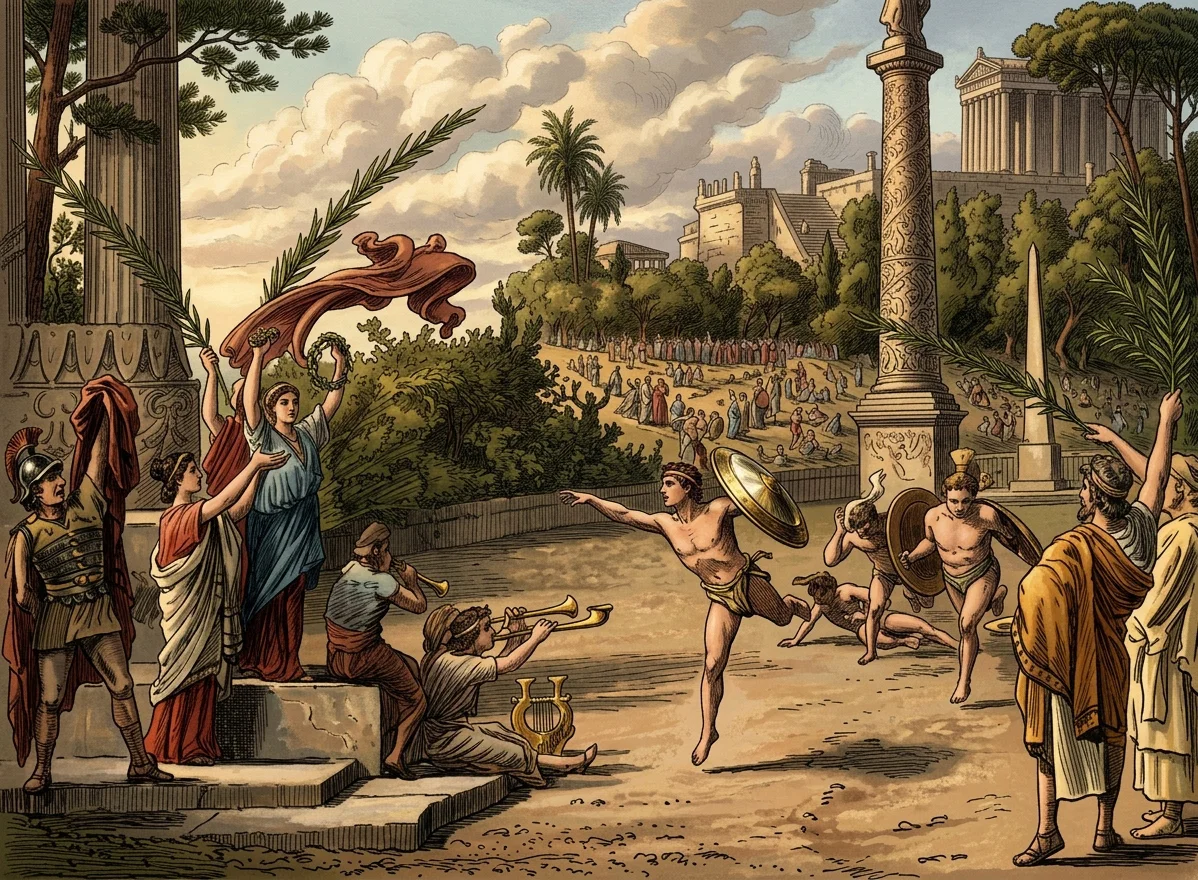
Christian Temperance is self-control for a high and noble purpose. The body is the temple of the Spirit of God, bought with the infinite price of the sacrifice of Christ. He desires to dwell therein. He would make every faculty of the mind, every power of the body, a trusted servant to do his will. He would have man by His power king over all base appetites and passion, controlling all, instead of being to them a slave. The apostle has given us an excellent and vivid illustration of this in the ancient games and races to which he refers in 1 Cor. 9:24–27:— “Know ye not that they which run in a race run all, but one receiveth the prize? Even so run, that ye may attain. And every man that striveth in the games is temperate in all things. Now they do it to receive a corruptible crown; but we an incorruptible. I therefore so run, as not uncertainly; so fight I, as not beating the air; but I buffet [“bruise,” margin] my body, and bring it into bondage; lest by any means, after that I have preached to others, I myself should be rejected.” R. V.
This striking simile, as others, can not be made to go on all fours, but note the following lessons:—
1. The Race.— The Christian race is not for a day, or an hour, or a few moments. It is a struggle, a contest for life with all the powers of evil. Its importance is infinite. All are in that race. The earth-life is the theater, men and angels the spectators. 1 Cor. 4:9.
2. The Crown.— The crown stands for the reward. In the Olympian games the crown won by the victor was wild olive; in the Pythian games, laurel; in the Numean, parsley; and in the Isthmian, pine. Altho these were all evergreens, they soon withered and faded. But the crown at the end of the Christian race is a “crown of righteousness” (2 Tim. 4:8), a “crown of life” (James 1:12), a fadeless “crown of glory” (1 Peter 5:4), an “incorruptible” crown (1 Cor. 9:25). And the crown is given the conqueror. It indicates a righteous character perfected, by the power of the endless life, a character transformed by God’s glory, pure and incorruptible. In the ancient games but one received a prize of all who entered at one time; but in the Christian race all may be victorious. “I therefore so run as not uncertainly,” says the apostle; “so fight I, as not beating the air.” So they ran in the ancient races. All were in doubt to the finish. There was but one crown—a corruptible one—waiting, and but one could wear it. But to the Christian race God calls all, and has a crown for every one he calls,—a crown of everlasting life.
3. The Preparation.— The striver for the mastery was temperate in all things. “Theregimen they were under,” says Rollin (vol. I, p. 47), “was very hard and severe. At first they had no other nourishment but dried figs, nuts, soft cheese, and a gross, heavy sort of bread called maza. They were absolutely forbidden the use of wine, and enjoined continence.” And all this for the honor of winning a race and a corruptible crown. So the pugilists of the present day, a class naturally self-indulgent, forego these pleasures, train for weeks and months, subject themselves to the severest discipline, that they may win a purse and a prize.
How much more ought the Christian to be temperate, to practise self-control. His opponents are not his fellows. He does not deprive a brother of a crown or a prize. His foes are the unseen spiritual powers of darkness, and the sensuality of the world, working through the lusts and passions inherent in the flesh. (See Eph. 6: 10–12; Col. 3: 5–14; 2 Cor. 10: 3–5; Rom. 8: 13; 13: 14.) The warfare is in the realm of thought and purpose, Christ dwelling within by faith (Eph. 3: 17), Christ living his life in us (Gal. 2: 20), and by the power of that life subjecting, crushing out, casting out, making to die, everything that rises up against God, and exalts itself against his holy will. It means self-denial of appetite, abstaining from everything which renders stupid the finer sensibilities, which makes gross the body, the temple of God, which excites or increases sensuality, which ministers to taste and desire rather than to strength and efficiency. It means control of habits of reading and thought; for there are fiction drunkards as truly as alcoholic drunkards. It means control in pleasure-seeking; for millions are intoxicated there. In short, it means that the whole man, body, soul, and spirit, shall be kept under that self-control that the Master’s voice may be heard, that his footsteps may be seen, that his hand may be felt, that every sense may be made responsive to his presence and guidance. “Whether therefore ye eat, or drink, or whatsoever ye do, do all to the glory of God.” 1 Cor. 10: 31.
Is it not worth while? Is not the reward, the gift, at the end sufficient? Nay, is it not worth the struggle, the discipline, the self-denial, the turning away from the thoughtless multitude, the giving up of evil habits of eating, drinking, reading, seeing, aye, all self-indulgence, and living for God’s glory? He takes from us no good thing. His ways are to the obedient sweet and pleasant, even tho they cost self-denial. His companionship, his indwelling, is worth more than all of earth. The clearer mind, the cleaner, better body, the purer soul, are worth more than all the pleasures of grosser sense the world can give. Temperance—self-control, by the Lord’s control—who would not possess it? “Who is wise, and he shall understand these things? prudent, and he shall know them? for the ways of the Lord are right, and the just shall walk in them; but the transgressors shall fall therein.”