Editorial

10%

Pacific Press Publishing Company · Oakland, California · Jan 7, 1897

FromSigns of the Times, Vol. 23, No. 1.

Read the full edition

Editorial

1897.—So we write it; for according to custom another new year has dawned upon us, and the year just past lives only in our memories and in the fruits and results which are the products of its existence.
Retrospection.—It is naturally a time of retrospection and reflection, a looking back and thinking back. There will appear to the various classes of the millions which indulge in this, blastings and blessings, failures and successes, defeats and victories, miseries and mercies. To many it has been wholly a year of discouragement and despair, and not a few have taken their own lives and the lives of others. Many others toil on in grinding poverty and misery, hoping against hope for something better. Some will lay the cause of all their trouble to a beneficent Providence; others will see in all the defeats and miseries the fruits of self and sin.
Introspection.—With nearly all will there be introspection, a looking within. The sins and selfishnesses will be bemoaned and regretted. Many will be sorry for the results of the sin, but not of the sinning. Reasons, purposes, motives will be to a greater or less extent analyzed. Why did I do this or that? Why has this or that come upon me? Why is not my home happier, and life a success? What is the cause? These and many other questions will crowd upon many a thoughtful and honest heart at this the close of the old year and the beginning of the new year. All this naturally leads to the forming of many Resolutions.—Many will be made, as many have been broken. They will be made a little stronger, a little more emphatic than the year before. There will be a few more prayers and tears, but hope springs up anew based upon the wreck of past resolutions renewed. The hope for the vast majority is in the resolution.
“Without Strength.”—But there is no more strength in the resolution than in the person who made it. There is no more purpose in it than in the heart from which it sprang. No resolution, no vow, no promise or pledge, will save a soul or keep from the power of temptation unless there be back of it all a greater power than the temptation or trial to be met. We may resolve, aspire, and promise ourselves, “When the morning calls to life and light, But our feet grow weary, and ere the night, Our lives are trailing the sordid dust.”
The word of God emphatically expresses man’s condition in the two words—“without strength.” And yet men persuade themselves that they can accomplish something, if not singly, by combination in lifting themselves and the world nearer God. Hence all the resolutions; and because of human weakness, all the failures.
An Illustration.—Jesus Christ had already told the disciples in that last sorrowful night preceding his passion, “Without me ye can do nothing;” but notwithstanding his word, notwithstanding the weakness displayed at the arrest of our Lord, especially by Peter, after the resurrection, man’s confidence in himself to do, to accomplish, is again manifested. Returning to Galilee, the scene of former labors in the flesh, the old memories are renewed of the time when the disciples were successful fishermen in its blue waters. “I go afishing,” said Peter. “We also go with thee,” said the others. “They went forth, and entered into a ship immediately; and that night they caught nothing.” What a kind reproof was hidden in the Master’s question the next morning: “Children, have ye any meat? They answered him, No.” There is no success in Christian work, in moral work, in personal heart work, in work which eradicates sin instead of changing its form, apart from Jesus Christ. Your vows to reform in your strength will not avail you, dear reader; your resolutions in your own strength are like ropes of sand. Man can not lift himself by tugging at his boot straps; no more can he purge himself from weakness or sin.
“In Him.”—But in Jesus Christ is all strength. “For it pleased the Father that in him should all fulness dwell.” “For in him dwelleth all the fulness of the Godhead bodily. And ye are complete in him.” “Who of God is made unto us wisdom, and righteousness, and sanctification, and redemption.” For God “hath made him to be sin for us who knew no sin, that we might be made the righteousness of God in him.” All he asks of us is to choose him and his all-glorious wisdom, strength, and beauty by giving up all of self, and he will come into our hearts with his own mighty power, his own all-sufficient life. If we will let him, he will live in us the same life he lived as Jesus of Nazareth of old. Then our power, our success, will not depend upon our resolutions, vows, promises; but upon the eternal power of God.
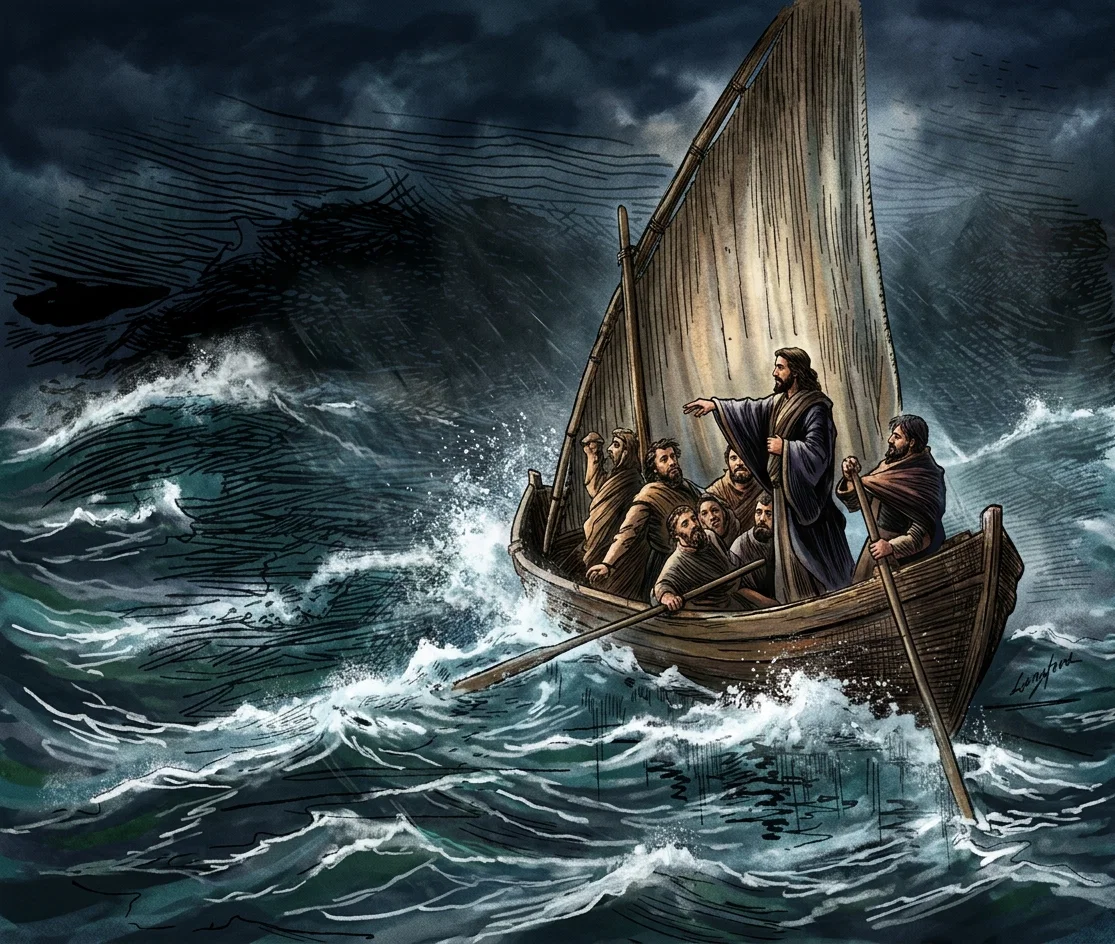
All Power Is in Him.—Friends may rage without; enemies may beset us on every side; waves of persecution and oppression may threaten to engulf our frail bark; worse than all, the evil passions of humanity may rise storm-like, and in the rage and roar of tempest we may hear the shrieking demons of hopeless defeat, despair, and death; but let Jesus into the boat; call upon him for aid; and as in old time on the storm-swept Sea of Galilee, he will arise in the calm majesty of eternal might, and speak the omnipotent words, “Peace, be still.” Reader, will you not this year take Jesus, themighty Saviour, the all-sufficient Friend, with you, to be in you and for you all that he desires to be?