Trees Mentioned

5%

Pacific Press Publishing Company · Oakland, California · Aug 6, 1896

FromSigns of the Times, Vol. 22, No. 31.

Read the full edition

Trees Mentioned

Trees

Among the beautiful, instructive things of nature which a kind Father has given us, are trees. No words can tell their benefit and beauty, their constancy and companionship. In the word of God they are intimately associated with man's history, fall, defeats, victories, from Eden lost to Eden restored. Surely God has given us Gospel lessons in the trees.

Trees Mentioned

Twoscore of different trees, more or less, are mentioned in the Book of God, beginning with its very earliest chapters. In the Garden of Eden God made to grow every tree “pleasant to the sight and good for food.” Here were seen
“Groves whose rich trees wept odorous gums and balm, Others whose fruit, burnished with golden rind, Hung amiable (Hesperian fables true, If true, here only), and of delicious taste.”
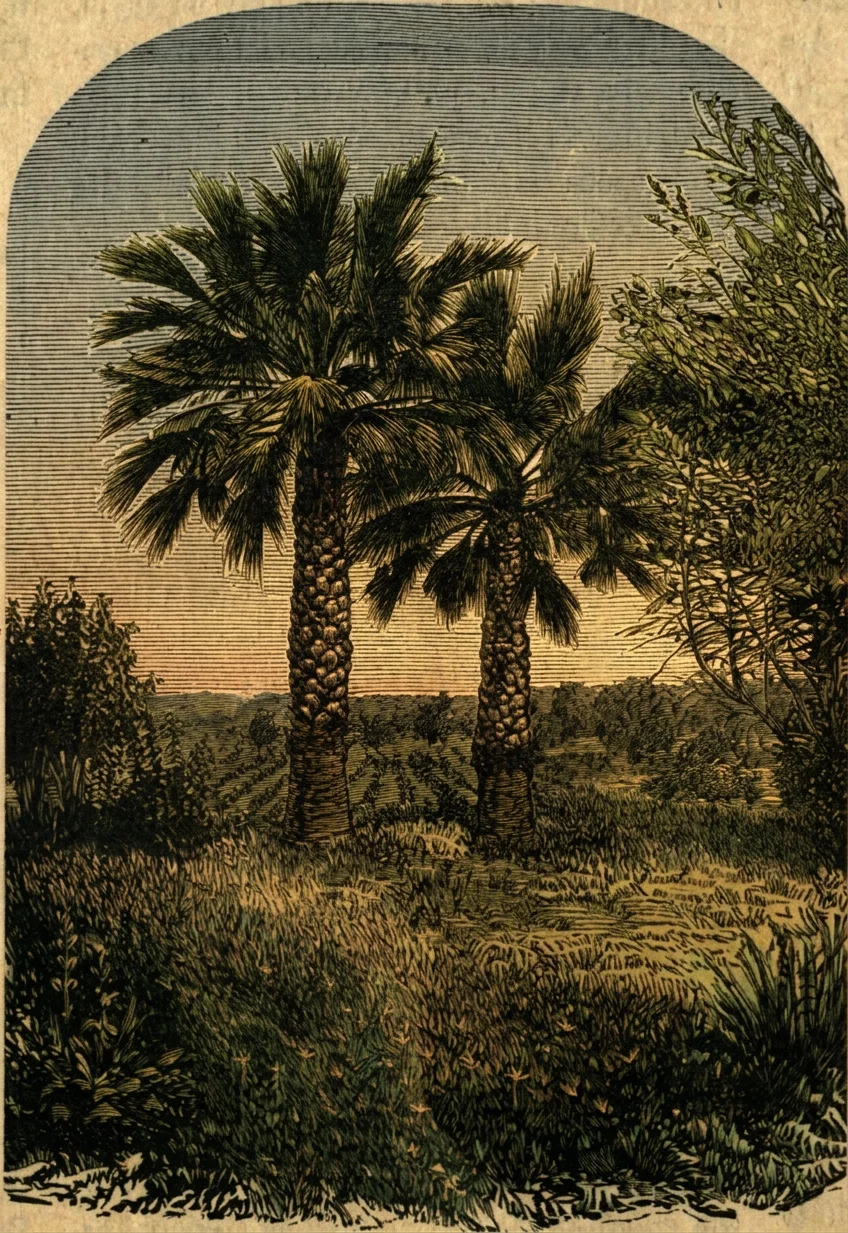
Here was the Tree of Knowledge of Good and Evil, here the Tree of Life, with its twelve manner of fruits. Here many others, all of which revealed God's glory, and were blessings to mankind. Later we have mentioned the fruitful almond, apple, fig, and olive, the odorous pine, juniper, and fir, the fragrant and healing balm of Gilead, the strong and sturdy oak, the lofty cedar of Lebanon, and the prolific palm.

With Man's History

All these trees and others are intimately connected with man's fall, history, and salvation. It was over the Tree of Knowledge of Good and Evil that came the first test of man's loyalty to God. Here it was that he fell. The Tree of Life was given to perpetuate an endless existence of a worthy character, but from its life-giving fruit sinful and sinning man was debarred, lest he should perpetuate a sinful and miserable existence. It was a tree which, cast into the bitter waters of Marah, made them sweet. It was the threescore palm trees of Elim which, with the wells of water, brought refreshment to weary Israel. Upon trees criminals were executed, and upon a tree Christ bore the curse of sinful man. All through the word, even as all over the earth, the trees teach God's lessons or breathe his praise.

Symbols of Man

Trees are very fitting symbols of man. Human nature finds in them strong reflections. We have the green tree and the dry tree, representing, on the one hand, life and growth, and, on the other, decay and death. The fruitless, leafy tree is a symbol of the hypocrite, who makes large pretensions but bears no fruit. The tree with poisonous fruit fitly represents him whose life is evil, baneful, and blasting.

Trees of Righteousness

“Trees of Righteousness” is God's characterization of those who are his, who have repented of sin, who have accepted Christ. They are “trees of righteousness, the planting of the Lord, that he might be glorified.” The seed is of God; it is the incorruptible word sown in the soil or heart prepared by the Spirit of God. The planting is of the Lord; for the child of God is “planted together [with Christ] in the likeness of his death,” that he may grow in the newness of resurrection life. (See Rom. 6:3–6.) It is the old man that is buried; it is the new man that is planted. Things are planted that they may grow, and be of benefit. So Jesus Christ planted his children here in this world that they may be trees of righteousness, that God may be glorified. “Herein is my Father glorified,” says our Lord, “that ye bear much fruit; so shall ye be my disciples.” (John 15:8.) The tree of righteousness must, therefore, be a fruit-bearing tree, “the fruit of the Spirit,” which “is in all goodness and righteousness and truth.” This is the mission of God's “trees of righteousness” in this world.

How They Grow

Christians should grow as the trees grow. The tree does not live of itself; it did not furnish its own life; God gave it life. Take away the life, it dies. When the life flourishes, it buds, leaves, blossoms, bears fruit. So the Christian does not live of himself. He does not provide his own life. He is “born from above,” not of himself, but by the will of God. He does not work or grow that he may live, but he grows because he lives. He does not bring forth fruit that he may have life, but he brings forth fruit because he has life, and the fruit is in harmony with the law of the life within. The tree grows by drinking in from air, sunshine, and rain the food which God gives. In the earth its tiny, ramifying tendrils, or tiny roots, absorb the moisture and the food which the earth provides for its needs. It is planted in the earth. It feeds on the earth. It uses the earth. But it does all this that it may ever grow skyward, that it may reach farther heavenward, toward the sunshine of life and moisture of refreshing, its glad arms of love and thankfulness.
So with the Christian. He is planted in the world, tho not of it. He has a life that the things of the world do not know. He uses the world and the things of the world, but not that he may grow into the world or be more like the world, but that he may appropriate its good to fruit-bearing for God. The life that is in him, working through the things of the world, molds them to God's glory, even as the life in the tree takes from the grosser soil and transforms it to golden, delicious fruit. Yet God's “trees of righteousness” are continually fed with the life from above. Branch and leaf drink in of the refreshing dew of God's grace, the rain of his Spirit, the sunlight of his life and love. To leave the figure, the Christian feeds on the word of God, sees God revealed in the things of nature, and faith forms the channel through which the current of God's life constantly flows into his soul, enablinghim to make all things with which he has to do redound to God's glory.

The Blessings of Trees

What blessings are trees! Whether it be their constant and varying beauty, their cooling shade, their shelter from the blast, the material which they furnish for furniture, shelter, home, or the fruit they bear, they are always, ever, blessings to man. So God has placed his children here in the world that they may be blessings, “trees of righteousness,” to glorify him by bearing fruit. He will do all on his part, wherever he may plant us. He will supply the water, the sun, the life, that we may grow and thrive. He will prune superfluous branches, dig about the roots, give us more of his life, that we may bear fruit to his glory and the good of our fellow-men. What a boon of blessing is such a life! The weary traveler finds rest and comfort under its grateful influence. The wounded find healing in its balm. The hungry find fruit. But this is not only what Christians may be, but what every Christian should be. Brother, are you a tree of righteousness? Do you stand the test given by Jesus Christ, “By their fruits ye shall know them”? Are you making great professions, yet bearing no fruit? Does the Master come to you hungry? and is he forced to leave unsatisfied? Are you using the world as not abusing it? However it may have been in the past, let the present mark an entire consecration to God. Give all up to him. Open leaf and root for his life to come in. If the storms cause the root to strike deeper into the earth, let it better enable you to gather more nourishment for more fruit to his glory. Grow as the trees grow, strong, stalwart, heavenward. Grow like the palm tree in the desert. Let the roots take hold of the unseen moisture from below, let the fruit-bearing top drink in the life-giving, fruit-giving sunshine from above. So shall you be “trees of righteousness, the planting of the Lord, that he might be glorified.”