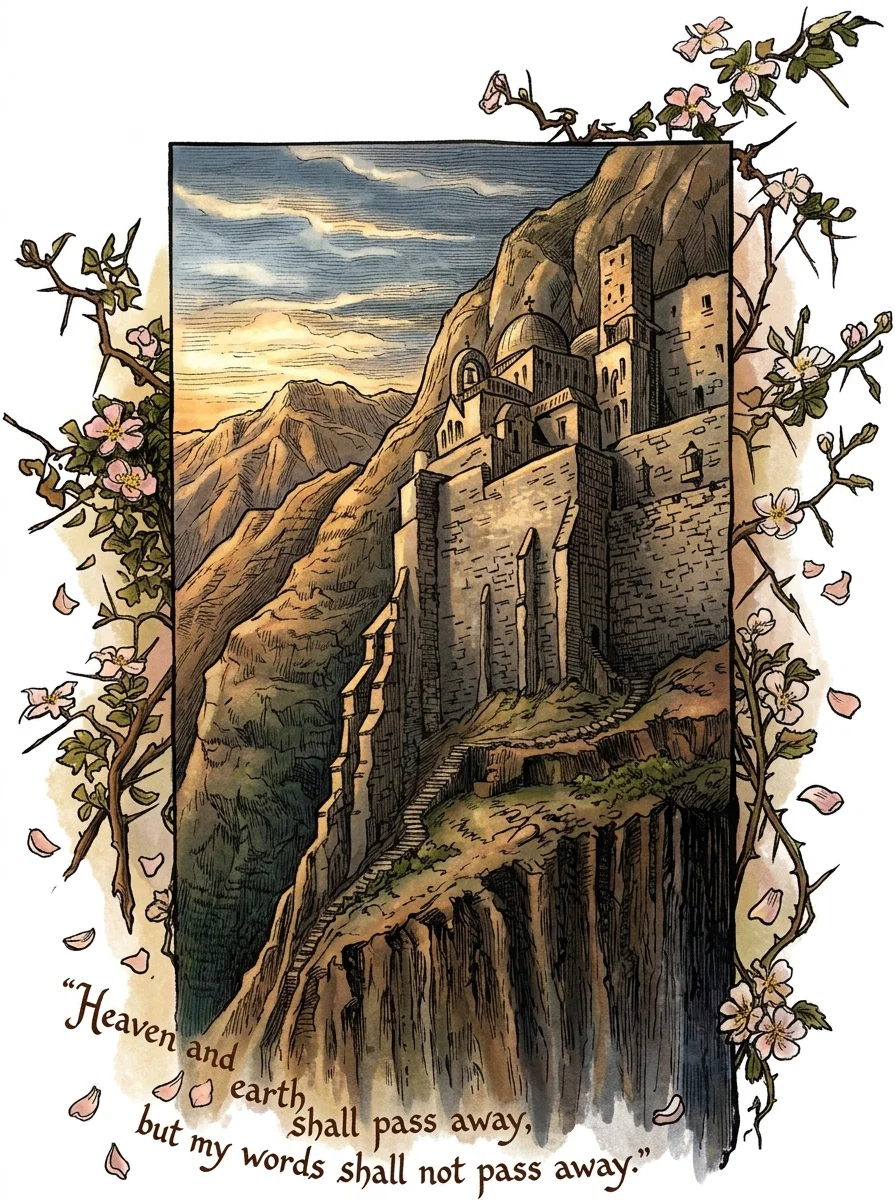
“The Word of the Lord Endureth Forever.”—This is the testimony of the Spirit of God through the apostle Peter to the Gospel of Jesus Christ.
A Contrast.—This declaration is made still more emphatic by the contrast drawn between the word of God and man. “For all flesh is as grass, and all the glory of man as the flower of grass. The grass withereth, and the flower thereof falleth away; but the word of the Lord endureth forever.” 1 Peter 1: 24, 25. Man is as the grass, which to-day is, and tomorrow is perished. All his glory—that in which he would boast, his great works, his inventions, his substitutes, his plans, his schemes—are even less than grass; they are as the mere flower of grass, which vanishes almost as soon as it appears.
Men’s Boast.—And yet it is to man and the glory of man that the race has looked for generations. Man’s names, man’s schemes, man’s decrees, man’s brief glory, catch the eye and ear of the passing crowd, and they fall down and worship the god of flesh, or, worse, the gods which the flesh has made. From Nimrod, the mighty hunter, through all the empires of the past, to the last great royal pageant in Moscow, or the political conventions in republican America, the great seething mass of humanity has gloried in men, bowed to men, worshiped men; and yet the men and the glory have died with the generation.
Something Better.—Contrasted to this, God gives us that which is enduring—the word of his Gospel. And note that this does not refer to what is called New Testament Scripture, but to the book of Isaiah, from which the quotation is made. And for the matter of that, the word of God, the Gospel of God, takes in the whole Bible. When Jesus said, “Search the Scriptures; . . . they are they that testify of me,” he referred to the Scriptures of his day—from Genesis to Malachi. When he opened the understanding of his disciples “that they might understand the Scriptures,” it was the law of Moses and the prophets and the psalms, the same Old Testament Scriptures, to which reference is made. (Luke 24: 45, 44.) When the apostle Paul tells us that “the Holy Scriptures” are able to make “wise unto salvation through faith in Christ;” that “all Scripture is given by inspiration of God, and is profitable for doctrine, for reproof, for correction, for instruction in righteousness; that the man of God may be perfect, thoroughly furnished unto all good works,” he referred to the Scriptures known and used by Timothy, a Jew. And so in all of Christ’s teaching, in his temptations, in his life, in that of his divinely ordained teachers, the scriptures of Moses and the prophets, and the Psalms are ever honored.
The Word of Christ.—And why should the word not be honored? All the Scriptures are the words of God to man. “Thus saith the Lord,” declare the prophets with constant iteration. “The Spirit of the Lord spake by me, and his word was on my tongue,” says David. Again and again we read of the same Scriptures, in the New Testament, “As the Holy Ghost saith.” The apostle Peter, whose words we quote at the beginning, declares that it was “the Spirit of Christ which was in” the prophets. The apostles and New Testament writers spoke by the same Spirit, “not in the words which man’s wisdom teacheth, but which the Holy Ghost teacheth.” All are parts of the same blessed word, spoken by different men, but breathed by the same Spirit. Words of Moses, Isaiah, Daniel, words of Matthew, Paul, John, yet words of God, one not less than the other. All are of man, all are of God. Deity is incarnate in the words of men, even as Deity was incarnate in the flesh of Jesus of Nazareth. But as in him were the wisdom of God and the power of God, always free to the believer, so in the enduring words of God’s Gospel, the Bible, are the wisdom of God and the power of God.
The Rock and the Sand.—The word of God is the rock, that upon which faith builds. All opposed to that word is sand. Man will build somewhere; he must erect somewhere his house, of some sort of character. He must worship, and enshrined somewhere will be his god. If he will not accept the word, he will, in spite of himself, build somewhere upon the sand. There are two foundations, the perishing flesh or the enduring word, the shifting, uncertain sand or the abiding rock.
The Great Question.—This is the great question of to-day: “Shall it be God’s enduring word? or shall it be the traditions of flesh, the glory of men? Shall it be the creative power of the Gospel of Jesus Christ? or shall it be the theories of evolution that find their hope in the progressiveness of the human flesh, which can redeem no one? Shall it be the mystery of God, which can and does save to the uttermost every soul which yields to its provisions? or shall it be the mystery of iniquity, which proposes, not to save men, but nations, and has never existed but to destroy? Shall it be the light of the “more sure word of prophecy,” blazing through the ever-deepening darkness the pathway to eternal glory, bursting upon the world at the soon coming of Christ? or shall it be the false fires of false prophets predicting through the glory of flesh a transforming but ever-disappointing millennium on earth? Shall it be the Sabbath of the Lord, the memorial of a living Creator, the sign of an almighty, ever-present Redeemer? or shall it be the pagan Sunday, the ever-present and age-lasting sign of apostasy since apostasy began? Shall it be the word of the eternal God, the2complete Gospel, the unmutilated Saviour? or shall it be corruptible flesh and its passing glory? Is it to you, reader, Christ or antichrist? Jesus said, “Heaven and earth shall pass away, but my words shall not pass away.” Will you choose the word?