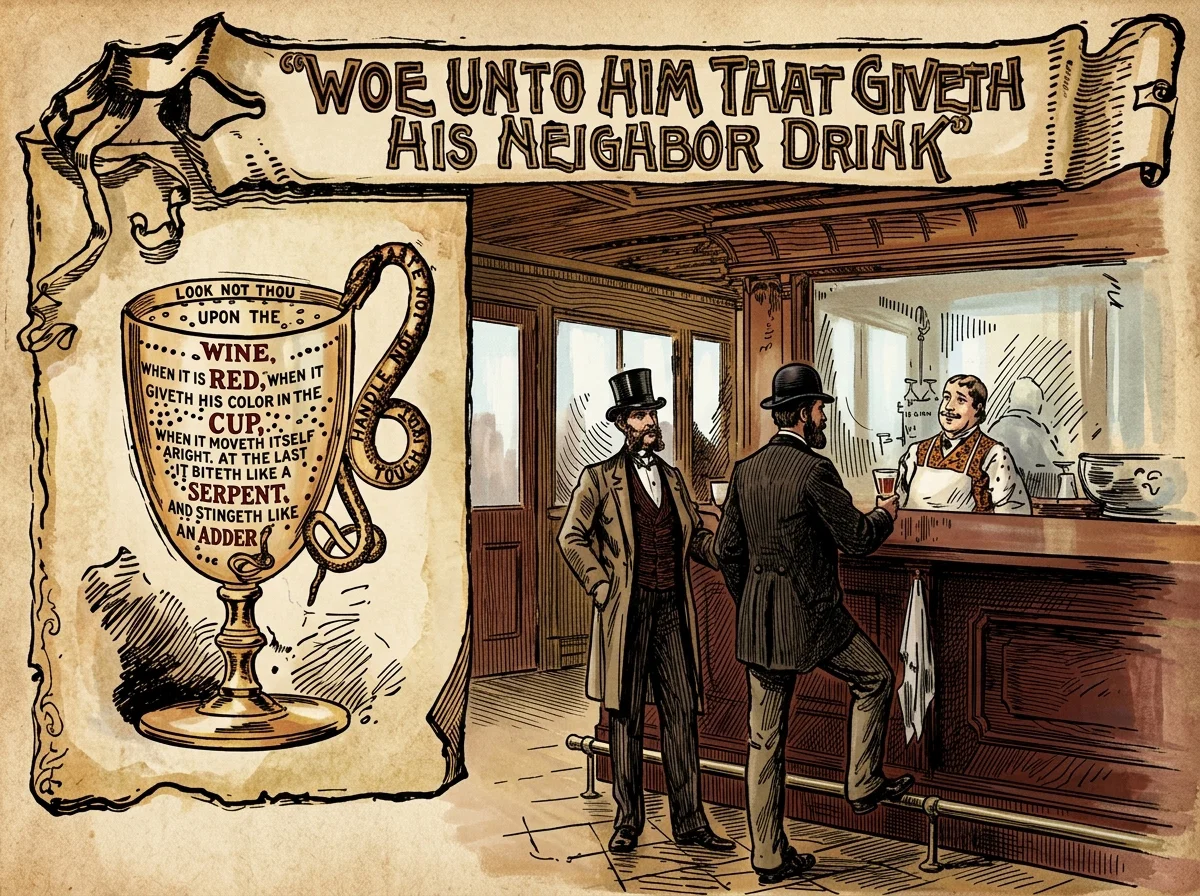
A Curse of the Ages

7%

Pacific Press Publishing Company · Oakland, California · Jul 16, 1896

FromSigns of the Times, Vol. 22, No. 28.

Read the full edition

A Curse of the Ages

A Curse of the Ages.—The curse of the ages is sin, but one of sin’s strongest allies is intemperance. History’s record is but a repetition over and over of the selfsame tale, varied by local coloring and setting. Nations and people when frugal, abstemious, temperate, and industrious have arisen, become strong, multiplied, and prospered. As wealth has increased, luxury, indolence, intemperance, degeneracy, and ruin have inevitably followed. So went the antediluvian world, the cities of the plain, Nineveh, Babylon, Media, Grecia, Rome. The nations to-day are repeating the same sad story in great object lessons.
What Is Intemperance?—It is not hard to define. It is not indulgence in alcoholic or intoxicating drinks alone. From the standpoint of eating, drinking, the satisfying of the nerves of taste and smell, true temperance is the moderate use of that which is good, and total abstinence from that which is hurtful. Intemperance includes, therefore, inordinate indulgence in good things as well as the use of things evil. To the Christian, true temperance is eating, and drinking, and doing to God’s glory. (1 Cor. 10:31.) It is finding pleasure in those things which will make true men and women, and best fit them, not only for helpfulness in this life, but prepare them for life to come. God’s glory is always consonant with our highest good; and the true Christian, the true believer, will not knowingly indulge in any habits which will degrade and destroy his body, mind, or soul.
Forms of Intemperance.—These are not indulgence in alcoholic, spirituous, or malt liquors alone. Intemperance is multiform. We know—all know, unless so besotted as not to want to know or to be unable to realize—that indulgence in spirituous liquors brings evil and only evil. “It ministers to pleasure;” true, but it is to the pleasures of the lower man; it is pandering to a perverted and cultivated appetite, to the debasement of the nobler powers of mind and body. “It furnishes employment to many;” yes, but it deprives a vaster number of employment, beggars and blasts and ruins temporally and eternally hearts and homes by myriads. It is evil and only evil. Tobacco is a worthy compeer of alcohol. Millions of dollars are burned and smoked and chewed and snuffed every year in the civilized countries of earth. The products of its use are impairment of vision, color blindness, loss of eyesight, deafness, nervousness, dyspepsia, lung disease, heart disease, paralysis, smoker’s cancer, hardening of the moral sensibilities, mentally and morally deformed offspring, other forms of intemperance, depleted incomes, inefficiency as men, and death. Opium, morphine, absinthe, the kola-nut, and other stimulants and narcotics, now growing fashionable, are mighty allies of alcohol. More than this, the strong coffees and teas indulged help to form the appetite for the stronger toxics. In fact, the strong coffee or tea may be worse for the child, sensitive and undeveloped as she is—and there are millions that use one or both—than the stronger stimulants are for father and mother.
Feeders.—These milder stimulants, the gross gluttony and overeating, are but feeders to the great stream of grosser intemperance. The appetite for strong drinks is oftentimes formed and fostered by an unwise parent at the table. To think of her bright-eyed boy as a drunkard or her rosy-cheeked girl as a nervous wreck would horrify the fond mother, and yet she is ministering to both these objects as truly as tho she were purposely training to these ends.
The great variety of dishes at a meal, the mixing of antagonistic elements of food, all serve to minister to overeating, perverted appetites, diseased bodies, depleted purses, ruined homes and characters, and the worse forms of intemperance. These things are most serious, and should arouse every Christian, and every true father and mother.
Gospel Truth.—Temperance is not a side issue, it is an essential part of the Gospel truth. It is one of the fruits of the Spirit of God (Gal. 5:23); it is one of the additional steps in the ladder of true sanctification (2 Peter 1:6); it is enjoined in view of the judgment (Acts 24:25); and he that striveth for the mastery over sin “is temperate in all things” (1 Cor. 9:25). Many are the admonitions, warnings, precepts, promises, examples, given in the word of God with reference to intemperance and gluttony and drunkenness and licentiousness; they all go together. All these things are increasing, despite all the efforts, wise and unwise, against them. Many of the “reformers” are themselves violating in one form the very principles they are seeking to inculcate and enforce in others. The only true way, the only permanent reform, is to begin at the very foundation of the principles of Gospel truth. Until the church is willing to deny self and follow Christ, all efforts to reform others by law will be abortive. Were the professed Christian world living out Christian temperance to-day, they would be connected with a power mightier than all civil enactment and enforcement. But one sad fact is that thousands are so blinded and their moral sensibilities so benumbed by indulgence of one form or another that they are not even stirred at the untellable and immeasurable sin and misery and crime in the world caused by intemperance.
An Illustration.—San Francisco is probably no wickeder than any other metropolitan city of its size. We have never seen more drunkenness in it than we have in other large cities. Its record of intemperance is therefore the record of a typical modern city. Well, here are some of the cogent facts:—
Its yearly consumption of beer, according to the calculation of the United States gauger, is 14,215,161 gallons, or nearly fiftygallons to every man, woman, and child in the city.
The consumption of whisky is 827,493 gallons, equal to 15,045 barrels of 55 gallons each, nearly three gallons to every man, woman, and child in the city. If loaded on trains, these barrels would fill 500 cars, carrying 15,000 pounds each, making five trains of 100 cars each.
The saloons of the city would cover 66 solid blocks, or put in a straight line would reach 16 miles. This would fill both sides of Market Street, the principal business thoroughfare of the city, to the exclusion of every other business, with nine miles to spare. What a journey that would be on some public holiday! And yet these do not take in what are called “barrel houses,” illicit joints, etc.
The city prison records disclose the fact that the last fiscal year there were 15,392 persons arrested for drunkenness. In July, 1895, the smallest number of arrests were made—900, nearly thirty a day—in December, the largest monthly record, 1,573, over fifty-two per day. This does not include many other equally deserving of and liable to arrest who did not come under the surveillance of the police.
But all these statistics, which we quote from the Examiner, a paper that is by no means temperance in sentiment, very feebly hint at the oceans of misery, the depths of degradation, woe, wretchedness, and despair behind all this. How many women are worse than widowed? How many children worse than orphaned? How many men driven to despair—for the “drunks” are not all men? How many homes ruined? How many souls lost forever? The picture is a horrible one; but, intemperately apathetic and indifferent, the present so-called “Christian” generation hurries on, seeing not, hearing not, caring not. God pity the fallen. God pity those who care not for them.
A Warning—A Duty.—All this increase of drunkenness, misery, crime, licentiousness, is a merciful warning against the very beginnings of sin, is one of God’s signs in the social world that we are nearing the end of all things earthly, and the second coming of our Lord Jesus Christ! God has pointed us to other cities and nations as warnings, and has told us that the last days—our days now—would be like them. (See Eze. 16:49, 50; Luke 17:26-30; 21:34, 35; Rom. 13:12-14; Isa. 5:11-25; 56:10-12; Prov. 23:1-3, 20, 21, 29-35, etc.) Our duty as individual Christians—men and women—is to save all we can by every means which God gives us, by every means which will not compromise truth and righteousness and that will glorify him. We should heed the solemn warnings. We should do the imperative duty. We should live as we preach.