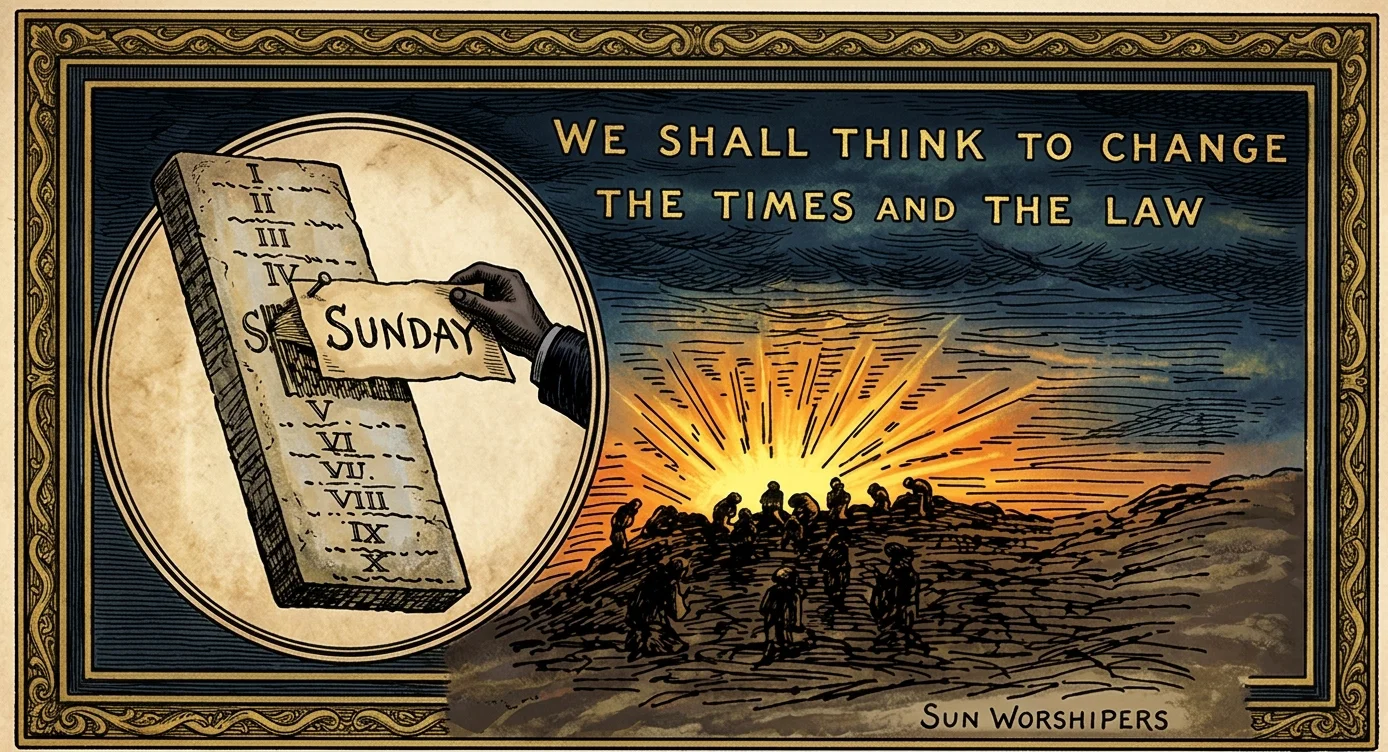
A MINISTER of Oakland, Cal., who seems to be a minister of “another gospel” (Gal. 1: 6–9), says:—
The old seventh-day Sabbath was Jewish, and had been abolished for Jew and gentile. It was meant only for the Jews, and everything Jewish has been done away.
The seventh-day Sabbath was given to man before he fell, while he was in Eden. Were Adam and Eve Jews? If they were, then what about marriage? It was also instituted in Eden, when there were only the first pair. If the seventh-day Sabbath must go because it is Jewish, then must marriage also go; for the two institutions were inaugurated for the use of mankind under the same auspices. But the Lord himself expressly says that “salvation is of the Jews.” John 4:22. Shall we therefore conclude that salvation has been done away?
Again, the apostle Paul says of his “kinsmen according to the flesh” (and he was a Jew): “To whom pertaineth the adoption, and the glory, and the covenants, and the giving of the law, and the service of God, and the promises; whose are the fathers, and of whom as concerning the flesh Christ came, who is over all, God blessed forever.” Rom. 9: 3–5. Shall we therefore conclude that all these things, including even Christ, have been done away?
This minister of “another gospel,” in supporting the first-day sabbath theory, further says:—
Authorized example is equal to precept or command in Christianity.
That depends upon whose example we take. There is but one “authorized example” set before men, and that is the example of Christ. His positive injunction to his disciples is, “Follow thou me.” We have no other example of Sabbath-keeping on his part than the observance of the seventh day. He said, “The Sabbath was made for man.” When?—Before the fall, as already stated. See Gen. 2: 2, 3. “Therefore,” he adds, “the Son of man is Lord also of the Sabbath day.” Of course he is Lord of everything that he made, and his example in keeping the Sabbath that he himself had made, is the best example for Christians to follow.
But, as the opposers of the law of God always stultify their own arguments, so this minister gives away his cause in the following admission:—
To be fair, however, there is no command to keep the first day of the week. There is no positive enactment upon the subject. But this only shows the wisdom of God.
To this we may add that it shows also the unchangeable character of his law. “The law of the Lord is perfect.” Ps. 19:7. “Wherefore the law is holy, and the commandment holy, and just, and good.” Rom. 7:12. “Do we then make void the law through faith? God forbid; yea, we establish the law.” Chap. 3:31. “It is easier for heaven and earth to pass, than one tittle of the law to fail.” Luke 16:17. The admission that “there is no command to keep the first day,” further shows that the advocates of first-day observance are urging upon Christians as duty that which God has not enjoined. Like the scribes and Pharisees of old, they make the commandment of God of none effect by their tradition, and teach for doctrines the commandments of men. See Matt. 15:1–9.
In further admission of the wisdom of God in not giving any express command to keep the first day of the week, this antinomian first-day apologist says:—
Sun Worshippers
For had the first day of the week been established by positive enactment as a day of rest and worship, and the manner of its observance been decreed among the myriads of the poor, the bond and bread-winners and busy men generally who have accepted the Christ in this age of activity, the law must have been broken continually.
We especially commend this to the ardent advocates of human Sunday laws. If they can see wisdom in God’s not making a Sunday law, on account of such dire results, why should they undertake such a work? Can they do successfully that from which God refrains? “Shall mortal man be more just than God? shall a man be more pure than his Maker? Behold, he put no trust in his servants; and his angels he charged with folly; how much less in them that dwell in houses of clay, whose foundation is in the dust, which are crushed before the moth? They are destroyed from morning to evening; they perish forever without any regarding it. Doth not their excellency which is in them go away? they die, even without wisdom.” Job 4:17–21. Such are the frail worms of the dust that assume to command in the name of the Lord that which God has not commanded. “Behold, I am against the prophets, saith the Lord, that use their tongues, and say, He saith.” Jer. 23:31.
“Let us hear the conclusion of the whole matter: Fear God, and keep his commandments; for this is the whole duty of man. For God shall bring every work into judgment, with every secret thing, whether it be good, or whether it be evil.” Eccl. 12:13, 14.