INVENTORY-OF-A-CELLAR

7%

Pacific Press Publishing Company · Oakland, California · Jun 25, 1896

FromSigns of the Times, Vol. 22, No. 25.

Read the full edition

INVENTORY-OF-A-CELLAR

BY J. H. KELLOGG, M.D.
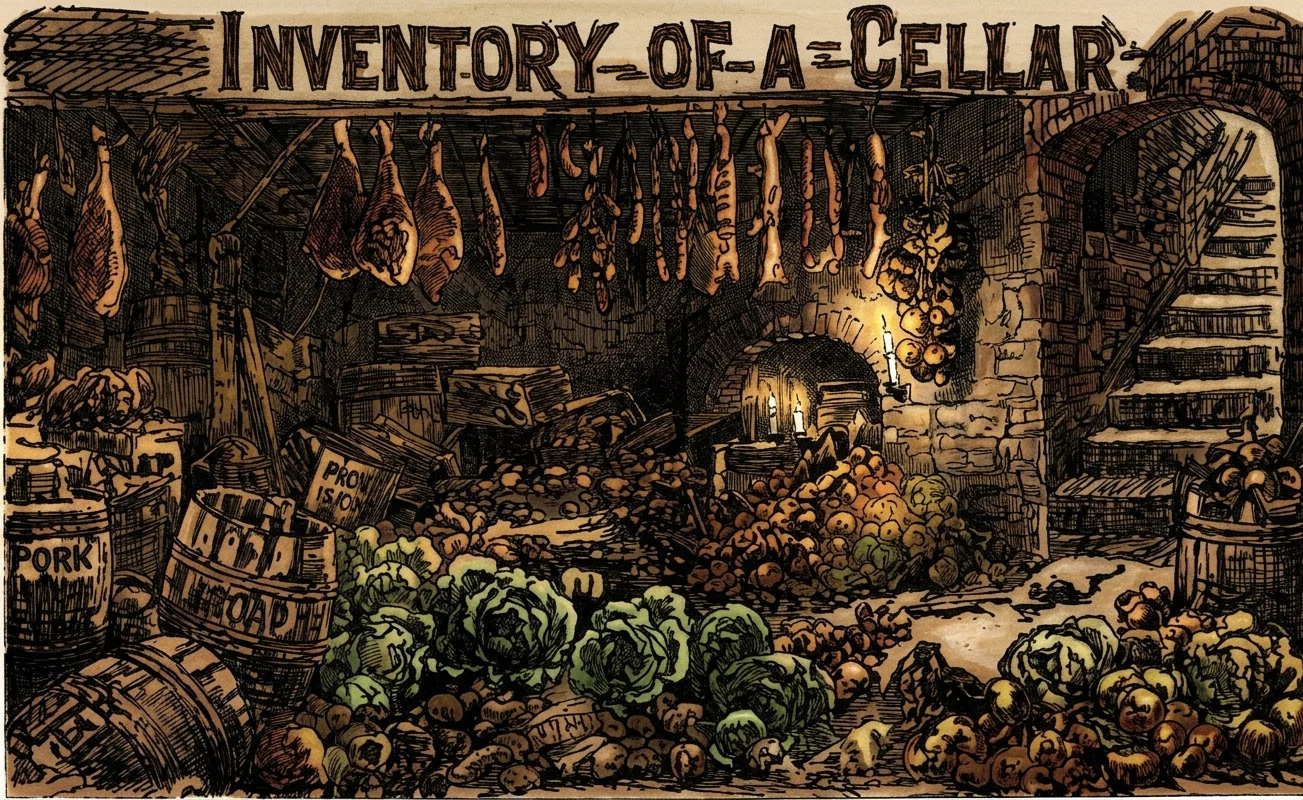
Give us a light, and let us take a peep into the regions below. Susie has a sore throat, and Jamie is just over an attack of cerebro-spinal fever, as the doctor called it, and the hired girl had a run of typhoid fever a month ago; and now spring is coming on, and the whole family are expecting to have the annual visitation of “spring sickness” and other maladies, which experience has told them is pretty sure to come with the first indications of approaching spring. Somehow, we have a suspicion that some of the family sickness may be the result of causes nearer home than most people would imagine, and we are going to make a sanitary survey of the premises. To-day we are to take a peep into the cellar. We must have a light, as no ray of sunlight ever enters into this subterranean storehouse. We open the door to descend. Whew! what a “smell”! A “smell,” did we say? Not one, but many smells—a conglomeration of vile odors of every variety and degree. Let us descend. As we grope about, the air seems thick, and the candle burns dimly. A suffocating sensation tells of carbonic-acid gas, and a stinging smart in the nose suggests ammonia, while a sharp headache setting in betrays the presence of that deadly gas, sulphuretted hydrogen.
Where do they come from, these pestilential gases?—Sources are abundant. Here is a bin of potatoes laid away for winter’s use. The warm, close air of the unventilated cellar has hastened their decay, and the peculiar penetrating odor which arises is evidence that we have located at least one “smell.” Here is a barrel which emits a moldy, vinegar-like odor, and a close inspection shows it to be half filled with rotten apples. Each day the cook picks out the sounder ones, and leaves the balance to decay and mold.
A peculiarly offensive odor attracts us to a corner in which has been stored a heap of cabbages and other products of the vegetable garden. The insufferable stench arising assures us that the sulphuretted hydrogen and its allies have here a stronghold. Half-decomposed cabbages and turnips contribute their share to the general stench. Overhead hang sundry stubs of moldy bacon, a smoked ham covered with a green coat, and a half-rotten codfish which has been forgotten. A glance around shows mold and mildew everywhere. A student of fungi would here find a rich field for specimens.
An unmistakable odor of sewer gas attracts us to a depression in the floor, which proves to be a half-stopped drain, communicating with a cesspool in the back yard. From it issues a constant stream of mephitic gases as deadly as those which were said to arise in ancient times from the dreaded Lake Avern.
But still there is one smell which is unaccounted for,—a sickening odor of animal decay, which would delight the nostrils of a turkey buzzard. We rummage about among the boxes and barrels, disturbing myriads of ants and centipedes, and at last discover, in an out-of-the-way corner, the decaying carcass of a rat, which suddenly fell sick from eating a slice of poisoned bread and butter.
There are sundry suspicious-looking barrels and boxes into which we have not looked, some of them having smells strongly suggestive of soft soap and soap-grease; but we dare not longer risk our lives amid these death-dealing stenches, and hasten to depart.
Many a time have we all visited just this sort of cellars. Is it any wonder that a house with such a “pit of corruption” under it, has always some one sick in it? If the United States were an absolute monarchy, and we the monarch, an edict should be issued prohibiting the construction of vegetable cellars under dwellings. They are undoubtedly a cause of much disease and many deaths. Thousands of sore throats, diphtherias, and other maladies find their origin in this dark, damp hole beneath the dwelling.
Vegetables, meats, and all decomposable stuffs, should be kept in an apartment separate from the dwelling-house. A vegetable cellar should certainly be separated from the dwelling, so that contamination of the air of the building will be impossible.
But there are cellars which contain no vegetables or other decomposable stuff, and yet are not healthful. A cellar which is damp, or one which is not cemented at the sides or bottom, is properly open to suspicion. A dry, well-ventilated cellar or basement adds to the healthfulness of a house; but a cellar which is filled with damp or stagnant air is productive of disease. This is particularly true during those seasons of the year when a house is likely to have its doors and windows closed, and fires burning in grates or stoves. The heating of the air in the living rooms of the house creates an upward draft, which draws up through every crack and crevice in the floor streams of stale, damp, cellar air, spreading it through the entire building. This is undoubtedly a source of numberless sore throats, catarrhs, rheumatisms, and other maladies which are wrongfully charged to Providence or the weather.
Cellars with uncemented walls and floors are certain to be filled with bad air derived from the soil, known to sanitary scientists as “ground air.” Scientific investigations have shown that the air of the soil is always more or less impure, and it may be so greatly contaminated as to become deadly in its effects. A cesspool, or vault, or leaky drain in the vicinity of a house, is certain to contaminate the soil, and thus render the ground air not only bad, but highly dangerous to life. A house the cellar of which has walls not made impervious to air, is constantly exposed to this danger. Poisoning by ground air is the source of the constant ill health which destroys the peace and happiness of thousands of families.
All cellars and basements under houses should be thoroughly drained and well ventilated, and should have walls so made as to be impervious to air and water. An ordinary brick or stone wall is inefficient; butsuch a wall, plastered smooth with good cement, outside as well as inside, is practically safe.