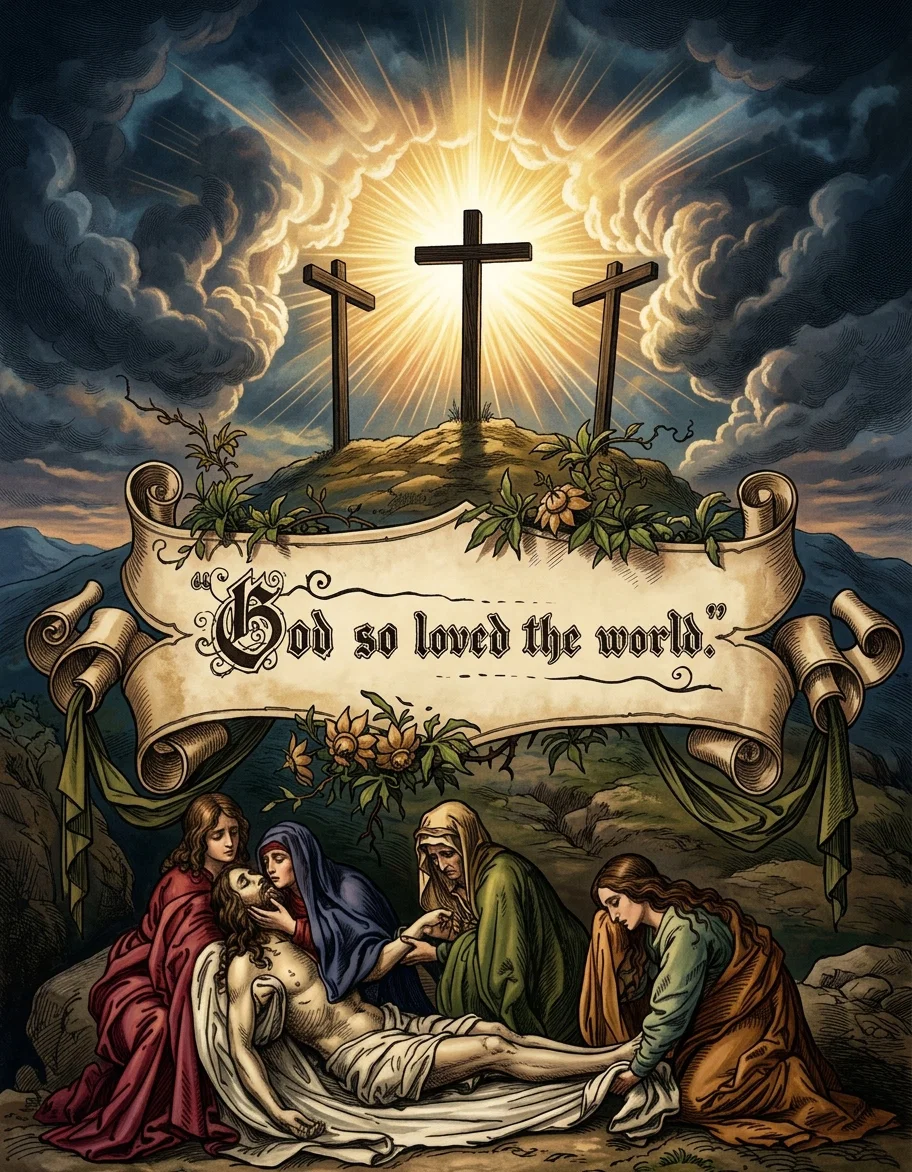
The Love of God

11%

Pacific Press Publishing Company · Oakland, California · Jun 18, 1896

FromSigns of the Times, Vol. 22, No. 24.

Read the full edition

The Love of God

The Love of God.—“For God so loved the world, that he gave his only-begotten Son, that whosoever believeth in him should not perish, but have everlasting life.” Such is God’s love to us.
Not Words but Deeds.—Note the fact that God’s love is not transient passion, but abiding principle. It is not the whim of a moment, nor an affection for that which pleases; for God loves us, the unlovely. That love is not shown in words alone, but in deeds as well. True it is that from the beginning God has said by words that he loved man, but he said it so much louder and stronger in his wondrous works for man, in the wise and beneficent law which he gave to man, in his long-suffering and tender mercy to man in sin and rebellion! God loved man, and his love was expressed in the doing.
How Much.—But in all the early history of the race God had never said—for words alone could never tell—how much he loved man. The tenderest expressions he could use, which man could understand, our Father employed to tell his love; but when his only-begotten Son—“the Son of his love”—died upon the cross—the symbol and climax of his sufferings for the race—God then told man how much he loved him. It cost the sacrifice of the Creator of the heaven and the earth to prove God’s love. And to-day that mighty sacrifice stands as a pledge to every believer; for if God so loved us that he “spared not his own Son but delivered him up for us all, how shall he not with him also freely give us all things?” And so he has given us all things in giving Christ; “for it pleased the Father that in him [Christ] should all fulness dwell,” and “ye are complete in him.”
This is God’s love to us—love in principle, love in exercise, love in deed.
Our Love.—“We love him,” says an apostle, “because he first loved us.” If he had never loved us, we never could have loved him, nor any one else save self; and self-love, pure and simple, is hatred of all things else. “Love is of God.” He who has love must therefore obtain it from God. God’s actuating motive is love; for “God is love.” He, therefore, who would have true love must be actuated by the same principle, ruled by the same spirit. So says the Scrip tures: “Every one that loveth is born of God, and knoweth God.” But it is through the Spirit of God that we are born (John 3: 3–5), and it is through the Spirit of God brought into our hearts by faith that the love of God is shed abroad within us (Rom. 5: 5); and that love in us will be not fleeting passion or transient emotion, but abiding principle.
Manifest in Deeds.—If we have the same spirit which actuated God in giving his Son, which actuated the Son in giving himself, that same spirit will actuate us in like measure. Love in God is manifest in deed. Love in us should be the same. “My little children, let us not love in word, neither in tongue; but in deed and in truth.” That love is thus manifest in works is a proof that the love is of God; for the apostle continues: “And hereby [that is, by the fact that our love moves us to deeds] we know that we are of the truth, and shall assure our hearts before him.” (1 John 3: 19, 20.) Fruit bearing is the proof of the vine. Deeds are the proof of our love. And this fruit, these deeds, are in harmony with the righteous requirements of God. The deeds are not of our way, or according to our own selfish choice, but they must be in harmony with God’s way. “Ye are my friends if ye do whatsoever I command you.” Therefore, the beloved apostle gives us the following means for knowing our love: (1) Every one that loves God will also love the children of God. (2) The proof that we love the children of God is the fact that we keep God’s commandments. (3) And the proof of our love to him, the only true expression of our love, is the keeping of his holy precepts; “for this is the love of God, that we keep his commandments, and his commandments are not grievous.” (1 John 5: 1–3.) Reader, have you this wonderful love? If you have not, why not?
Gospel Liberty.—The “liberty of the Gospel” does not license us to commit sin. Many have a mistaken idea that the liberty to be found in Christ releases one from all obligation to keep the divine law. Such, however, but poorly understand the nature, scope, and power of the redemptive plan, and the relation that the law and the Gospel sustain to each other. When the disciple dwells in Christ, and Christ in the disciple, the law of God will be a delight, and the observance of its righteous requirements an abounding pleasure. As Christ obeyed the law while here in the flesh, so while dwelling by his Spirit in the heart of his followers will he do the same. And if his professed people are living their Christian life “by the faith of the Son of God,” it will be the natural acts of their spiritual nature to observe the law of God. David says, “I will walk at liberty; for I seek thy precepts.”