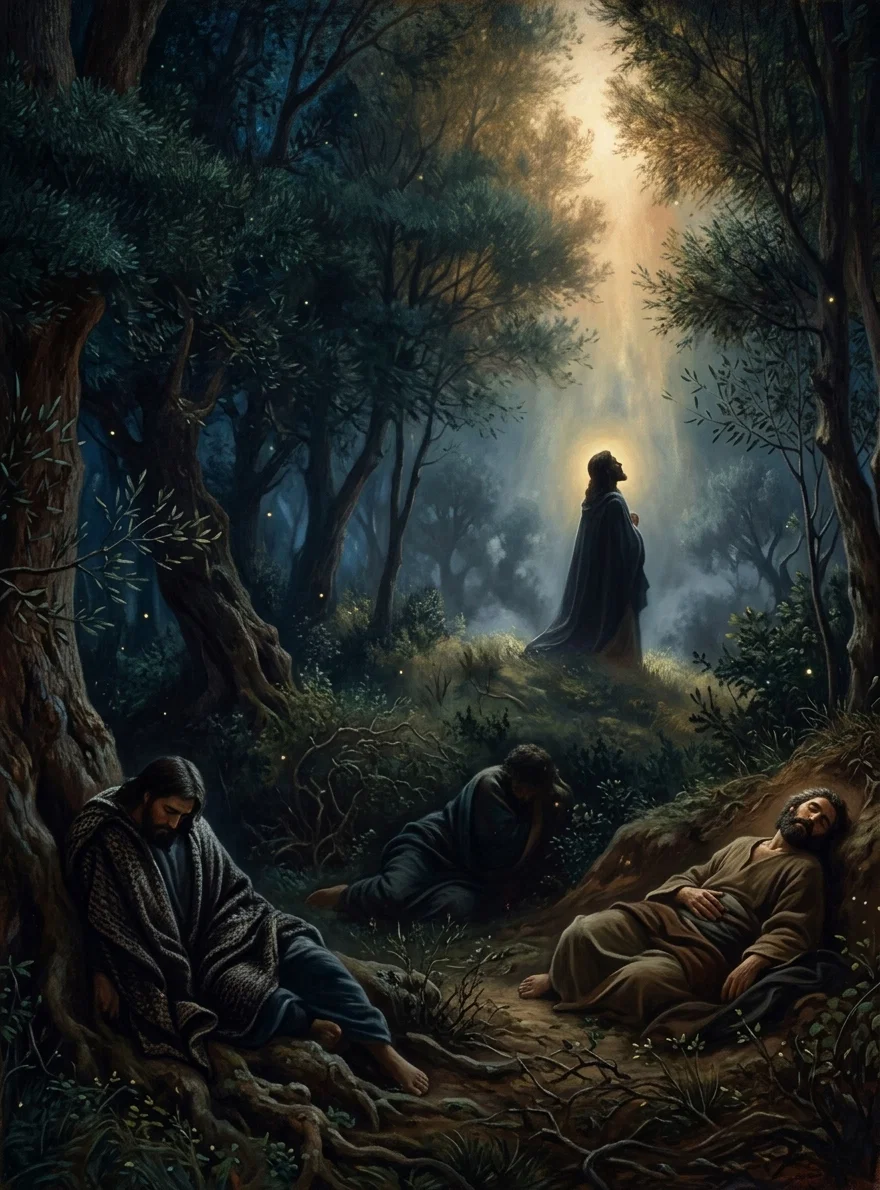
Not My Will, but Thine

6%

Pacific Press Publishing Company · Oakland, California · May 28, 1896

FromSigns of the Times, Vol. 22, No. 22.

Read the full edition

“Not My Will, but Thine.”

This was the choice, the prayer, of Christ in the Garden of Gethsemane . It was his choice and prayer in the whole great work of his sacrifice for man. Before he came to this earth, his language was, “Lo, I come; in the volume of the book it is written of me, I delight to do thy will, O my God; yea, thy law is within my heart.” And when upon the earth his language and life were, “My meat is to do the will of Him that sent me, and to finish His work.” This was Christ’s purpose and spirit.

God’s Will.

God’s will is his holy law. This we learn from the scripture quoted above. That law is the reflect of God’s character, the fulness of all moral qualities. It is a law of love. Its “weightier matters” are “judgment, mercy, and faith.” God in his love and mercy “gave his only-begotten Son,” that the sinner might be saved. Christ came to demonstrate in his life the love and mercy of the law toward the sinner. All glories seen in Christ—the excellency of character, the holiness of life, the sweetness of his love, the purity of his conduct, the wisdom and power of his words—were but the living personal embodiments of God’s holy law.

What It Means.

God’s will wrought into character means self-denial, self-abnegation, humiliation, sacrifice, self-effacement. Therefore Christ “emptied himself,” and God came in and filled him; in other words, God’s law or will was wrought in him in its fullest perfections. Christ’s goodness was not alone negative badness, but a positive life of loving service. He put away the one that he might do the other. But this is what doing God’s will—following Christ—means to us. “If any man will come after me,” says the Master, “let him deny himself, and take up his cross, and follow me.” But this often means suffering, crucifixion, anguish of heart and soul. The flesh, the natural man, suffers and revolts against it. Every fiber of the natural man calls out for deliverance from the cross of self-sacrifice; for it often means severance from friends, and home, and tenderest ties of earthly relationship, the giving up of the dearest pursuits and the loftiest worldly ambition. And there is no wonder that tried humanity oftentimes cries out in anguish of soul for deliverance, even as did Jesus in Gethsemane, “O my Father, let this cup pass from me!” The weight of the world’s sin and wretchedness and wo were upon him; the cross, the grave, the separation from the Father because of sin—the sin which he voluntarily assumed, which he became for man (2 Cor. 5:21)—were too much for frail humanity; and what wonder that they wrung from his human heart the prayer for deliverance, and a little later, the despairing cry, “My God, my God, why hast thou forsaken me?”

The Triumph of Faith.

But in all the trial, faith triumphed. Every prayer of faith will be heard in heaven and answered; for faith respects God’s will, and God “worketh all things after the counsel of his own will.” But was this prayer of Christ’s agony answered?—Yes, verily. The prayer contained two petitions, of which the first was lost in the last. As expressed by Mark, “Abba, Father, all things are possible unto thee; take away this cup from me.” This is the human cry of agony, but it was absolutely subordinate to the petition of faith, “Nevertheless ,”—not the less, notwithstanding all that I may desire or long for,—“not what I will, but what thou wilt.” This is the one petition above all others. Jesus came to do the Father’s will; and the burden of his prayer was that God’s will might be wrought in him, costing whatever suffering it might, because he knew that the will of the all-loving, all-merciful, all-wise, all-powerful Father was the very best thing that could be done. It is this great truth which God has revealed over and over again, that his will is best; and faith grasps it as a great foundation rock, unmoved by storm and tempest.

Our Faith.

The faith of Jesus is the faith which God desires his people to have; it is the faith that is in his word; it is the faith that respects God’s will; all else is feeling or presumption. Such faith may seem to the superficial to be defeat, but it is ever eternal triumph. Here is a poor, sick soul, wretched with pain, yet loving life and dear ones. He longs to be healed. He prays that the disease may not end in death; that he may be spared the cruel cup. It seems to him that it ought not so to be. He asks his friends, godly men, to pray for and with him, and they do so earnestly, pleading God’s healing goodness and power. God has healed others many times, why not now? And yet oftentimes the sufferer is not healed, but goes down to the grave; and then some doubt. There is the promise, that one, for instance, in James 5:15; why was it not verified? Did God hear? Did he answer the prayer?—Yes, the prayer of faith; and theprayer of faith respects God’s will. “And this is the confidence that we have in him, that, if we ask anything according to his will, he heareth us.”

Submissive Faith.

Faith is always submissive. There are some things which we know to be God’s will always. It is always his will to forgive sins and cleanse the sinner; for “this is the will of God, even your sanctification.” “If we confess our sins, he is faithful and just to forgive us our sins, and to cleanse us from all unrighteousness.” We may plead this with all assurance. But it has not always been God’s will to save men from sickness and death in this world. The good of all ages have died. The apostles all died, many of them cruel deaths of martyrdom. Paul, who healed all manner of diseases, wrote, “Trophimus have I left at Miletum sick,” and prescribed a remedy to Timothy for his stomach and other ills, and labored himself constantly under infirmities. These, each and all, doubtless, needed the infirmity, the trial, the cross, the suffering, that a more precious faith might be developed, that they might know the all-sufficiency of God’s grace in the sorest, deepest trial, even unto death. Not all the notable examples of faith of Hebrews 11 “stopped the mouths of lions” or “quenched the violence of fire,” but some were sawn asunder, were slain with the sword, and in later times were torn asunder by lions, and burned at the stake. And yet they had faith—the faith of Jesus. They had the faith that respected God’s will; and “the prayer of faith,” as with Christ, said, “Nevertheless, not what I will, but what thou wilt.”

God Loves Us.

He is no respecter of persons. He does not blame the human heart for crying out for deliverance from the dread crosses with their dreadful agonies. He sympathizes with the sufferer. He is linked with him by the bond Christ Jesus. But he sees the better way, the latter end; and he is working in infinite wisdom for our eternal good. If the dreaded death, the sad separation, the long, unbroken rest of the grave, is better, God knows. It may be salvation to the sleeper, salvation to loved ones left behind; he knows; let faith rest in the assurance that “God hath not appointed us to wrath, but to obtain salvation by our Lord Jesus Christ, who died for us, that, whether we wake [are alive at his coming] or sleep [in death], we should live together with him.” Let us rest in his word. Let our prayer—the one prayer above all others, permeating all prayers, in all the Gethsemanes of trial—be, “Nevertheless, not what I will, but what Thou wilt.” The valley of Gethsemane lies before every soul; for in every path
“The garden lies; strive as you may, You can not miss it in your way; All paths that have been or shall be Pass somewhere through Gethsemane. All those who journey, soon or late Must pass within the garden’s gate, Must kneel alone in darkness there, And battle with some fierce despair; God pity those who can not say, ‘Not mine, but thine,’ who only pray, ‘Let this cup pass,’ and can not see The purpose in Gethsemane.”