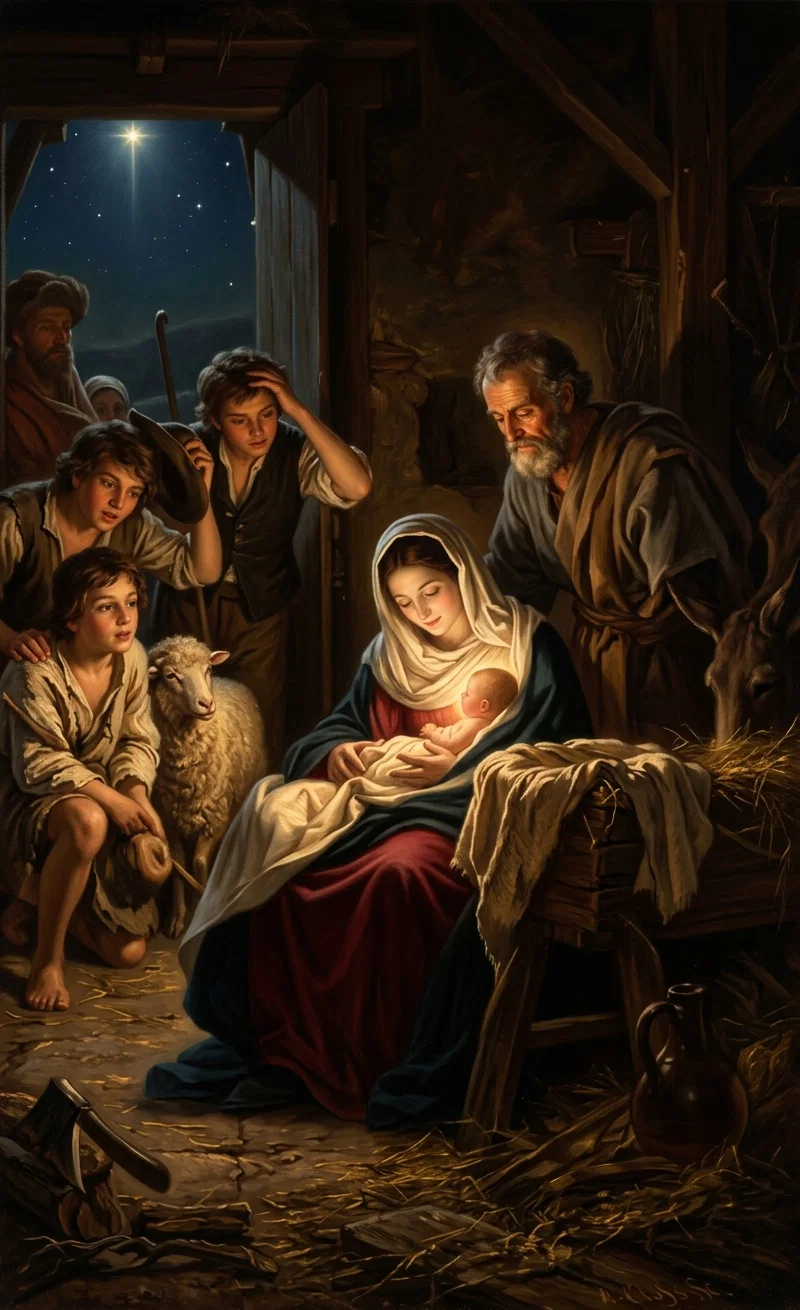
Incarnation.—The word “incarnation” comes from the Latin in and caro, carnis (flesh) signifying in the flesh, “to clothe with flesh,” “to embody in flesh,” to make that flesh, or a part of flesh, which before was not.
“In the Beginning” man’s flesh was holy and without blame before God. The transmuting power of the Creator had made dust into organized flesh; and as man stood before his Creator in all the beauty of his sinless perfection, the wisdom of God pronounced him “very good.” Gen. 1:31. Into that flesh God had breathed his life, which man held by faith. If, believing in God, he obeyed, he should live to all eternity; if, disbelieving God, he disobeyed, he should “surely die.” Gen. 2:17.
Sin Incarnate.—Into the fair abode of man the tempter came—he who once was perfect in his ways till iniquity was found in him. (Eze. 28:15.) He declared, in opposition to the word of God, that if man disobeyed God he should “not surely die,” but should be as God. (Gen. 3:4, see R. V.) The choice rested with man; and man yielded to Satan. He admitted Satan into the citadel of his life and character. Instead of developing the character in holy flesh that God designed, he believed the enemy, perverted the law of his flesh, his being, and yielded his God-given mind to the perverted law. In other words, he sinned. The law of righteousness perverted became the law of sin. The flesh given him of God became “sinful flesh,” or, more literally, a “flesh of sin.” (Rom. 8:3.) The mind, capable of almost infinite development in the way of righteousness, became the mind of the flesh, or the fleshly mind, self-centered. (Rom. 8:6, 7; Col. 2:18.) It was the flesh subject to sin, and the mind enslaved by the flesh; and man became “carnal, sold under sin” (Rom. 7:14), and of himself “foolish, disobedient, deceived, serving divers lusts and pleasures, living in malice and envy, hateful, and hating one another” (Titus 3:3). Our first parents by yielding became the incarnation of sin.
God’s Mercy.—“But after that the kindness and love of God our Saviour toward man appeared.” (Titus 3:4.) The great heart of Infinite Love pitied the sinner, and the sacrifice of the Son of God was made, that man might be saved. The Father “so loved the world, that he gave his only-begotten Son, that whosoever believeth in him might not perish, but have everlasting life.” The Son so loved the world that he “gave himself for us, that he might redeem us from all iniquity, and purify unto himself a peculiar people, zealous of good works.” This was the love in both Father and Son. But man of himself, in sinful flesh, can not do good works. He may see himself condemned in the law, but he is powerless to do the law. “For we know that the law is spiritual; but I am carnal, sold under sin. For that which I do, I allow not; for what I would, that do I not; but what I hate, that do I. . . . For I know that in me (that is, in my flesh), dwelleth no good thing; for to will is present with me; but how to perform that which is good I find not.” (Rom. 7:14–18.) The law is weak, not in itself, but through sinful flesh. (Rom. 8:3.) Man in the flesh is ruled by the mind of the flesh. And yet there is victory, but how?
Righteousness Incarnate.—
The victory must be won where it was lost,—in man. A power must come into the flesh sufficiently strong to make the flesh subject to it, instead of being subject to the flesh. The enmity to God’s law, the carnal mind, must be cast out, and the mind of the Spirit must rule. How this has been done and how it may be done in us is set forth in the following scriptures:—
“Have this mind in you, which was also in Christ Jesus; who, being originally in the form of God, counted it not a thing to be grasped to be on an equality with God, but emptied himself, taking the form of a bond-servant, becoming in the likeness of men; and being found in fashion as a man, he humbled himself, becoming obedient even unto death, yea, the death of the cross.” Phil. 2:5–8, R. V., margin.
“There is therefore now no condemnation to them that are in Christ Jesus. For the law of the Spirit of life in Christ Jesus made me free from the law of sin and of death. For what the law could not do, in that it was weak through the flesh, God, sending his own Son in the likeness of flesh of sin and for sin, condemned sin in the flesh; that the requirement of the law might be fulfilled in us, who walk not after the flesh, but after the Spirit.” Rom. 8:1–4, R. V., margin.
The good fight has been fought, the warfare2has been accomplished, the glorious victory to all eternity has been won in the flesh of Jesus of Nazareth. “The Word was made flesh, and dwelt among us, . . . full of grace and truth.” (John 1:14.) “When the fulness of the time came, God sent forth his Son, born of a woman, born under the law, that he might redeem them which were under the law, that we might receive the adoption of sons.” (Gal. 4:4, 5, R. V.) “As many as receive him [the word], to them gave he the right to become children of God, even to them that believe on his name.” (John 1:12, R. V.) When here, Christ “did no sin;” he kept his Father’s commandments. He was therefore righteous, God’s “righteous Servant,” who justifies many (Isa. 53:11), “the LORD OUR RIGHTEOUSNESS” (Jer. 23:6). He was the revelation of God to men. As he “emptied himself,” “it pleased the Father that in him should all fulness dwell.” (Col. 1:19.) He was righteousness incarnate.
Destroyed the Enmity.—He came to do what Adam had undone. Adam by his sin brought enmity into the flesh against God (Rom. 7:14; 8:7); but the Son of God came into the flesh, and by his perfectly righteous life “abolished in his flesh the enmity” (Eph. 2:15). He was tempted in all points as we are, yet without sin. He was made in all things like unto his brethren, that he might be merciful and compassionate; and he won the victory, that he might be eternally strong to help all who would trust him. All this is forcibly set forth in Heb. 2:9–18; 4:14–16; 5:7–9; 7:16, 25.
In Our Flesh.—The Son of God came in the flesh of sin of Jesus of Nazareth, that he might come in our flesh of sin. He “abolished the enmity in his flesh,” so that when Satan came, he found nothing in him to respond to his temptations, in order that he might abolish the enmity in our flesh, so that Satan would find nothing in us in harmony with his temptations. And so the beloved apostle declares: “Hereby know ye the Spirit of God: Every spirit that confesseth that Jesus Christ is come in the flesh is of God; and every spirit that confesseth not that Jesus Christ is come in the flesh is not of God; and this is that spirit of antichrist, whereof ye have heard that it should come; and even now already is it in the world.” (1 John 4:2, 3.) The word “confess” includes the idea of covenanting, saying together with Christ, that he is in our flesh, we showing it by our words, he by his life lived in us according to his word. That the confession pertains to Jesus Christ coming into our flesh is evident from the next verse, which declares: “Ye are of God, little children, and have overcome them; because greater is he that is in you, than he that is in the world.” The spirit of antichrist is sin ruling within the flesh. The Spirit of Christ is righteousness ruling in the flesh. “Let no man deceive you; he that doeth righteousness is righteous, even as He [Christ] is righteous.” (1 John 3:7.) “He that saith he abideth in Him ought himself also so to walk, even as He walked.” (1 John 2:6.)
Let Him In.—Reader, do you know Jesus Christ? Is he in your flesh? or is sin incarnated in you? Jesus Christ “was made of the seed of David according to the flesh,” but he was “declared to be the Son of God with power, according to the Spirit of holiness, by the resurrection from the dead.” (Rom. 1:3, 4.) Are you, tho born of sinful flesh, showing that you are a son of God by walking in “newness of life,” by the power of his indwelling life? If not, why not? Open the door of your heart. Ask Christ in, that self may be banished, the enmity abolished. Accept, receive his word, that it may be Spirit and life in you; thus may you feed upon Christ. (See John 6:53–58, 63.) Let Christ in in all his humility, crucifixion, righteousness, glory. He says: “Behold, I stand at the door, and knock; if any man hear my voice, and open the door, I will come in to him, and will sup with him, and he with me.” Let him into your flesh; so shall you triumphantly say with Paul: “I am crucified with Christ; nevertheless I live; yet not I, but Christ liveth me; and the life which I now live in the flesh I live by the faith of the Son of God, who loved me, and gave himself for me.”