GOD AND CÆSAR

6%

Pacific Press Publishing Company · Oakland, California · Mar 19, 1896

FromSigns of the Times, Vol. 22, No. 12.

Read the full edition

GOD AND CÆSAR

TO GOD? OR TO CÆSAR?

TO GOD? OR TO CÆSAR?

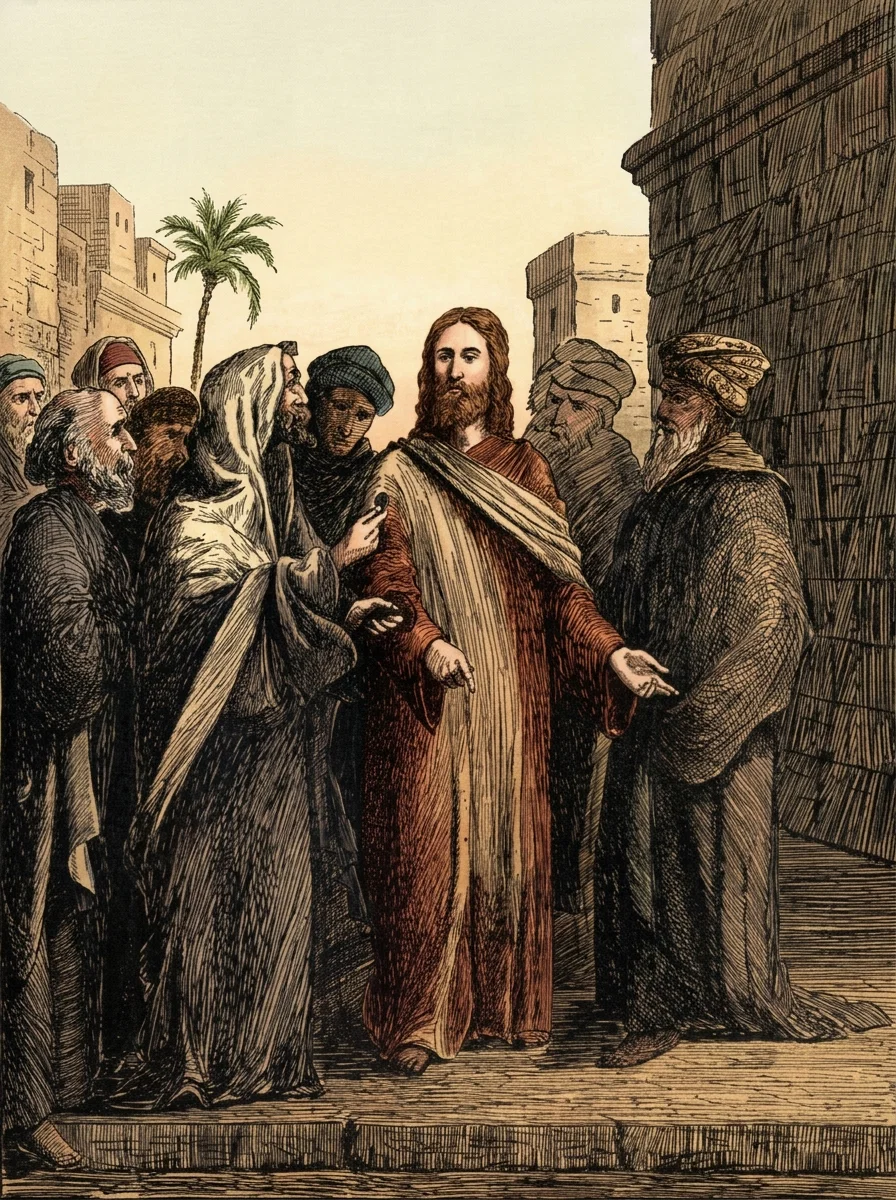
When the Jews sought to entrap Jesus into committing himself into opposition to civil government, by asking him if it was lawful to give tribute unto Cæsar, he asked them to show him the tribute money, and they brought him a penny. “And he saith unto them, Whose is this image and superscription? They say unto him, Cæsar’s. Then saith he unto them, Render therefore unto Cæsar the things which are Cæsar’s; and unto God the things that are God’s.” Matt. 22: 19-21.
The completeness of this answer was recognized even by the enemies of Jesus; for when they had heard it, “they marveled, and left him, and went their way.” It settled the question as to what belongs to Cæsar, or human governments, and what to God. Everything that belongs to Cæsar is to be given to him, and that which belongs to God is to be held as sacred to him. That is but simple justice; no one can gainsay the statement that every one should have what belongs to him.
From this distinction, what may we learn as to ourselves and our service? The Scriptures furnish the answer, by telling us to whom we belong. The apostle Paul but repeated the statement of Christ, when he said, “Render therefore to all their dues; tribute to whom tribute is due; custom to whom custom; fear to whom fear; honor to whom honor.” Rom. 13: 7. Yet he did not include himself and his service as belonging to Cæsar, and to be rendered to him; for when he was in the hands of Cæsar’s soldiers, on the way to Rome, he said, “There stood by me this night the angel of God, whose I am, and whom I serve.” Acts 27: 23.
Writing to the church at Corinth, and to us all as well, he said, “What! know ye not that your body is the temple of the Holy Ghost which is in you, which ye have of God, and ye are not your own? for ye are bought with a price.” 1 Cor. 6: 19, 20.
If we are not our own, whose are we?—Why, we belong to Him who has bought us. But that was not Cæsar nor any other earthly name. No; “for whether we live, we live unto the Lord; and whether we die, we die unto the Lord; whether we live therefore, or die, we are the Lord’s.”
We are the Lord’s because he bought us with a price, and that price was his life. For we were “not redeemed with corruptible things, as silver and gold,” “but with the precious blood of Christ, as of a lamb without blemish and without spot.” 1 Peter 1: 18, 19. He “gave himself for us.” Titus 2: 14.
Jesus gave his life for us. He gave himself for us in death, and he ever liveth to make intercession for us. Therefore, since he died and lives for us, it necessarily follows that “whether we live therefore, or die, we are the Lord’s.” The service of our lives belongs to him, and if we die, it is to be only to his glory, and not to that of any man or any society of men. All is to be to the glory of God, whose we are.
The Christian, therefore, may, at the demand of the state, give it his money, for that bears the image and superscription of the state. But he can not give himself to the state, for he bears the image of God. He belongs to God, who has bought him, and he must render unto God that which is God’s. To give himself to the state would be to rob God.
It is true of all men that they belong to God; but it is true of Christians in a special sense, since in their case the purchase has been acknowledged and sealed. Not being their own, they are not at liberty to dispose of themselves. God has the sole right to direct their time and their actions. No Christian, therefore, can enter into any service which will put him, as in the case of a soldier, absolutely under the control of some “superior.” To say that the giving of one’s self to the state, for it to have absolute control of one, is service to God, is to make the state synonymous with God, which is paganism.
Let no one imagine that this means rebellion or any manner of opposition whatever to earthly governments. Far from it. The God whom we serve is “the very God of peace,” and therefore we can serve him only by living quiet and peaceable lives. Earthly governments may make demands upon us that are obviously unjust, but we are not judges, nor are we sent to reform government; we must submit even to unjust demands, and not do or say anything to the prejudice of the government or its officers. But when it demands ourselves, when it claims supreme authority as to time and service, then we are to remember whose we are. We can not give ourselves to the state, not because such a demand interferes with our rights or convenience, but because we are not our own to give.
He who best serves God, best serves man. It is becoming more and more common to reverse this order, and to make the service of God consist solely in a service to man. Butit is wrong. God is first, and he alone can tell us how we can serve our fellow-men the best. He who puts man first, will fail to serve either man or God. The correct answer to the question, “Whose are you?” will enlighten us as to our duty in many difficult situations.
E. J. W.