A Consuming Fire

7%

Pacific Press Publishing Company · Oakland, California · Mar 12, 1896

FromSigns of the Times, Vol. 22, No. 11.

Read the full edition

A Consuming Fire

We read in Heb. 12:29 the statement that “our God is a consuming fire.” It is quoted from Deut. 4:24, “For the Lord thy God is a consuming fire, even a jealous God.” The Revised Version reads, “For the Lord thy God is a devouring fire, a jealous God.”

A Warning

By the context in both places it will be seen to have somewhat the character of a danger signal against sin. “Take heed” that ye sin not, that ye serve him “acceptably, with reverence and godly fear, for our God is a consuming fire.” The thought is that those who do not heed the warning will be consumed by him. It is said of the presence of the Lord on Mount Sinai, “The sight of the glory of the Lord was like devouring fire on the top of the mount in the sight of the children of Israel” (Ex. 24:17); and the people, in their self-condemnation, said, “This great fire will consume us” (Deut. 5:25). And yet twice Moses lived for forty days in the midst of that glory, without material food, talking with God as a man talketh to his friend, and lived. Why? and why a consuming fire to the people?

God’s Presence Consumes Sin

The reason of it all is found in the moral condition of the two classes. It is God’s nature to consume sin. “Thou art of purer eyes than to behold evil, and canst not look on iniquity,” says Habbakuk. “For thou art not a God that hath pleasure in wickedness; neither shall evil dwell with thee,” says David. Sin—evil, wickedness, iniquity—is antagonistic to God’s nature, and perishes in the presence of his glory. God’s nature is absolute righteousness and perfection. In him is “no variableness, neither shadow of turning.” He is absolute righteousness. His laws of operation or working are all right and perfect. He can act in no other way, because he can not prove false to his essential nature. Sin, or iniquity, is the perversion of God’s righteousness, the perverting of the life, the law, the blessings of God, to selfish and wrong purposes. The nature of God being to do right always, must also be to right wrong, and destroy the principle which perverts the good. And therefore to all sin, to all perversion of good, “our God is a consuming fire.”

The Lord’s Desire

As concerns the sinner (and “all have sinned and come short of the glory of God”), God desires that the sin shall be consumed and the sinner “saved to sin no more.” He gave his Son to save them from their sins. Christ gave himself to save men from all iniquity, and purify a people unto himself. (See Matt. 1:21; Titus 2:14.) All that he asks of man is to renounce the sin, the selfishness, the iniquity, and choose God for all that God wants to be to him through Christ—“wisdom, and righteousness, and sanctification, and redemption.” 1 Cor. 1:30. This is acceptable confession; this is genuine faith. And it is this that makes the soul like God.

How Is the Sin Taken Away?

By Christ’s presence. So Mount Sinai was holy because of God’s presence. (Ex. 19:23.) God dwelt among Israel and sanctified them by his presence. (Ex. 29:43, margin.) Says Moses: “For wherein shall it be known here that I and thy people have found grace in thy sight? is it not in that thou goest with us? So shall we be separated, I and thy people, from all the people that are upon the face of the earth.” Ex. 33:16. And therefore God calls them “a holy people,” made holy by his indwelling presence, which had purged away the sin. So also we read again: “Know ye not that ye are the temple of God, and that the Spirit of God dwelleth in you? . . . For the temple of God is holy, which temple ye are.” 1 Cor. 3:16, 17. It is God by his presence through his Spirit and word which purges away the sin and makes holy the sinner.

An Illustration

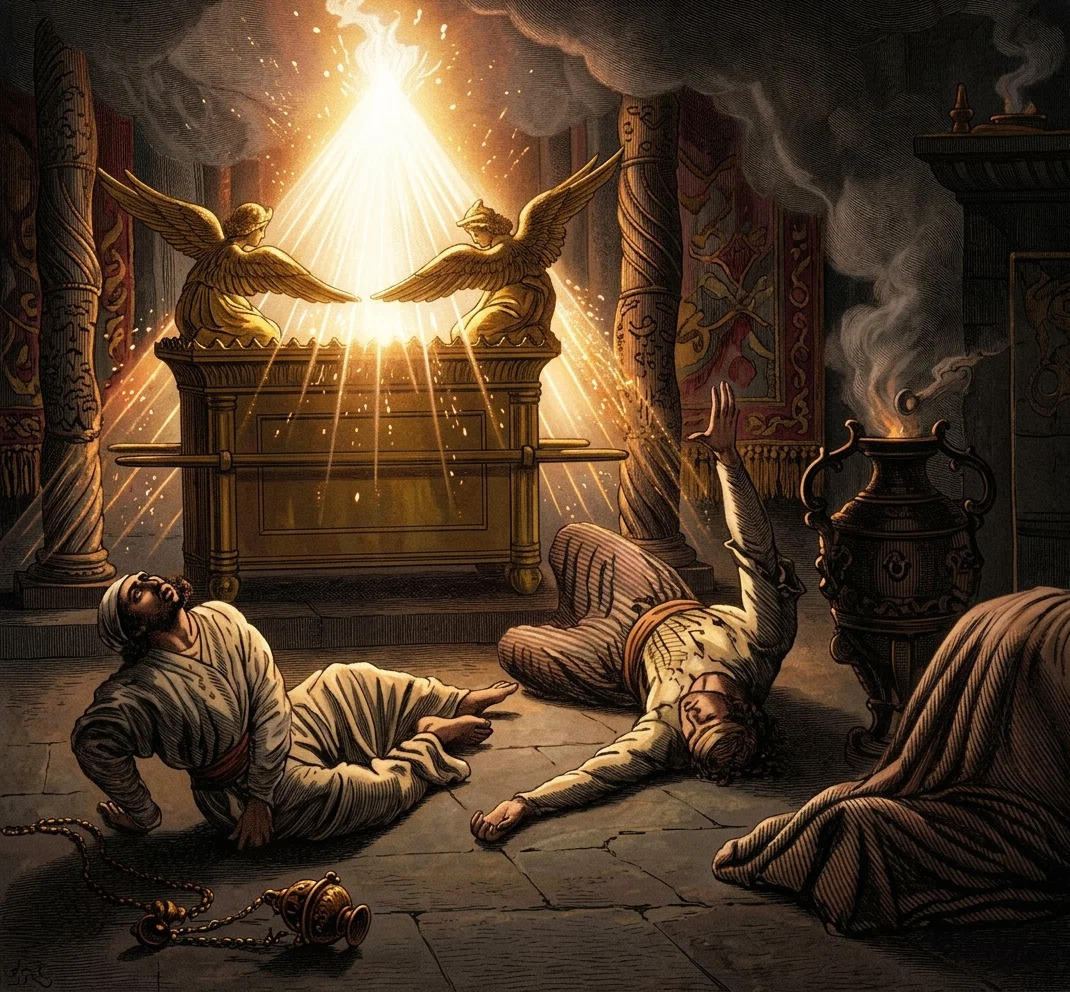
An illustration of how God consumes the sin of the penitent is given in Lev. 9:15-24. The offerings in behalf of the people represented the sins of the people. They had in figure transferred their sins by confession to the innocent beast. That beast became in type their sin. They had yielded it up to God, placed it through the priest upon God’s altar. All this of course was by faith in the coming Lamb of God, “who was made to be sin for us.” 2 Cor. 5:21. How did God regard this sin offering? Let the record state: “And there came a fire out from before the Lord, and consumed upon the altar the burnt offering and the fat; which when all the people saw, they shouted, and fell on their faces.” The sin was consumed, and the people were cleansed and saved. But in the next chapter we read a different story. Nadab and Abihu transgressed God’s law, deliberately, presumptuously. They not only sinned, but they did it in a way to show that they identified themselves with the sin, and thus became sin. The result was: “And there went out fire from the Lord, and devoured them, and they died before the Lord.” In the one case sin was renounced and confessed and laid upon the offering, and the sin was consumed; in the other, the men identified themselves with sin, went into the presence of God, which consumes sin, and were devoured with the sin they had chosen.

Moses and Israel

These illustrations show why Moses could endure continually God’s presence, and why the children of Israel feared, and drew afar off, and prayed that God might not speak to them any more. If God’s presence had been dwelling within, they would not have been afraid of his presenceon the mount. If there had not been unconfessed sins cherished in the heart, they would have cherished the presence of God. Moses knew God’s presence in his own life and experience; and instead of going away from God, and seeking to hide from his presence, stop his ears from his voice, and seek to shut his eyes from the manifold brightness, he pleaded with humble boldness, “I beseech thee, show me thy glory.” Ex. 33:18. And God more graciously revealed himself to his servant. And the glory of Moses’ face when he came down from the mount was but the forthshining of the glory within, which had purged away all known iniquity.